
Mini Split Installation in Conway, AR
A new system here will heat from November through April and cool from May through September every year. Tell us about the house, and a licensed contractor who covers Faulkner County will get in touch.
Tell us about the job
It takes about a minute.
Eleven months of the year, your mini-split is working
Conway asks a lot of a mini-split. Winter nights average 32°F from December through February, and homes here need heat from November through April, six months straight. Summer afternoons average 91°F, and cooling runs May through September, five more months. That leaves only one month where the system can sit idle.
A new unit installed here has to handle both ends of that range. If it was manufactured this year or later, federal rules require at least 14.3 SEER2 for cooling and 7.5 HSPF2 for heating, the same minimums that apply to any split-system heat pump. There is no lower bar for a ductless system just because it has no ducts.
- 6 months
- November through April, your system heats
- 5 months
- May through September, it cools
- 32°F
- the average winter night it heats against
- 91°F
- the average summer afternoon it cools against
NOAA nClimDiv, 1991–2020 normals
Arkansas requires HVAC contractors to hold a state license.
The license belongs to the contractor, not to this one job. It's what the state checked before that contractor was allowed to work anywhere in Arkansas, and it stays in place from job to job. Counties and cities in Arkansas can't add their own HVAC license on top of it, so the state's license is the one that applies in Faulkner County too.
For a mini-split install, that license doesn't cover the work itself once it's underway. Most cities and counties require a permit for this kind of installation, with an inspection after the work is done, so someone checks the install beyond the contractor simply being licensed to do it.
Source: Arkansas Department of Labor and Licensing
- Is a mini split worth it?
- For most homes, yes, especially if you're heating or cooling a room your ductwork doesn't reach well. A mini split puts a heat pump right in the room, so you get heat on cold nights and cooling on hot afternoons without losing energy through ducts. Conway sees winter lows around 32°F and summer highs near 91°F, and a mini split handles both from one system. Whether it's worth it for your house depends on which rooms need help and what's heating or cooling them now, which is something a contractor can walk through with you.
- How many rooms can a mini split cover?
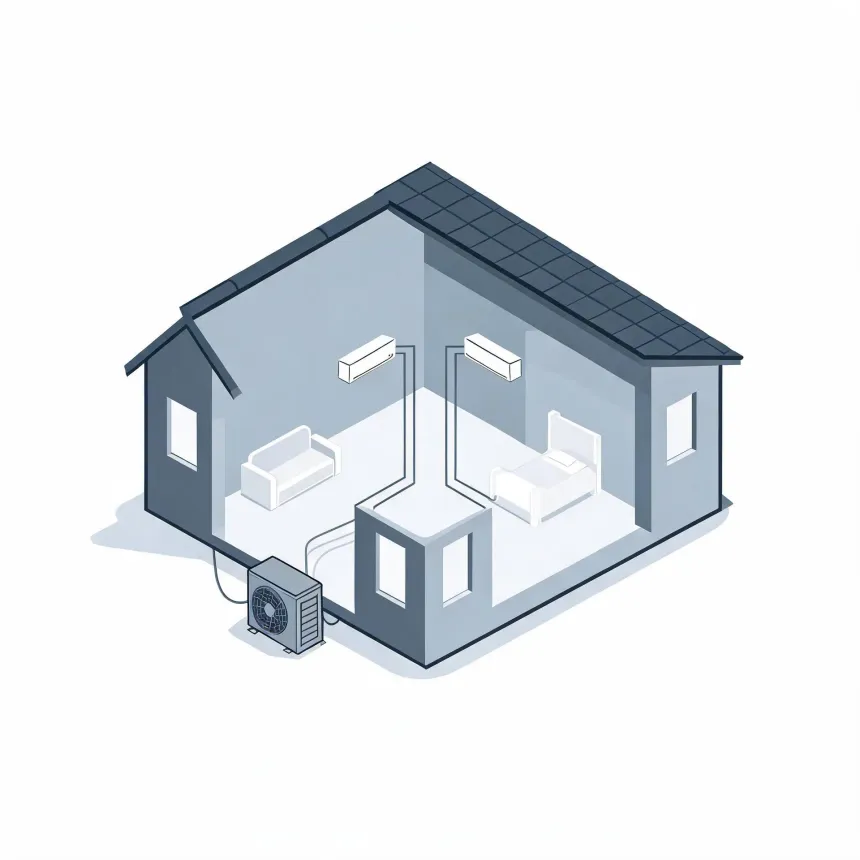
- That depends on the system. One outdoor unit can run multiple indoor heads, and each head handles one room or open area, so a two-room install needs two indoor heads and a five-room install needs five. The right setup for your house depends on square footage, ceiling height, and how the rooms are laid out, which a contractor will size on a visit.
- Can a mini split heat a whole house?
- It can, if you install enough indoor heads to reach every room, but most homes use it to cover specific rooms rather than the whole house. A multi-zone system with a head in each room can work as a home's only heat source, and it will keep working through Conway's winter since these heat pumps are built to handle temperatures well below the 32°F average low here. Whether that makes sense for your house or whether it's better paired with existing heat depends on the layout, and a contractor can lay out both options.