Mini Split Installation in Heber Springs, AR
A new system here will heat from October through April and cool from May through September every year. Tell us about the house, and a licensed contractor who covers Cleburne County will get in touch.
Tell us about the job
It takes about a minute.
What Heber Springs weather asks of a mini-split
Your mini-split works almost every month here. Heat runs October through April, seven months, and cooling picks up May through September, five more. There is barely a break between seasons.
Winter nights average 31°F, so the heat pump side has to keep pulling warmth from cold air most of the winter. Summer afternoons average 89°F, which keeps the compressor working hard on the cooling side too. A unit installed today has to meet 14.3 SEER2 for cooling and 7.5 HSPF2 for heating, the federal minimum for split-system heat pumps since January 2023. Cleburne County sees its share of winter storms and damaging wind, and a mini-split that starts back up on its own once the power returns is worth asking about.
- 7 months
- October through April, your system heats
- 5 months
- May through September, it cools
- 31°F
- the average winter night it heats against
- 89°F
- the average summer afternoon it cools against
NOAA nClimDiv, 1991–2020 normals
Arkansas requires HVAC contractors to hold a state license.
The license covers the contractor, not the job itself, so it stands behind the person doing the work rather than any single install. It's also the same license everywhere in the state. Counties and cities in Arkansas can't require their own HVAC license on top of it, so the license a contractor holds in Cleburne County is the same one that applies anywhere else in Arkansas.
For the mini-split itself, the local building office is what checks the installation. In most cities and counties, a job like this needs a permit and an inspection once the work is done, and that inspection looks at the installation itself, separate from the license the contractor already holds.
Source: Arkansas Department of Labor and Licensing
- Is a mini split worth it?
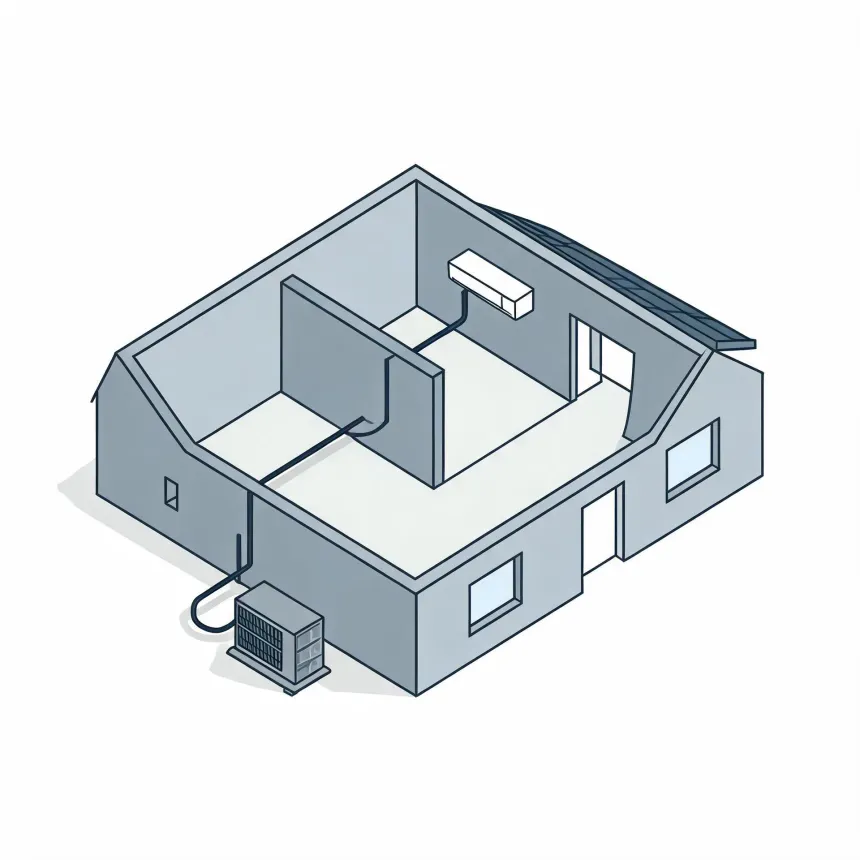
- For most homes it is, especially if a room runs on window units or electric baseboard now. A mini split heats and cools that same room on a fraction of the electricity, and it does both from one unit, which matters here since homes need heat or cooling all twelve months. It also gives you a backup source of heat or cooling if the main system in the house ever goes down. A contractor can look at the room and tell you what size unit it needs.
- How many rooms can a mini split cover?
- A single-zone system covers one room. If you need more than that, a multi-zone system runs several indoor units off one outdoor unit, so a bedroom, a living room and a home office can each get their own thermostat and airflow. The right number for your house depends on the square footage and layout of each room, so a contractor should work that out room by room rather than guessing at a whole-house number.
- Can a mini split heat a whole house?
- It can, but it takes the right number of zones placed where the house actually loses heat, not just one unit in the living room. Winter nights here average 31°F from December through February, so the system has to be sized for that cold, not for a mild day. A contractor can walk the house and tell you whether a multi-zone mini split will carry the whole place or whether it makes more sense alongside your existing furnace.