
The vent clear and open
The flap swings open when the dryer runs and closes flat against the wall when it stops. Air and lint shoot out the hood with each load, and the mesh screen keeps birds and mice out without slowing the airflow down.
Get matched with a pro who works on dryer vents in Benton County.
Find a dryer vent proLint builds up every time the dryer runs, and a vent that's choked down makes clothes take two or three cycles to dry. You want a number you can actually plan around, not a vague "clean it sometimes." With Benton County summers staying muggy for months and winters turning cold, the dryer in most houses here runs often, and that adds up faster than people expect.
Once a year keeps a vent clear in most homes. Lint collects along the duct every time you dry a load, and it narrows the path air needs to escape through. A once-a-year cleaning clears that out before it becomes a real blockage. If your household runs the dryer most days, or the vent run is long or has several bends, check it closer to every six months instead. Rogers summers stay humid well into the year, and that humidity gets pulled into the dryer along with the air it's venting, which makes lint stick to the duct walls instead of blowing straight through. A vent that's clear also helps the dryer shed heat properly during the humid stretch and the cold months when it's working against a colder intake.
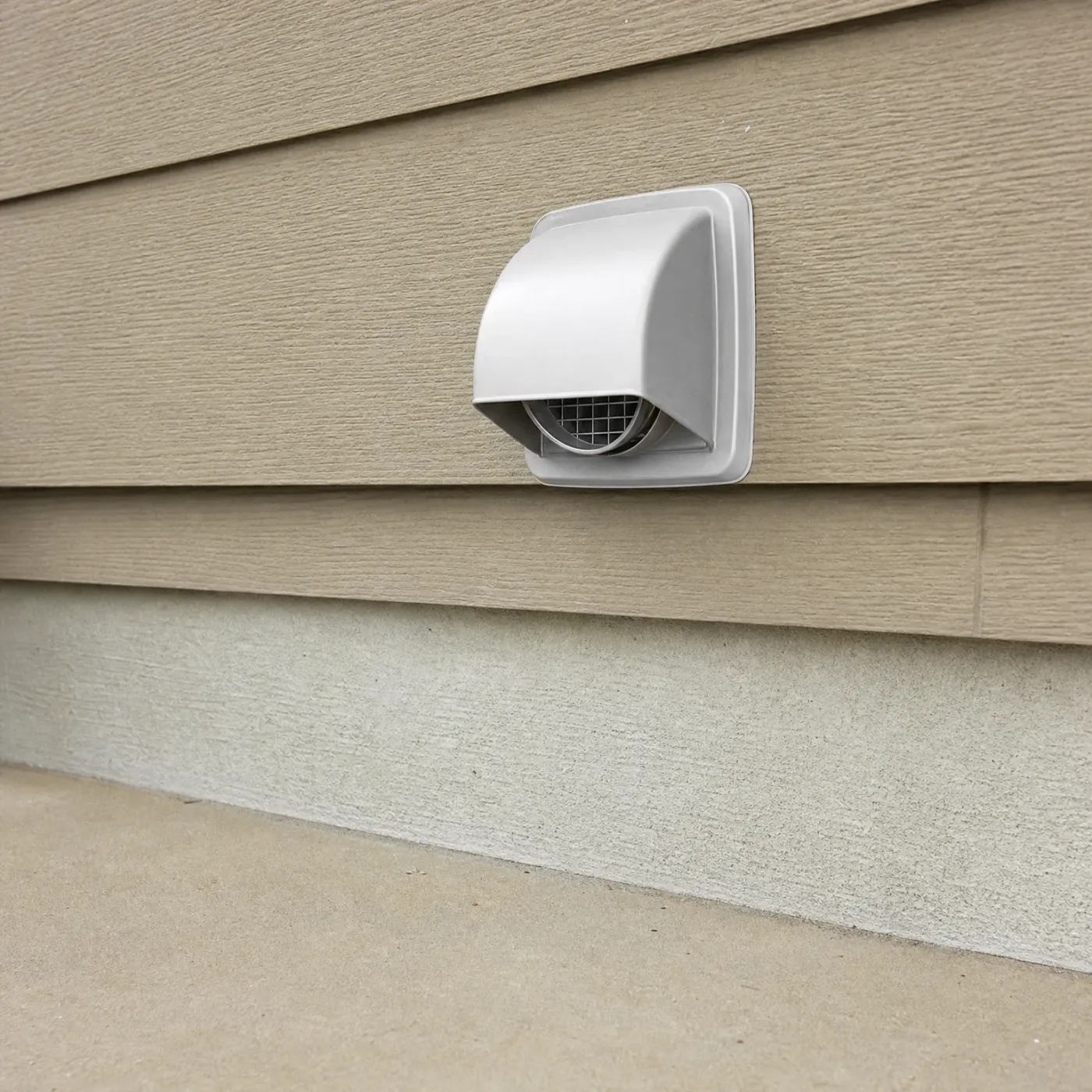
The flap swings open when the dryer runs and closes flat against the wall when it stops. Air and lint shoot out the hood with each load, and the mesh screen keeps birds and mice out without slowing the airflow down.
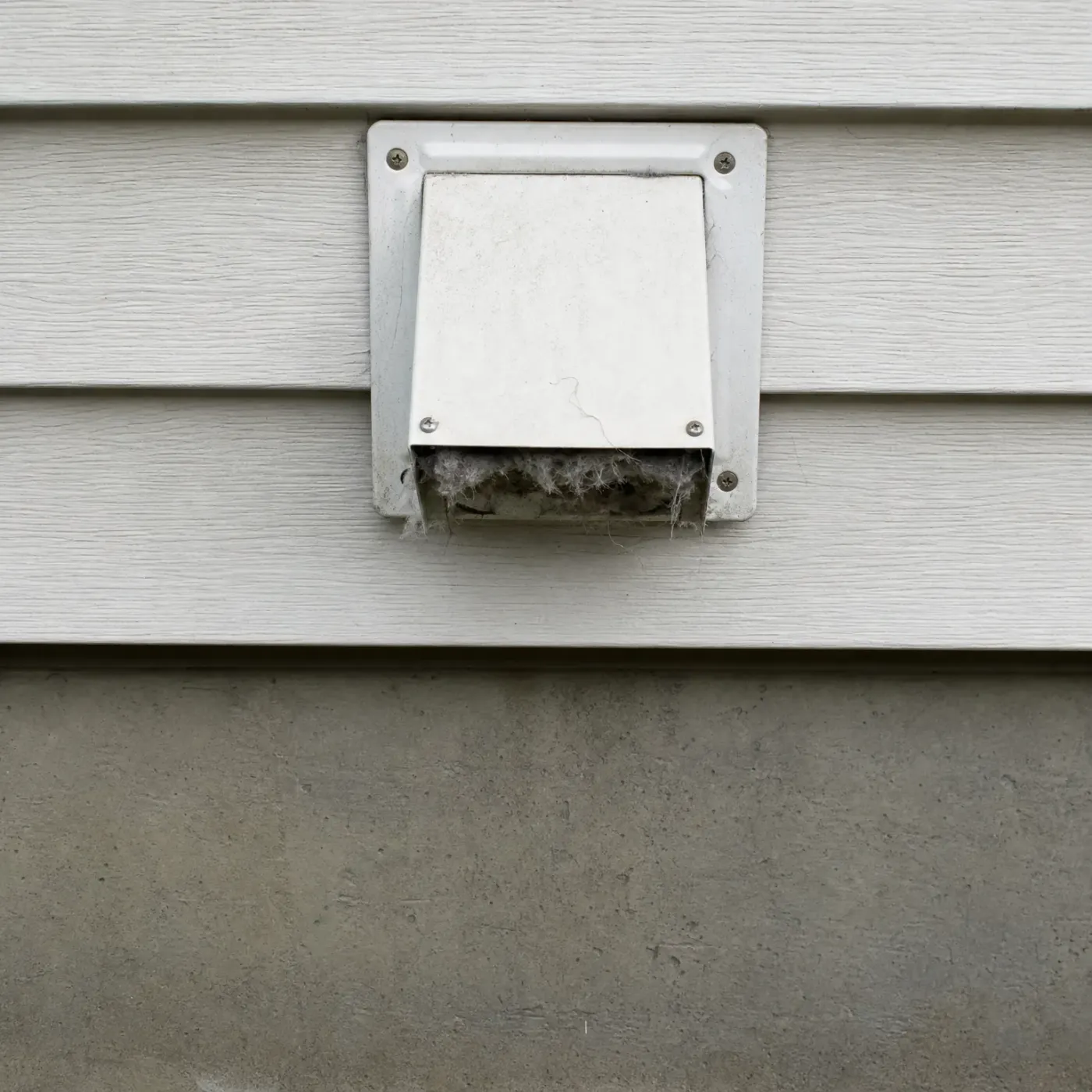
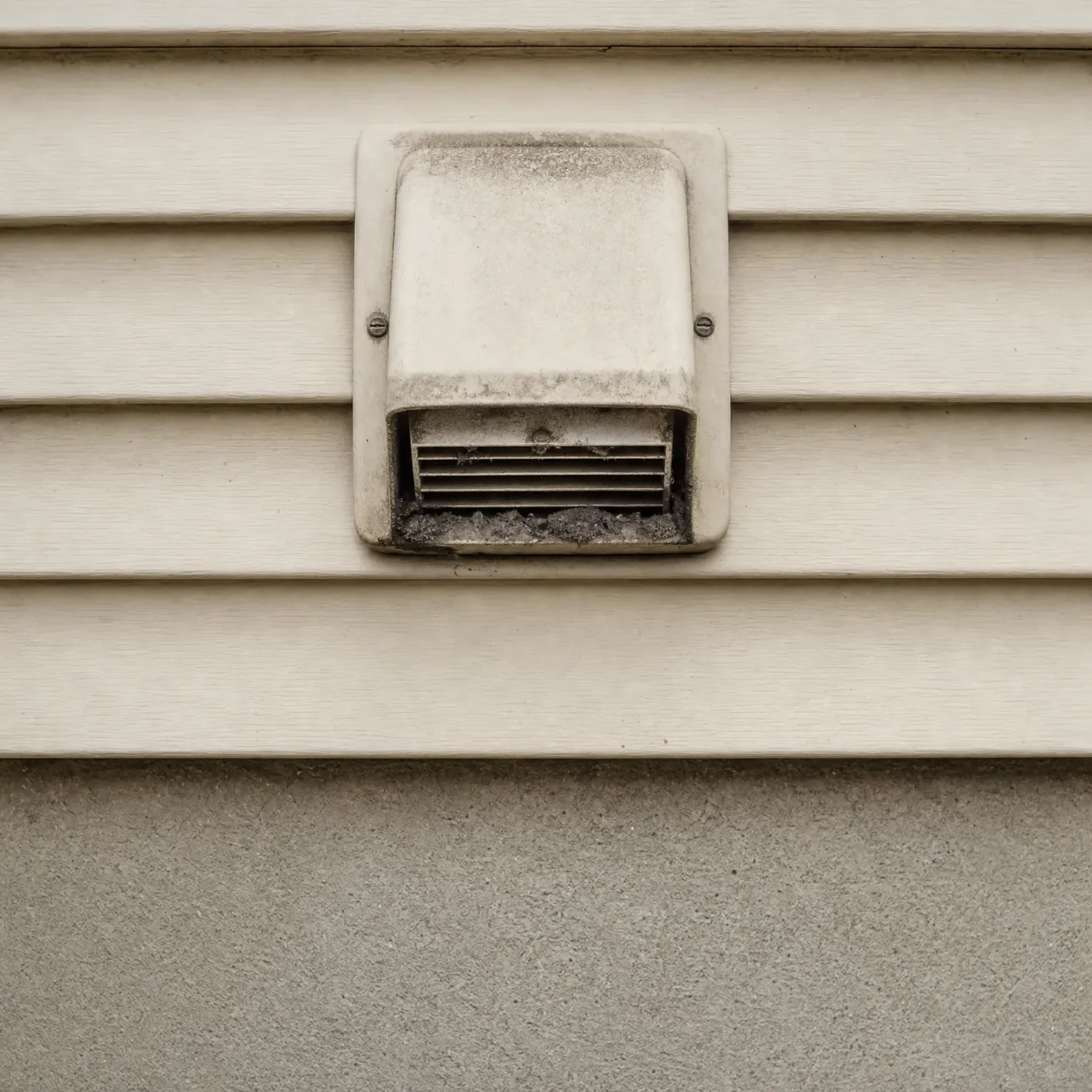
The flap can't close because lint has built up behind it and pushed it open for good. That lint traps moisture against the siding, and the dryer has to force air through a passage that's already most of the way blocked.
2.69 people per household on average
2.69 people live in the average Benton County household. More people means more laundry loads through the same vent, and more lint moving through it every week.
Half the homes here were built by 2001
Half the homes in Benton County were built in 2001 or earlier. A vent that old has had two decades or more to collect lint in bends and joints you can't see.
Power here costs 12.77 cents per kilowatt-hour
Power here runs 12.77 cents per kilowatt-hour. Electric dryers working against a clogged vent pull more of that power per load than they should.
ACS 2020-2024 · EIA-861 2025
A dryer pushes out hot, damp air with every load, and that moisture settles in the lint that lines the vent. It doesn't dry out between loads. It sits there, warm and wet, which is exactly what mold needs to take hold.
A clogged vent also runs the dryer hotter than it's built to run, since the heat has nowhere to go. That's wear on the heating element and the thermostat, load after load, long before either one would normally wear out.
Your dryer doesn't vent straight outside. The duct runs from the back of the machine through 15 to 25 feet of pipe before it reaches the hood on your wall, and every elbow along the way is a spot where lint can catch instead of moving through. The trap behind the door only stops a fraction of it. The rest travels down the duct and builds up on the walls of the pipe itself, out of sight and out of reach unless someone opens up the full run. If you've got a gas dryer, there's another reason to care: the vent also carries combustion byproducts out of the house, and a blocked duct can send those fumes back the way they came. The material of your ductwork matters too. Flexible foil or plastic venting sags in places, and lint settles in those low points faster than it would in a straight rigid run. A cleaning clears all of it, from the drum to the outside hood, not just what you can reach with your hand or a vacuum nozzle.

Think about what actually runs through your vent each week. A family of three or four doing laundry most days pushes a lot of warm, wet lint through that pipe, and in Rogers it has to fight 15 to 25 feet of duct and at least one bend before it gets outside. When that path narrows, you'll feel it first in the laundry room: the dryer runs hotter, the cycle stretches longer, and the top of the machine gets warm to the touch. Leave it alone and the risk isn't just a slow dryer. Lint sitting damp in a blocked vent is exactly the kind of mess mold grows in, and a motor working against a clogged line wears out sooner than it should. None of that shows up overnight. It builds load by load, the same way the lint does, until the vent can't keep up with the house using it.


You've got the number now, and a vent that's overdue doesn't wait for a convenient week. Finding someone to look at it means searching contractors, calling a few, explaining the same thing about the duct run and the lint buildup each time, then sitting on quotes trying to tell them apart. That's the part worth handing off. Rogers summers run long and sticky, and a dryer fighting a clogged vent runs hotter and longer through all of it, which is exactly when you don't want to be the one tracking down an opening in someone's schedule. Winters here get cold enough that you're running the dryer just as hard the other half of the year. Either way, the vent keeps collecting lint on its own timeline, not yours. Put in your address once and let a contractor who already works in Benton County take it from there.

A load of towels dries in one cycle instead of two or three. The laundry room stays cool instead of turning into a hot, damp box every time the dryer runs. You stop having to prop the door open or run a fan just to clear the steam. The dryer shuts off on its own timer instead of running long because the moisture sensor never reads dry air. You notice the difference on the first load after the vent's been cleared.

You run every load twice, sometimes three times, and the dryer gets hot enough that the room feels like a sauna by the second cycle. Clothes come out warm but still damp at the seams. The lint trap looks fine, so it's easy to blame the machine instead of the duct behind it. Meanwhile the motor and heating element are working harder than they're built for, load after load, with nowhere for the exhaust to go but back into the house.
You might notice the top of the dryer feels hot, or the laundry room warms up fast once it's running. Towels come out damp on the first cycle and need a second run. The vent hood outside barely moves when you hold your hand near it, where it should be pushing out a steady stream of warm air. Sometimes there's a faint burnt-dust smell near the machine. Left alone, a blocked vent makes the dryer run hotter and longer than it's built for, and that heat has nowhere to go but back into the duct packed with lint. That's the setup for a dryer fire, and it's why the smell and the slow drying aren't just an inconvenience to put off.
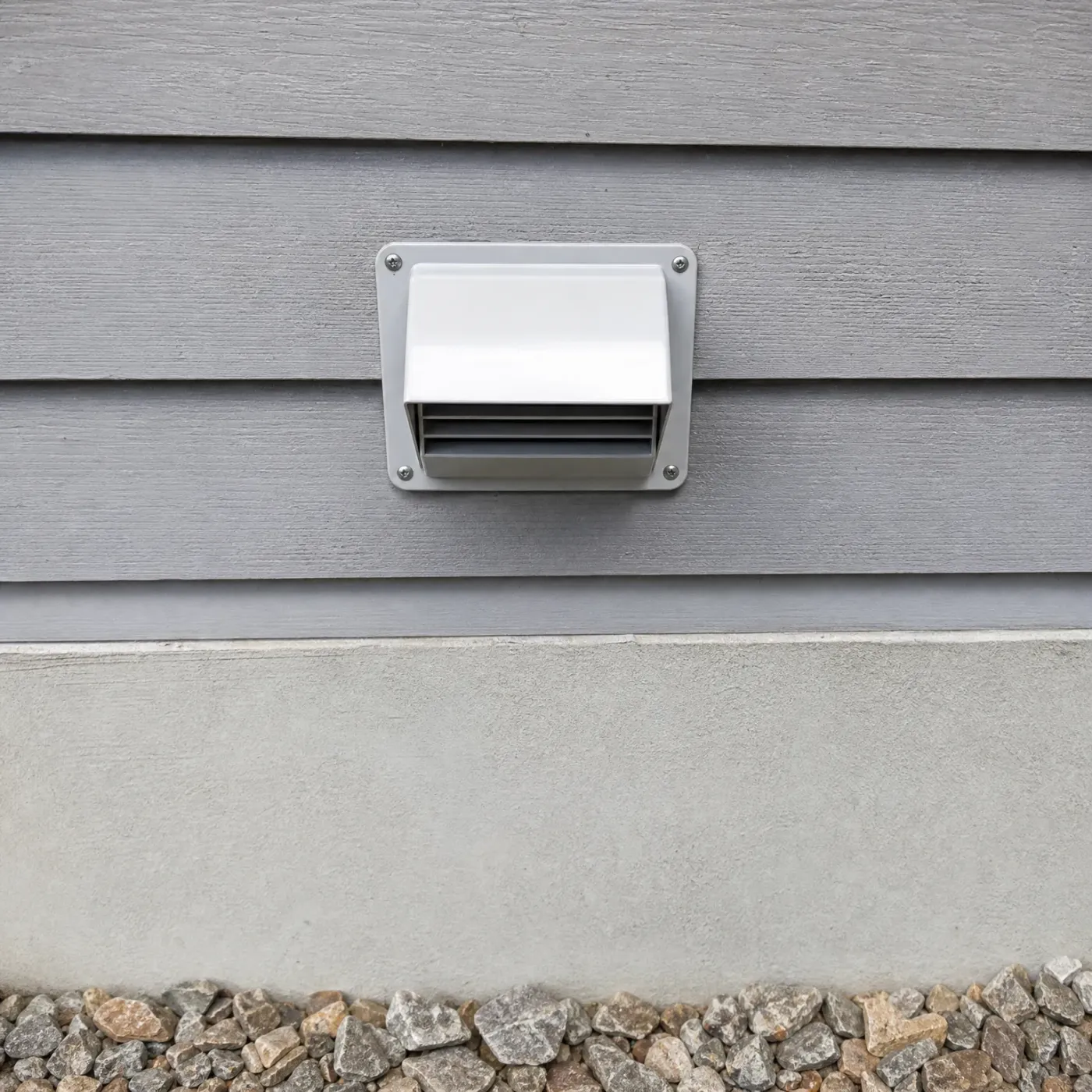
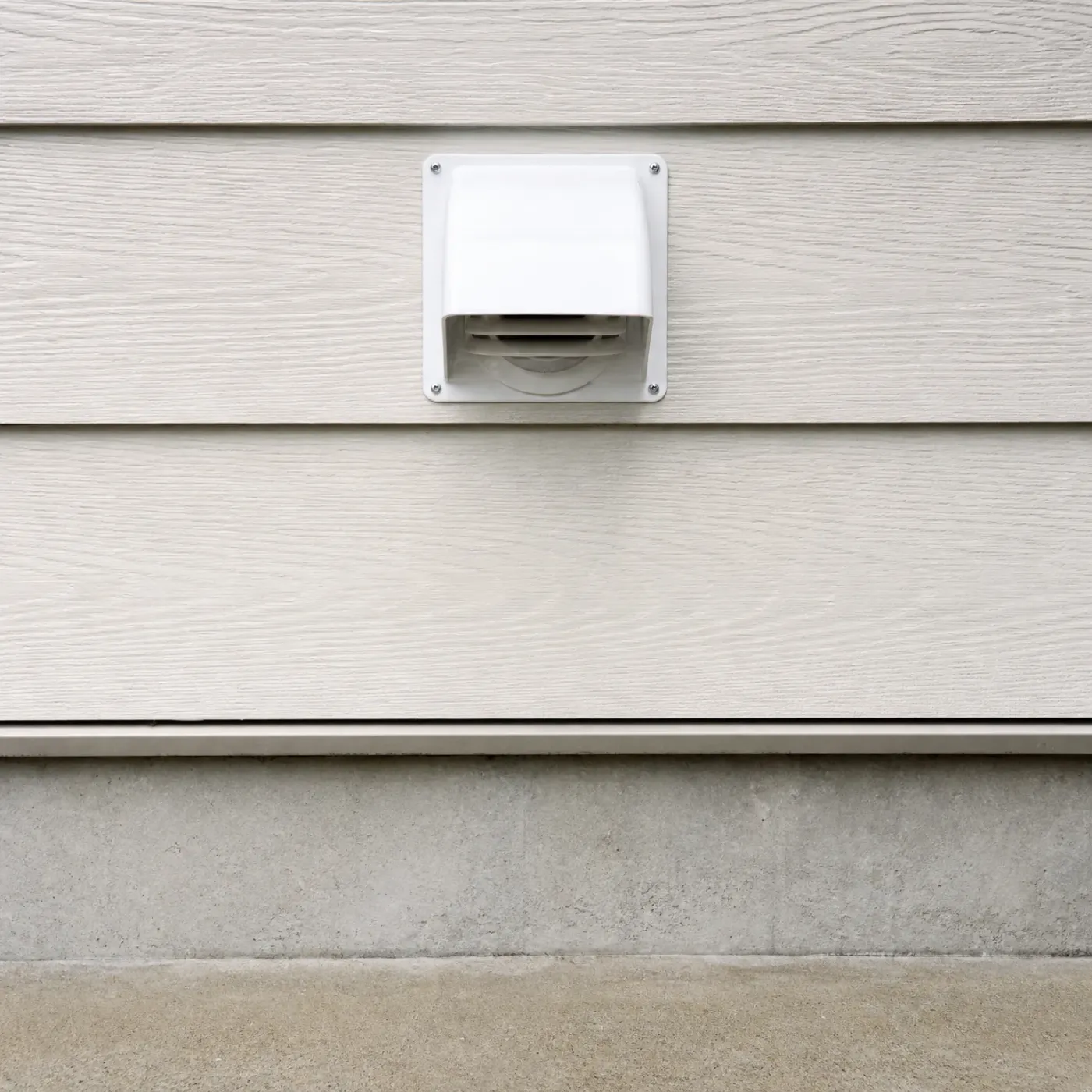
The louvers sit flush against the siding and swing open each time the dryer kicks on. Screws hold the hood tight at all four corners, so it doesn't rattle loose in the wind. Air pushes straight out with the lint, and the hood closes flat again once the load is done.
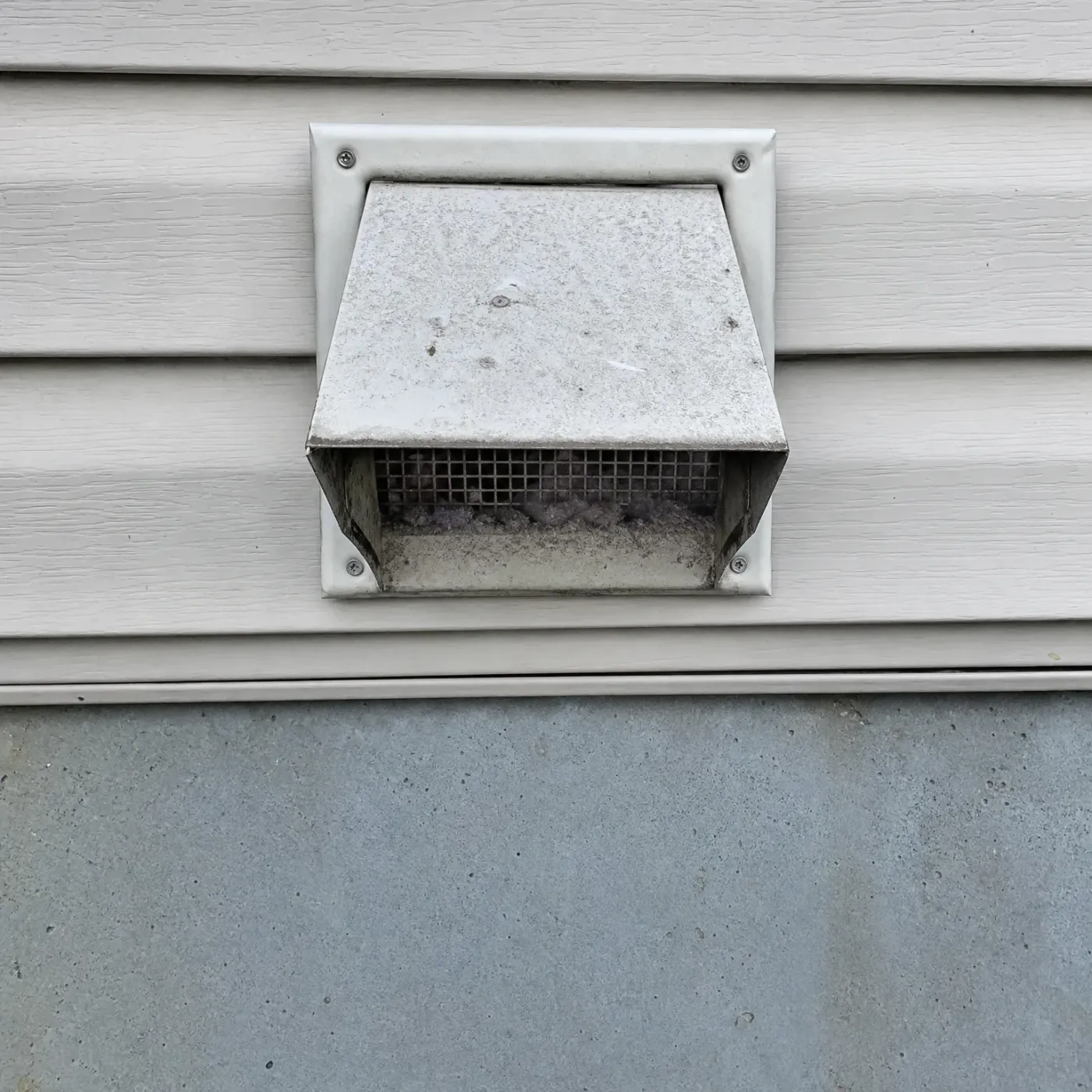
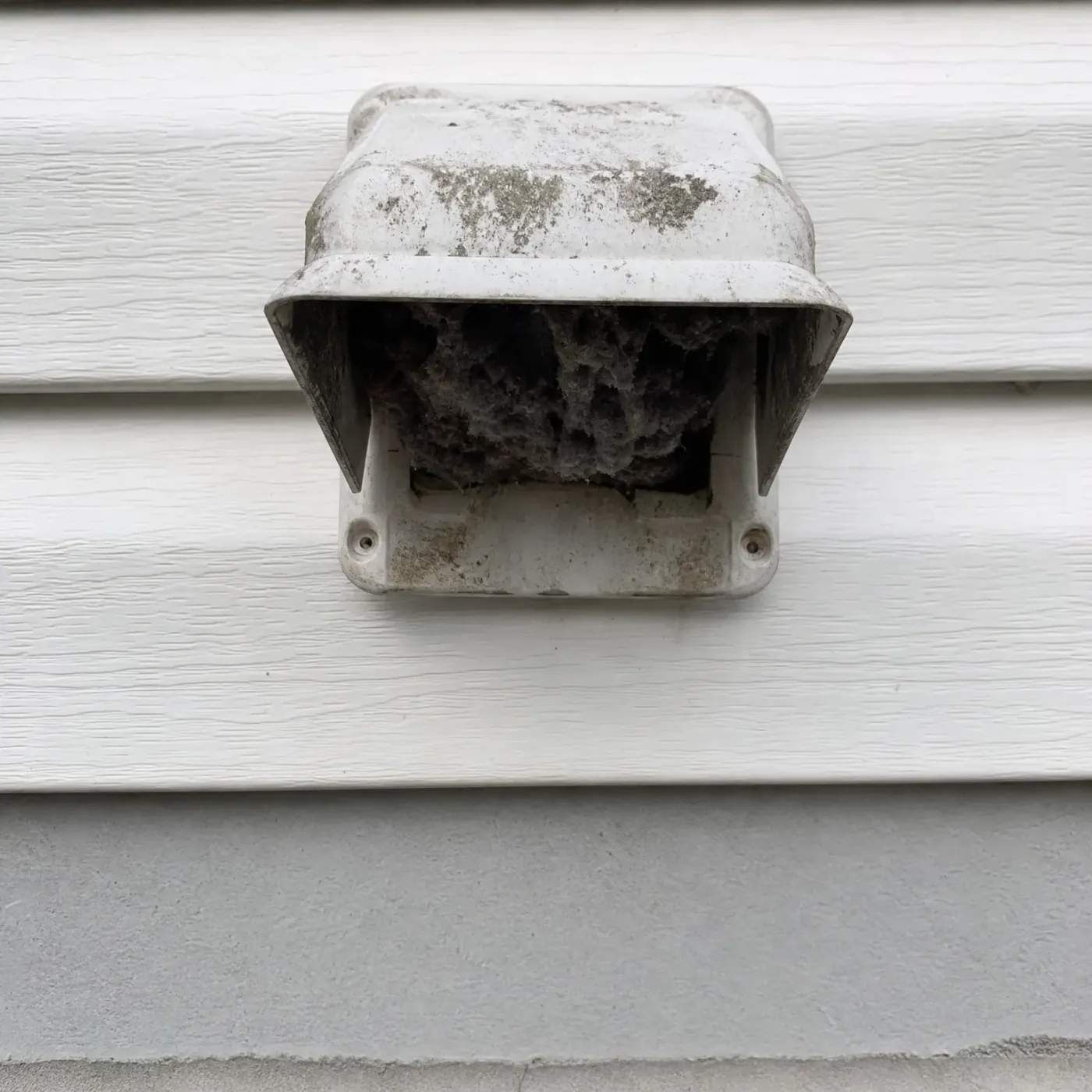
The cap and the mesh screen are coated in a thick layer of lint, and the louvers barely move. Air that should shoot out the hood is fighting its way through a narrowed opening instead. A vent in this shape is why towels need a second cycle to dry.
At 2.69 people, most Benton County houses run a load or two most days, not a single weekly wash. That's more trips of warm, wet lint through the same length of pipe, and more chances for it to pack in tight before anyone notices the dryer slowing down.
ACS 2020-2024





A dryer vent in Rogers wants a once a year cleaning if it's a short, straight run, and twice if the duct bends or stretches past 25 feet or your household does a load most days. That's the number. Everything above it was the reasoning behind it: the lint, the moisture, the bends in the pipe, all pointing at the same answer.
Once you know where you stand, the next step is getting someone out to look at the vent instead of guessing at it. That means skipping the part where you call around, explain the duct run and the lint buildup to three different people, and wait on quotes that don't tell you much. Submit your information once and a contractor who works on vents like yours in Rogers reaches out to you directly, already knowing what you're dealing with.


Find a dryer vent cleaning pro in Benton County



