









Side profile of a bearded man wearing a dark faded baseball cap and a dark gray t-shirt against a plain light background.

Is duct cleaning worth it in Rogers, AR

Duct and vent cleaningDucts or ventsBenton County, AR
Step 1 of 2

What ZIP code is the job in?

It depends on what's going on with your ducts, but for most houses in Rogers it isn't a yearly chore. If nobody in the house has allergies acting up, you haven't had rodents or a leak get into the ductwork, and you can't see dust blowing out of the vents, cleaning the ducts themselves probably won't change much. Where it does matter here is the furnace and AC running hard from a long, sticky summer into a cold winter, since that long runtime pushes more air, and more dust, through the system than a mild climate would. If your vents have visible mold, or you just had duct work or a remodel that left debris behind, that's different, and worth having looked at. Otherwise, the air filter is doing most of the work of keeping the air clean, and changing it on schedule matters more than cleaning the ducts does.

So does your duct system actually need cleaning?

  • Half the homes here were built by 2001

    Half the houses in Benton County date to 2001 or earlier, so a lot of ductwork has had decades to collect dust nobody's looked at.

  • Heat runs October through April

    Heat runs here October through April, about seven months, pushing whatever's sitting in the ducts through the house all winter.

  • Cooling runs May through September

    Add cooling from May through September and the air in your home is moving through those ducts nearly year round.

ACS 2020-2024 · NOAA nClimDiv 1991-2020

When cleaning makes sense

If you had rodents get into the attic or a crawlspace duct run, cleaning is worth doing regardless of how clean the house looks otherwise. The same goes for a water leak that sent moisture into the ducts, since that can grow mold inside the metal where you'll never see it. If someone in the house has allergies that get worse indoors than outdoors, dust and dander sitting in the ductwork is a reasonable thing to rule out. And if a contractor did duct work, like replacing a section or adding a return, cleaning afterward clears out the construction dust that job leaves behind.

When it's probably not needed

A house with no history of pests, leaks or recent duct work, where the filter gets changed on schedule and nobody's having breathing trouble, doesn't need its ducts cleaned on a calendar. Dust sitting in a duct isn't the same as dust blowing into the room. As long as the filter is doing its job, most of what collects in the ductwork stays there. Spending money to clean a system that isn't causing a problem doesn't buy you cleaner air or a system that runs better. It's worth checking the filter and vents first. If those look fine and nobody's symptoms point to the air, cleaning can wait.

Dusty sheet-metal HVAC ducts with a rectangular vent register run beneath wooden floor joists above an empty concrete-walled basement.
Before you get your ductwork cleaning
Empty basement with bare concrete walls and floor, a small window at left, and exposed wood joists with galvanized sheet metal ductwork and pipes overhead.
After you get your ductwork cleaning

How a duct cleaning job works

  • A duct cleaning crew runs a vacuum collection unit at one end of the system to pull everything loose toward a single exit point.
  • Each supply and return line gets agitated with a brush or compressed air tool so dust stuck to the inside walls breaks free and moves to the vacuum.
  • The furnace or air handler coil and blower housing get cleaned too, since dust settles there as much as inside the ducts themselves.
  • Registers and grilles come off during the job so the tool can reach straight into the duct run instead of working around them.
  • A camera inspection before the work starts shows whether the buildup is light dust or something heavier like rodent debris or standing mold.
  • The whole system gets sealed and tested for suction at the end so no line was left only half cleared.

A duct cleaning job starts with a look, not a tool. A technician runs a camera into the system first to see what's actually in there, whether it's just dust or something heavier like rodent debris or mold from a leak. That decides how the rest of the job goes. Once the work starts, a vacuum collection unit hooks up at one end of the system and stays on through the whole job, pulling loose material toward a single exit point so nothing gets pushed deeper into the house. Registers and grilles come off room by room, since the tool needs a straight path into each duct run rather than working around a cover. A brush or compressed air tool goes through every supply and return line to knock dust off the inside walls, where it's been sitting since the system was last touched. The furnace or air handler coil and blower housing get the same treatment, because dust collects there just as much as it does in the ductwork, and a dirty coil affects how the system runs. Once every line has been cleared, the registers go back on and the system gets sealed up and tested for suction, which is how the crew confirms nothing was left half done partway through the house.

A woman wrapped in a chunky knit blanket sits in an armchair with an open book on her lap, beside a lit table lamp and a window with frost and snow outside.
An older woman in a cream knit sweater smiles while looking off-camera in a warmly lit kitchen, with a round loaf of bread on a wooden board in the foreground and a dark window behind her.

A duct system holds onto whatever has settled in it, and your furnace and AC just keep moving that air through the house. If there's dust built up, it's landing on the same surfaces you just wiped down, and it's doing that every time the system cycles. Humidity climbing through a Rogers summer gives mold a better shot at taking hold in a system that's already carrying dust and moisture. If something got in there, droppings or a leak that dried out, that doesn't clean itself up. It stays until someone pulls it out, and until then it's part of the air moving through every room on the system, not just the one closest to the problem. Crusted register covers are usually the visible edge of what's sitting further back in the line. None of this is dramatic on its own, but for anyone in the house dealing with allergies or asthma, it's the air they're breathing all day. That's the part worth weighing before deciding whether cleaning is worth it for your house.

What dirty ducts mean for your house

  • A duct system matted with dust gives mold and mildew a place to take hold once humidity climbs during a Rogers summer.
  • Dust pulled back into the air every time the furnace or AC kicks on can leave a film on furniture and floors within days.
  • A litter of mouse or squirrel droppings inside a duct run keeps circulating through the house until someone has it cleaned out.
  • Register covers crusted with dust are usually a sign of what's built up further back in the line, not just a surface problem.
  • A leak that reached the ductwork and dried on its own can still leave mold spores for the blower to spread room to room.
  • Anyone in the house who deals with allergies or asthma is breathing whatever the ducts are holding onto, all day, every day.
A gray-haired bearded man in a dark snow-dusted coat and scarf stands inside a dimly lit home entryway, with a hallway, framed picture, lit table lamp and staircase behind him.
An older man with gray hair and a beard, wearing a dark snow-dusted coat, stands in a warmly lit home entryway with a hallway, console table with lamp, patterned rug, and living room visible behind him.
An older man with gray hair and a beard, wearing a dark coat dusted with snow and a blue plaid scarf, stands smiling in a dimly lit entryway with a window, framed picture, table lamp and staircase behind him.
A gray-haired man in a dark coat dusted with snow stands in a warmly lit home entryway, with a lamp, sofa, window and white staircase banister behind him.
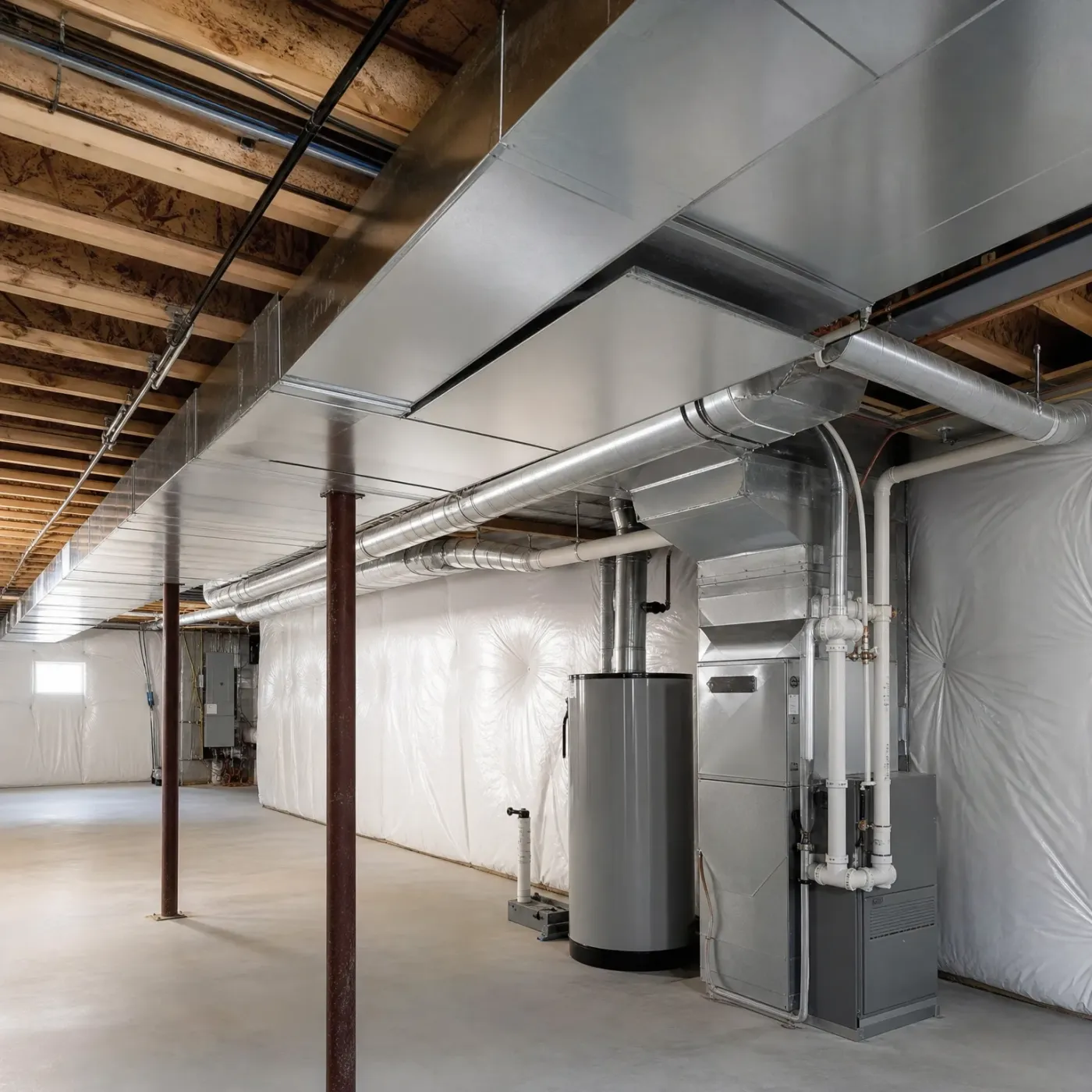
Unfinished basement with concrete floor, plastic-sheeted insulated walls, exposed wood joists, metal support posts, sheet-metal supply ducts, a cylindrical water heater and a furnace with PVC piping.

A duct system pro near you

One request and the duct cleaning stops waiting on you.

Get matched with a Benton County pro who cleans ducts.

Find a duct system pro

Sending the form costs nothing.

Clean Your Ducts or Leave Them

Skip it

  • No one in the house has allergies that flare up worse indoors than outdoors, and nobody has pointed to the vents as the cause.
  • You haven't had a rodent problem in the attic or crawlspace, and no water has ever leaked into a duct run.
  • Vents blow air clean, with no visible dust kicked out when the furnace or AC starts up.
  • Filters have been changed on a regular schedule, which keeps a lot of the dust from ever reaching the ducts in the first place.
  • The system is original to the house and has run this long without anyone noticing a problem with the air it moves.

Get it cleaned

  • Rodents got into a duct run in the attic or crawlspace at some point, leaving droppings or nesting material a vacuum crew needs to remove.
  • A water leak sent moisture into the ductwork, which is exactly the kind of damp, dark space mold needs to take hold.
  • Dust visibly blows out of the registers when the air kicks on, something you can usually see on a dark surface nearby.
  • Someone in the house has new or worsening allergy symptoms that ease up when they're away from home.
  • The ducts haven't been touched since the house was built in 2001 or earlier, and nobody's ever looked inside them.
A basement with a gray furnace on a concrete pad connected to large sheet-metal ducts running along an exposed wood joist ceiling, with PVC pipes and plastic sheeting on the walls.

Ducts running clean

This is a system doing its job. Air moves through the plenum and out to each room without dragging years of dust along with it. The furnace, the lines overhead, the joists above, all of it stays as it should, and nothing extra gets added to the air moving through your house.


Galvanized sheet metal HVAC ductwork with a vent grille running along a wooden joist ceiling above a bare concrete wall.

Ducts in trouble

Here the duct run sits exposed below the floor joists, open to whatever collects in the crawlspace, a rodent, a leak, loose wiring nearby. Any of that can end up inside the duct and then in the air a register pushes into a room.

How does a duct cleaning crew actually clean the ducts?

You've seen the vents and maybe the furnace, but the ductwork itself runs inside walls, the attic and under the house where you can't see it. If someone's coming to clean it, it helps to know what they're actually doing back there, not just that a truck shows up and a few hours later it's done.

A vacuum pulls from one end while tools knock dust loose at every line

The crew sets up a vacuum collection unit connected to the main trunk, usually through an access cut near the furnace, and it runs the whole time the work is happening so loosened dust has somewhere to go instead of settling back into the system. While that's pulling, each supply and return line gets worked with a brush or a compressed air tool, run down the inside of the duct to knock dust off the walls where it's been stuck, sometimes for years. The vents themselves come off and get wiped down or washed. Once every line has been hit and the registers are back on, what's left in the ducts is whatever didn't come loose, which on a system that was never cleaned is a lot less than what came out.

  1. A crew seals off every supply and return vent except one access point.

  2. A vacuum collection unit hooks up there to pull debris out of the system.

  3. Each duct run gets agitated with a brush or air tool to break dust loose.

  4. Loosened dust travels through the ducts into the vacuum unit and out of the house.

Power here costs 12.77 cents per kilowatt-hour

At 12.77 cents a kilowatt-hour, running the furnace blower or the AC through ducts packed with dust doesn't cost much extra here. But clogged ducts make that blower work harder to push the same air, and that's wear on equipment you'd rather not pay to replace early.

EIA-861 2025

A man in a blue sweatshirt and cap carries a red and black tool bag up a paved walkway toward a house entrance where another man in a tan sweater stands in the open doorway, with stone-clad columns, wall lights, and potted mums nearby.

Where that leaves your ducts

So the answer for most houses in Rogers is no, not on a schedule. Clean them when something points to it: rodents got into the attic, a leak reached a duct run, or someone in the house is reacting to something that traces back to the vents. Otherwise the system is doing what it's built to do, and cleaning it won't make it do that job better.

If one of those signs fits your house, you don't have to figure out the rest on your own. A contractor who works on duct systems in Benton County can look at what you're dealing with and tell you plainly whether cleaning will fix it. Answer a few questions about your situation and someone who handles this work will reach out to you directly, so you're not the one tracking down who to call.

A gray upholstered sofa with a matching cushion sits beside a potted plant and a wooden table holding a small green plant in a stone pot, near a curtained window.
A white gabled house with a dark metal roof and chimney seen among dense trees draped with Spanish moss, with a tall pine and layered hazy mountain ridges in the background under a pale cloudy sky.

Get matched with a duct system pro in Benton County

Get a local pro

You're not committing to anything by asking.

A crew that cleans ducts for a living will spot things a homeowner wouldn't, like a disconnected run in the attic or a sign rodents got in before they did more damage. Sending the request costs you nothing and gets you someone who can tell you straight whether your system needs it.