Signs your ducts need cleaning in Fayetteville, AR

Get matched with someone who does this kind of work in Washington County.

Connect with a pro

Dust coming out of the vents when the air kicks on is the clearest sign. You might also notice a musty smell that doesn't go away, rooms that stay dusty no matter how often you clean, or a furnace filter that looks gray within a few weeks instead of lasting months. Washington County homes run the furnace hard through the cold months and the AC hard through the sticky summers, and that constant airflow pushes dust, pollen and pet hair deeper into the ductwork over time. Once enough builds up, the system starts recirculating it through the house instead of filtering it out. If anyone in the house has started sneezing more indoors than outside, or you can see dust settling on surfaces soon after dusting, the ducts are likely part of the reason. It doesn't mean anything is broken. It means the duct system is overdue for a cleaning.

Why does duct dust build up so fast in a Washington County house?

  • Half the homes here were built by 1995

    Half the homes in Washington County were built in 1995 or earlier, per Census data. Older duct runs have had more years to collect dust, pet hair and debris.

  • Heat runs October through April

    Heat runs October through April here, about seven months. That's seven months of air moving through the same ducts, pushing whatever is in them into every room.

  • Cooling runs June through September

    Cooling runs June through September. Add that to the heating months and the system is on most of the year, giving dust and debris little time to just sit still.

ACS 2020-2024 · NOAA nClimDiv 1991-2020

Dust that's just dust

Some dust in the ducts is normal. Every house has it, and a light coating on the inside of a duct run doesn't mean much on its own. If your filter still looks clean a month in, your rooms don't gather dust fast, and nobody in the house is coughing or stuffy more indoors than out, the system is probably doing its job. You don't need to act on dust alone. It's the other signs, the smell, the visible buildup, the filter going gray in weeks, that tell you something has changed and is worth a second look.

Dust that means something

When dust is coming out of the vents themselves, or you can see it built up at the grille, that's not normal and it won't clear up on its own. Add a musty smell that sticks around no matter how much you clean, or a filter that's gray again within a couple weeks of replacing it, and you've got a pattern. That pattern is what a contractor needs to hear about. Calling around to explain it to two or three different companies, then sorting through what each one quotes you, takes time you don't have to spend twice.

An older man with gray hair and a beard stands in a doorway of a home, wearing a dark coat dusted with snow, with a lit fireplace and lamp visible in the blurred room behind him.
A bearded older man in a dark snow-dusted coat and scarf stands just inside a home's front door, with a lamp-lit room and snowy window visible behind him.
An older man with gray hair and a beard wearing a dark snow-dusted coat stands in a home entryway, with a lamp-lit living room and a wooden staircase behind him.
An older man with gray hair, a dark coat and scarf dusted with snow stands in a warmly lit entryway with an open wooden door, a table lamp, framed pictures, and a plant in a vase.

Every time your air handler kicks on, it pulls return air through the same metal runs, over and over, dozens of times a day. Some debris sticks to the inside walls each pass. That buildup isn't even across the system. Runs closer to the furnace collect more than runs out at the far vents, because air loses speed moving through bends and joints and drops what it's carrying. If your ducts are flex duct instead of sheet metal, which is common in crawlspaces and attics around here, the ribbed interior holds onto dust more than a smooth run would, even on the same cleaning schedule. A loose seam at the return plenum makes it worse, since it draws in attic or crawlspace air that never passes through the filter at all. A cleaning crew works through this room by room, running a brush or air whip through each section while a vacuum pulls out what comes loose, working back toward the furnace or air handler. Afterward, a new filter and a sealed return are what keep the buildup from starting right back up.

How dust actually builds up

  • Air handlers pull return air through the duct system dozens of times a day, and each pass leaves a little more debris stuck to the inside of the metal.
  • A duct cleaning crew runs a brush or air whip through each run while a vacuum collects what breaks loose, working room by room back to the furnace or air handler.
  • Supply runs near the furnace tend to collect more dust than runs far out at the vents, since air slows down as it moves through bends and joints.
  • Flex duct, common in crawlspaces and attics, holds dust in its ribbed interior more than smooth sheet metal does, so it can look dirtier even on the same cleaning schedule.
  • A return plenum with a loose seam pulls in attic or crawlspace air along with the air from your rooms, adding dust the filter never gets a chance to catch.
  • Once the ducts are cleaned, a new filter and a tight seal at the return keep the system from collecting that much buildup again right away.
A woman wrapped in a thick fleece blanket sits on a sofa holding an open book, beside a lit table lamp and a frost-covered dark window.
An older woman with grey-blonde hair in an updo and a beige turtleneck sweater smiles while looking to the side in a warmly lit kitchen, with a round loaf of bread on the counter in front of her and a dark window showing snow outside.

1995 or earlier

Half the duct systems in Washington County have been collecting debris since before that year, with no cleaning in between for most of them.

Find a pro near me

Dozens of passes a day

That's how many times the air handler pulls return air through the ducts, leaving a little more behind each trip through the metal.

Find a pro near me

Can dirty ducts actually make my allergies worse?

If allergies seem worse at home than anywhere else, and you notice it most when the heat or air kicks on, it's a fair question whether the ducts themselves are part of the problem, not just the usual pollen or seasonal stuff.

Yes, if what's built up in there is pet dander, pollen or mold

Dust by itself mostly just sits in the duct until airflow moves it along. But pet dander, pollen tracked in from outside, and mold spores behave differently. They're light enough to get pulled into the airstream every time the air handler kicks on, which in a Washington County summer or winter is dozens of times a day. If your ducts are holding onto those, you're breathing a little of it with every cycle. Mold is the one to take seriously, especially if there's ever been a leak or condensation near the ductwork, since it can grow inside the run where you'd never see it. A musty smell is often the only clue it's there.

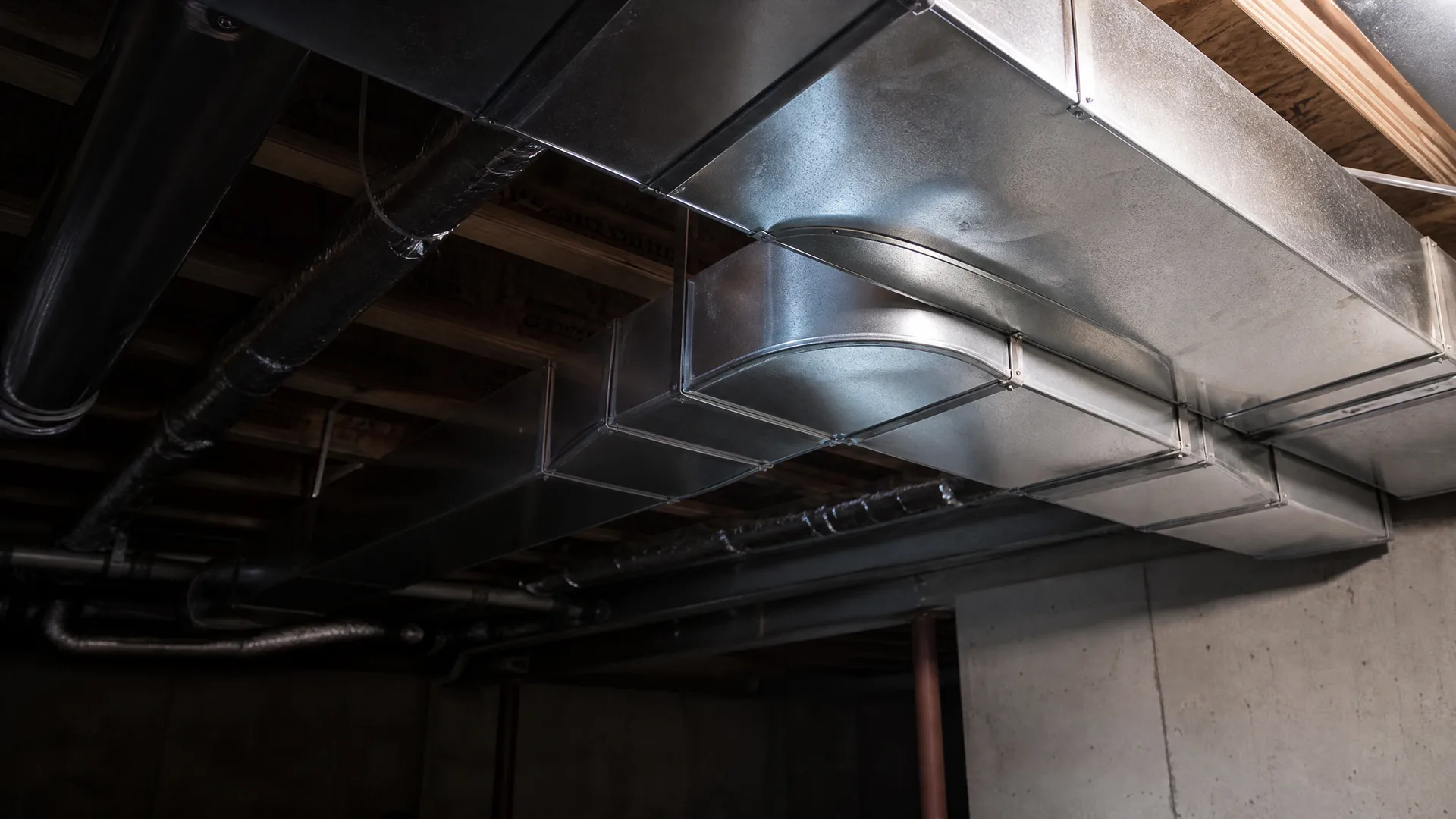
Basement ceiling with galvanized sheet-metal ductwork, wooden joists and subfloor, black and white pipes, above a concrete wall and floor.
Before you get your ductwork cleaning
Unfinished basement with bare concrete walls and floor, exposed wood joists, and galvanized sheet-metal HVAC ductwork and pipes running across the ceiling.
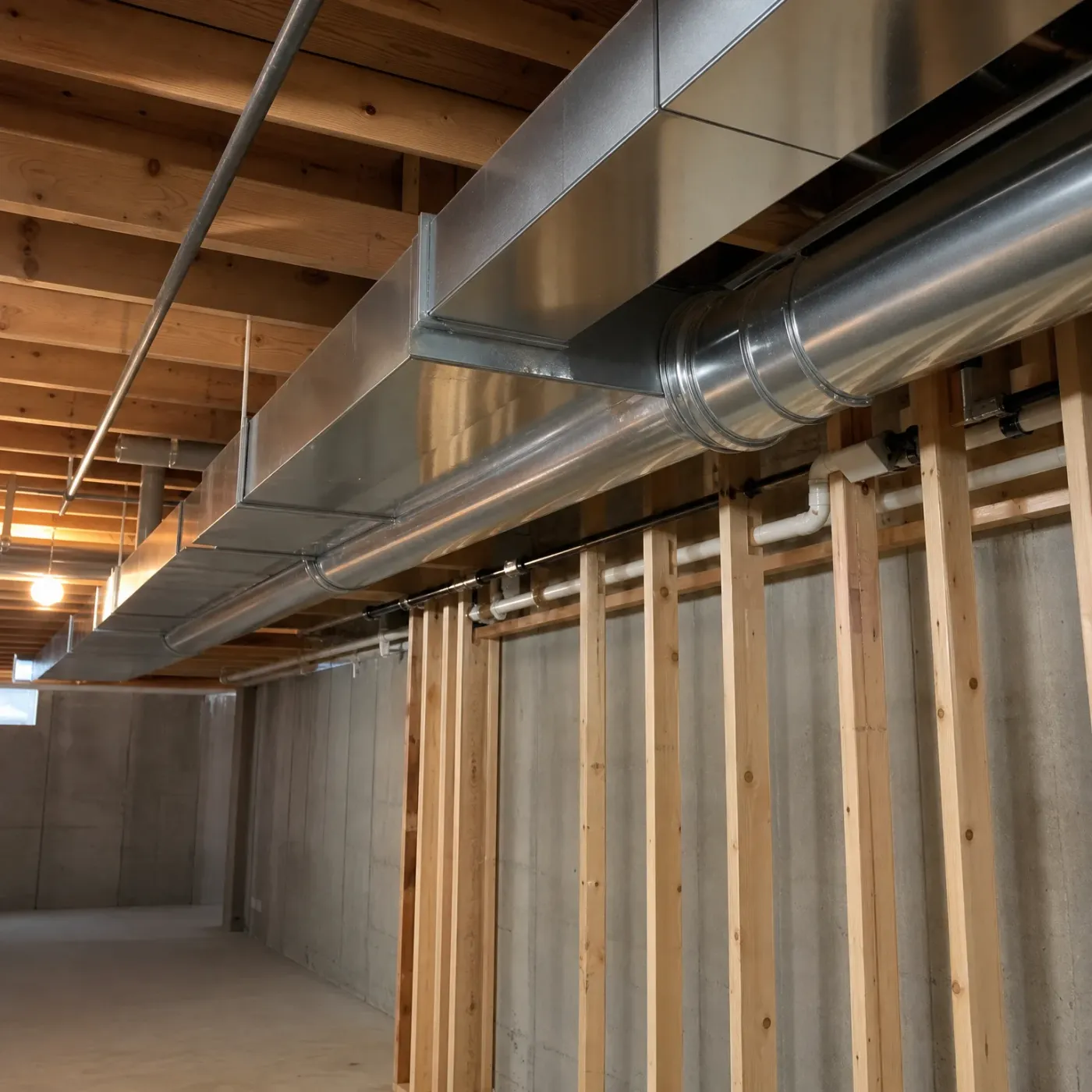
After you get your ductwork cleaning
Unfinished basement with exposed wood joists, galvanized rectangular and round ductwork, piping, stud framing against concrete walls, and a bare hanging light bulb.

The right pro for this job

Skip searching for a duct system pro and answer a few questions instead.

Get matched with a pro who works on ducts in Washington County.

Get my match

Asking costs nothing, and the choice to hire stays yours.

Why does my house feel dustier than it should?

You dust the shelves on a Saturday and by Wednesday there's a film on them again. Vents near the ceiling have a ring of gray around the edges. The air feels heavier in rooms that sit at the end of a duct run, and a sneeze or a cough shows up more at home than it does at work or anywhere else you spend time. Some of this is just a Washington County house doing what houses do, but when it keeps up month after month, it usually means the ducts are feeding dust back into the rooms instead of just carrying air through them. Left alone, that buildup keeps circulating through every room on the system, not just the one you're standing in.

  1. A technician inspects every duct run with a camera before touching anything.

  2. Each supply and return vent gets sealed off except one access point.

  3. A vacuum attaches to that opening and pulls the whole system under negative pressure.

  4. A brush or air whip knocks debris loose from the inside of each run.

Empty unfinished basement with bare concrete floor, insulated walls with vapor barrier between wood studs, exposed wood joists, galvanized sheet-metal ductwork, a recessed light, and a steel support column.
Ducts in good shape move air through clean metal, with the insulation and framing around them doing their job.
Empty basement room with bare concrete walls and floor, exposed wooden floor joists overhead, large galvanized sheet-metal ducts with a vent grille, colored pipes, and a single lit bulb.
Loose, open joists and bare concrete give dust and debris more surfaces to settle on before the ducts carry it right back into your rooms.

How a duct cleaning actually works

  • Negative pressure keeps debris moving toward the vacuum instead of scattering it into the room through the one open vent.
  • A whip agitates the inside of the metal while the vacuum pulls loose material out before it resettles further down the run.
  • Return ducts usually carry more buildup than supply ducts because they pull air straight off the floor and off carpets.
  • Flex duct and sheet metal get cleaned differently, since the brush that works on rigid metal can tear the liner of flex duct.
  • The furnace coil and blower wheel sit outside the duct run itself, so a duct cleaning doesn't reach either one.
  • A camera pass after the cleaning confirms the brush and vacuum actually reached the far end of each run, not just the first few feet.

A cleaning crew doesn't just run a vacuum through the ducts and call it done. The system gets sealed up first, with every vent covered except one access point, and a vacuum pulls that whole section under negative pressure. That pressure is what keeps loosened debris heading toward the vacuum instead of puffing dust back into your living room. With the pressure holding, a brush or air whip goes through each run to knock material loose from the metal, working section by section so nothing just gets pushed further down the line and left there.

Return ducts usually need more attention than supply ducts. They're the ones pulling air off the floor, off carpets, out of whatever's settled near the registers, so they tend to carry more buildup. The material matters too. Flex duct has a thin liner inside it, and the same stiff brush that scrubs sheet metal clean will tear that liner, so a crew working flex duct has to use a gentler method.

Worth knowing going in: the furnace coil and the blower wheel aren't part of this. They sit outside the duct run, so cleaning the ducts doesn't touch either one. Once the ducts are done, a camera run through the system checks that the brush and vacuum actually made it to the far end of each run, not just the first few feet near the access point.


Power here costs 13.18 cents per kilowatt-hour

At 13.18 cents per kilowatt-hour, running the blower longer than it needs to costs you something every month. Dirty ducts make the air handler work harder to push air through, and that extra runtime shows up on your bill before it shows up anywhere else.

EIA-861 2025

Unfinished basement with bare concrete floor and walls, exposed wood joists, large galvanized sheet-metal ductwork, PVC and copper piping, and a gray furnace unit beside wood stud framing.

Ductwork doing its job

Metal runs like this move air across the basement with no mess to speak of. The joists stay dry, the duct sits tight at every seam, and air gets to your rooms without picking up anything along the way.

Basement ceiling with large galvanized sheet-metal ductwork, round metal pipes and plumbing lines running beneath wood joists, above a bare concrete wall and floor.

Ductwork worth a second look

Water staining on the foundation wall like this means moisture has been getting in. Damp duct runs and joists give dust and debris a place to stick, and that staining is worth asking a technician about when they're already in the basement.

A woman in a cream sweater stands in an open doorway of a single-story house with horizontal siding and a stone-veneer base, facing a man in a blue shirt with a bag strap seen from behind in the foreground.

Dust, smell, and a filter that doesn't last are the signs that matter

Gray dust at the vents, a musty smell that lingers, a filter that's dirty again in a few weeks. One of those might mean nothing. All three together, in a house that's old enough to have years of buildup in the runs, is worth a closer look. That's the whole answer. What you do with it is up to you.

If you'd rather not spend a Saturday calling around Washington County for someone who does duct cleaning, describing the gray rings and the musty smell more than once, and sorting through quotes that don't tell you much, you don't have to. Answer a few questions about what you're seeing in your house and a contractor who handles this work will reach out to you directly, already knowing what you told them.

Interior corner of a room with a window and sheer curtain at left, a gray upholstered sofa with a cushion at right, and a round wooden table holding stacked books and a round vase with an olive branch.
Galvanized sheet metal rectangular HVAC ductwork running beneath wooden floor joists in an unfinished basement, with insulated pipes and a concrete wall nearby.

Matched to your ductwork job

Duct and vent cleaningDucts or ventsWashington County, AR
Step 1 of 2

What ZIP code is the job in?