

Arkansas HVAC Guide

Why your house is so dusty in Arkansas

A local pro who cleans ducts gets in touch with you.

Match me with a pro

Dust that builds up fast usually means your ducts are moving it around the house instead of filtering it out. Every time your system runs, it pulls air through return vents, pushes it past the filter, and sends it through the ductwork to every room. If there's a gap in that ductwork, a loose connection, or buildup inside from years of use, the air picks up dust along the way instead of just the dust already in your rooms. Arkansas summers are muggy enough that systems run long hours moving air, which means more cycles pushing that dust through the house. A dirty filter makes it worse, but even a clean one won't catch what's already loose inside the ducts themselves. If you're dusting the same surfaces every few days and it never seems to stop, the dust is likely coming from inside the system, not just settling from the room air.

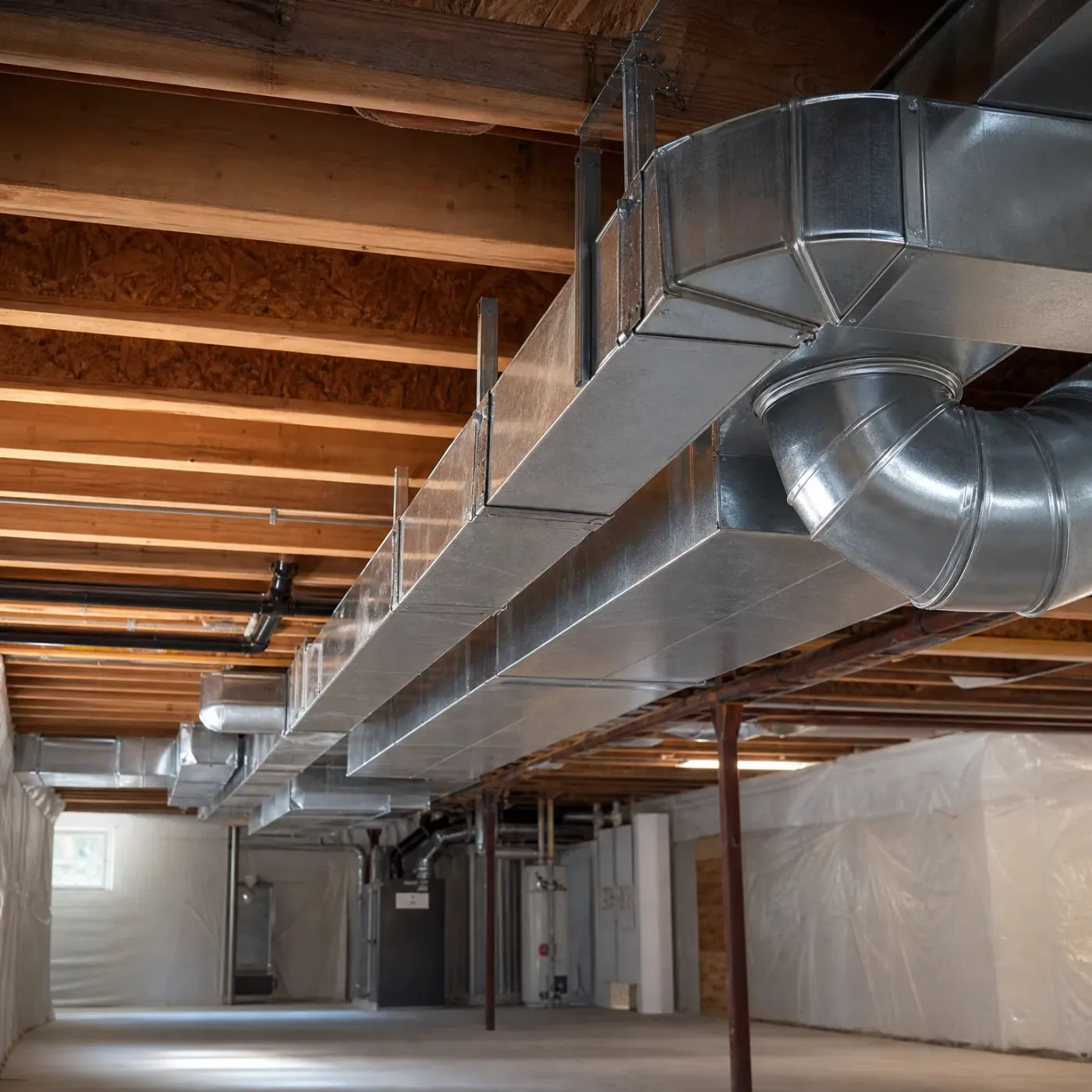
Empty unfinished basement with bare concrete walls and floor, showing galvanized sheet metal ductwork, insulated flexible duct, and pipes running along the wood-framed ceiling, with a small window at left.

Clean duct run

This is sheet metal doing its job. Air moves through sealed seams, past the filter, and out to your rooms without picking up anything along the way. A setup like this holds its filtering and cuts way down on how much dust ever leaves the vents.


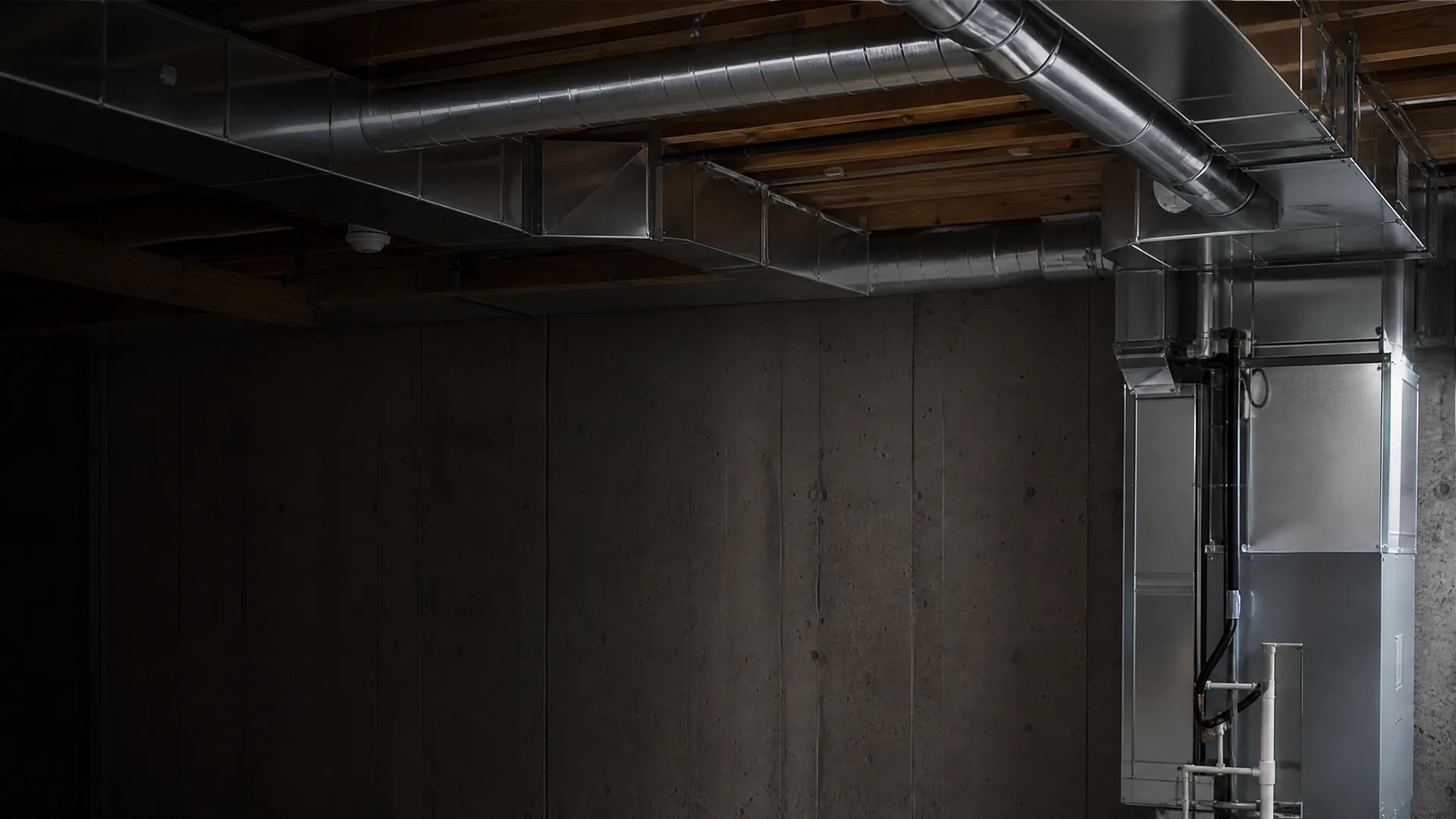
Empty basement room with bare concrete walls and floor, with exposed wooden joists, sheet-metal HVAC ducts, an insulated flexible duct, and pipes running across the ceiling.

Duct run in trouble

Gaps in the joints or a loose connection let air bypass the filter entirely. It pulls in whatever's sitting in the basement, behind the insulation, around the wiring, and pushes it straight into your living room. Your filter never gets a chance to catch any of it.

An older man with gray hair and a beard stands in a dimly lit entryway wearing a dark hooded coat dusted with snow, with a lit table lamp, framed picture, and front door with glass panels behind him.
An older man with gray hair and a beard, wearing a dark snow-dusted jacket and scarf, stands smiling in a dimly lit entry hall with a lamp, wooden front door and staircase behind him.
A gray-haired bearded man in a dark coat with snow flecks on the shoulders stands just inside a dimly lit home entryway, with a lamp, framed pictures, sofa and candle-style lights in the background.
An older man with gray hair and a beard, wearing a dark coat and scarf dusted with snow, stands in a warmly lit home entryway with an arched doorway, lamps, and a living room visible behind him.

Every return vent in your house is pulling air, and it pulls from wherever it sits, so a room with a nearby return feeds its dust straight into the system. From there, what happens depends on the condition of the ducts themselves. A loose joint under the house or up in the attic lets in insulation fibers and attic dust before that air ever reaches a room. A bad seal at the furnace cabinet does something similar, letting air slip past the filter instead of through it. Flex duct that sags between joists or gets pinched slows the air down enough that dust drops out and collects inside the run rather than traveling on. Airflow problems compound this in rooms farthest from the furnace, where weaker airflow gives dust more time to settle before anything pulls it back out. And if the blower keeps running past when it should shut off, it stirs settled dust back into the air on a loop. None of this is about how often you clean. It's about what the ductwork is doing between cleanings.

Where the dust actually comes from

  • Your return vents pull air from every room, so whatever settles on the floor near one gets drawn straight into the ductwork.
  • A gap at a duct joint under the house or in the attic pulls in insulation fibers and attic dust and feeds it right into your supply air.
  • The filter only catches what actually passes through it, so air leaking around a bad seal at the furnace cabinet skips it entirely.
  • Flex duct that sags or gets crushed between joists slows airflow and lets dust drop out of the stream and build up inside the run.
  • A blower that keeps running after the thermostat is satisfied keeps stirring settled dust back into the air long after the cycle should have ended.
  • Rooms far from the furnace often get the least airflow, which means dust has more time to settle before it ever gets pulled back to the filter.
A woman wrapped in a thick cream knit blanket sits in an armchair beside a lit table lamp, with an open book in the foreground and a frost-covered window behind her.
A woman in a cream knit sweater sits in an armchair indoors, eyes closed and smiling, beside a window showing yellow and orange autumn foliage, with a mug on a wooden side table and shelves holding vases behind her.
Unfinished basement with galvanized sheet-metal trunk ductwork and round branch ducts suspended beneath wood floor joists, with support posts, plastic sheeting on the walls, and a furnace and water heater along the far wall.

A duct system pro near you

Skip calling around for someone who cleans ducts.

Your duct cleaning request goes to a local pro who does this work.

Skip the calls

It costs nothing to send, and you don't have to hire anyone.

Clean Ducts or Fix the Source First

Clean the ducts first

  • If the dust is new and heavier than it used to be, something changed in the duct system itself, and cleaning addresses that directly.
  • A contractor can run a camera through the supply and return lines and show you where the buildup is before anything gets pulled out.
  • Loose insulation fibers, drywall dust from a remodel, or debris from rodents in the attic get removed instead of recirculated every time the system runs.
  • Sealing a gap or a disconnected joint matters less if years of settled dust are still sitting in the ductwork waiting to get stirred loose.
  • This is the lower-effort fix if your filter is rated correctly and fits tight, since the problem is likely what is already inside the ducts.

Fix the filter and seal first

  • If the filter is the wrong size, the wrong rating, or not seated tight in its slot, air is bypassing it on every pass regardless of how clean the ducts are.
  • A gap at a joint under the house or in the attic keeps feeding new dust in, so cleaning the ducts without sealing it just buys you a few months.
  • Checking the filter slot and the visible duct runs for gaps costs you nothing and takes less time than scheduling a full cleaning.
  • If dust has been a problem since you moved in rather than a recent change, an ongoing leak or an undersized filter is the more likely cause.
  • This is worth ruling out first if you want to know whether cleaning alone will actually hold, since a sealed, well-filtered system stays cleaner longer between cleanings.
Unfinished basement with exposed wood joists, galvanized sheet-metal ductwork, insulated flex ducts, piping, a small window, and a furnace or air handler against a gray wall.

Ductwork running clean

This basement shows a duct system doing what it should. Galvanized trunk lines and flex duct run tight to the furnace, seams sealed, nothing loose at the joints. Air moves through that run and out to your rooms without picking up anything it shouldn't.

Empty basement room with bare concrete walls and floor, and an exposed ceiling of wooden joists with large galvanized sheet-metal ductwork and pipes.

Ductwork open to the house

Here the ducts run across exposed joists with conduit and junction boxes sharing the same space. Any gap in a seam this close to unfinished framing pulls in whatever is sitting up there and carries it straight into the air you breathe. A contractor can check whether a run like this is sealed the way it should be.

Power costs 12.87 cents per kilowatt-hour statewide

Most homes in Arkansas heat with electricity, and at under 13 cents a kilowatt-hour, running the system longer than it needs to doesn't hit your bill that hard. That's exactly why dusty ducts go unnoticed here. Nothing's pushing you to cut the runtime that keeps stirring dust through the house.

EIA-861 2025 statewide residential average

  1. Return vents pull household air, dust and all, into the ducts

  2. Air passes through the filter before reaching the blower

  3. The blower pushes that air through the trunk line and branches

  4. Any loose dust or debris already in the ducts rides along with it

A woman stands in the open front doorway of a single-story house with a dark hipped roof and light siding, while a man in a navy jacket and cap is seen from behind in the foreground on the paved walkway.

Your ducts decide how much dust settles back out

Dust that keeps coming back fast isn't about how often you run a cloth over the furniture. It's about what your system is pushing through the house every time it cycles on. Sealed ducts move air and nothing else. Ducts with a gap at a joint or buildup sitting in the trunk line move air and whatever has collected in there with it. That's the difference between dusting once a week and dusting every other day.

A contractor who looks at your duct system can tell you which one you've got, and whether cleaning it actually changes what's landing on your shelves. You won't have to describe the problem to five different companies or sort through quotes to find someone who knows what they're looking at. You get matched with a contractor who takes on jobs like yours, and they'll reach out to go over what your ducts need.

A living room with a cream sofa and knit throw beside a window, with a wooden coffee table in the foreground holding a round woven tray, a small bowl, and a speckled vase of green leafy branches.
Unfinished basement with poured concrete walls, exposed wooden joists, and galvanized sheet-metal supply ducts and round pipes running along the ceiling to a furnace unit at right.

A local pro for your ductwork cleaning

Answer a few questions about the duct cleaning and skip the search.

Duct and vent cleaningDucts or ventsArkansas
Step 1 of 2

What ZIP code is the job in?