Signs of leaky ductwork in Fort Smith, AR

Skip searching for someone who cleans ducts in Sebastian County.

Describe it once

A few signs point to leaky ductwork: some rooms never get as cool or warm as others, your energy bills climb without a clear reason, you feel drafts near duct joints or registers, and dust builds up fast even after you've cleaned. If your ducts run through the attic or a crawl space, as many do here, the joints and seams can separate or the flex duct can tear where it rubs against framing. Once that happens, air you paid to cool or heat escapes before it reaches the room, and your system runs longer to make up for it. Since most homes in the Fort Smith area heat with electricity, that lost air shows up on your power bill even though power here is cheap. It also means your AC is working against air leaking out all through the long, sticky summer. A contractor can check this with a pressure test or by inspecting the ducts directly, and seal what's leaking so the air you pay for actually gets where it's going.

A smiling woman with long brown hair in a dark sweater sits at a light stone kitchen counter with a glass of red wine, with a dimly lit living room in the background.
A smiling woman with dark hair pinned up, wearing a beige sweater, sits looking off to the side in a kitchen with a glass of red wine in front of her, a stainless steel refrigerator, marble counter and a potted plant behind her.
A smiling woman with dark shoulder-length hair in a navy sweater sits at a kitchen counter with a glass of red wine, with a lit living room and pendant lights behind her.
A woman in a dark gray sweater laughs while seated at a white marble counter with a glass of red wine, with a blurred living and dining room behind her.

Why would your ducts be leaking in the first place?

  • Half the homes here were built by 1981

    Half the homes in Sebastian County were built in 1981 or earlier, and duct joints and seams loosen with age, especially in homes original to the house.

  • Heat runs November through April

    Heat runs about six months a year here, November through April, so a leak in the attic or crawlspace is pulling at your bill most of the year.

  • Cooling runs May through September

    Cooling runs May through September, and a leaking duct in that stretch means warm attic air mixing with the cold air you're paying to make.

ACS 2020-2024 · NOAA nClimDiv 1991-2020

  1. Air leaves your furnace or air handler under pressure

  2. Loose joints and seams let conditioned air escape into the attic or crawlspace

  3. Lost air never reaches the registers in your rooms

  4. The blower runs longer to make up the difference

Attic Ducts vs. Crawlspace Ducts

Ducts in the attic

  • Attic ducts sit in the hottest part of your house all summer, so any leak there dumps cooled air into space that can top 120 degrees.
  • A leak in the attic run means your blower fights both the loss and the heat soak through the duct walls at the same time.
  • Attic leaks are harder to spot from inside the house, since you won't feel a draft the way you might near a floor register.
  • Insulation around attic ducts shifts over time, and once it's pushed aside a leak there goes unnoticed longer.
  • If your attic ducts run a long path from the furnace to the far end of the house, a leak partway through costs you the whole rest of that run.

Ducts in the crawlspace

  • Crawlspace ducts run closer to the ground, so a leak there pulls in whatever is under the house: moisture, dust, sometimes a musty smell through the registers.
  • Cold floors in winter are the usual tell, since a crawlspace leak loses heated air right where the duct runs under that room.
  • Crawlspace joints sit lower and take on more condensation, which works on the seams differently than the dry heat an attic duct faces.
  • A crawlspace is easier to walk and check by flashlight than an attic, so leaks there often get found sooner once someone looks.
  • If your return duct runs through the crawlspace, a leak there can pull in outside air before it ever reaches the furnace.
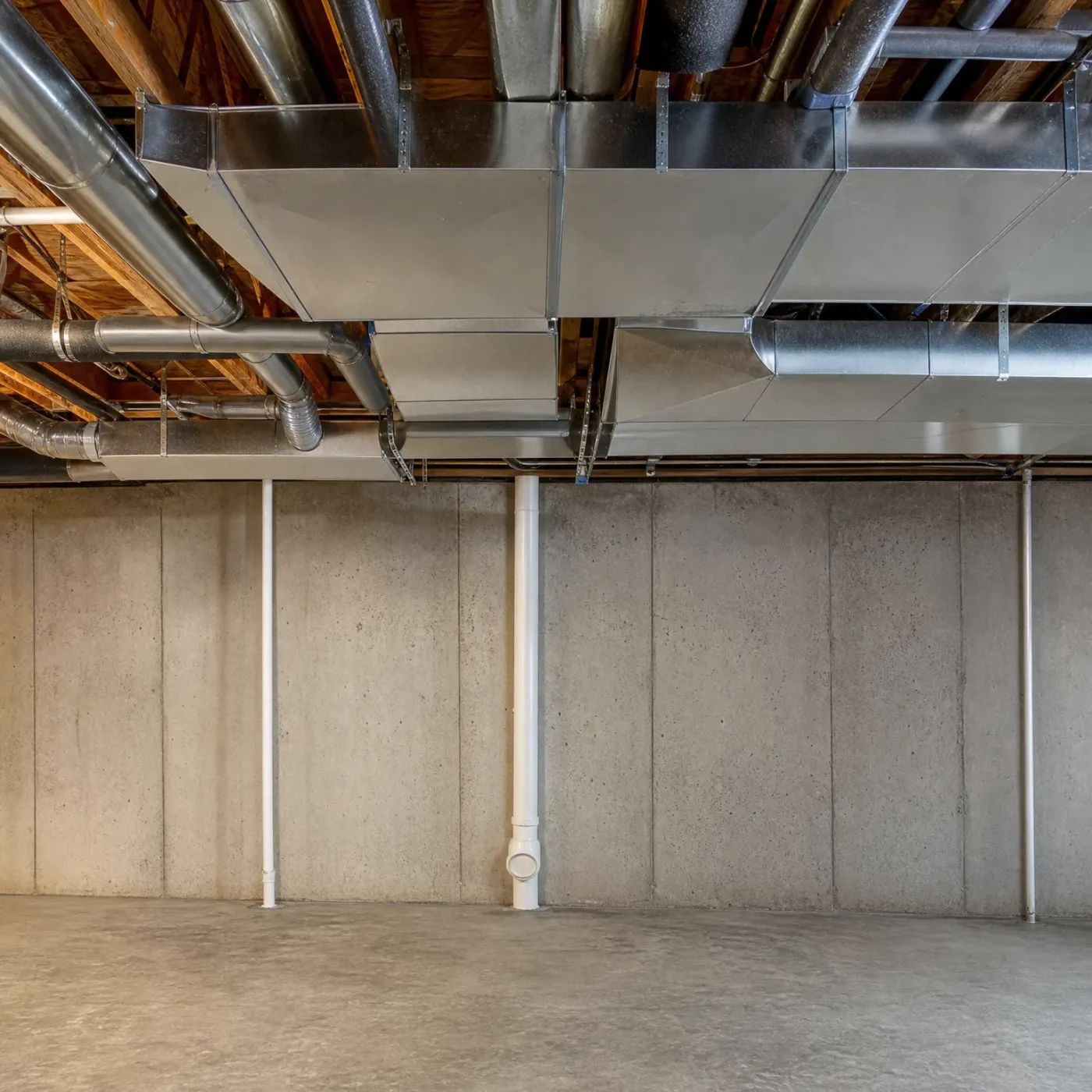
Unfinished basement with poured concrete walls, a bare concrete floor, white PVC pipes running down the wall, and exposed sheet-metal HVAC ductwork beneath wood floor joists.

Sealed and running right

This is what a tight duct run looks like. Metal and round pipe carry air straight from the furnace to your rooms without losing it along the way. Every joint stays sealed, so what the blower pushes out is what reaches your registers.

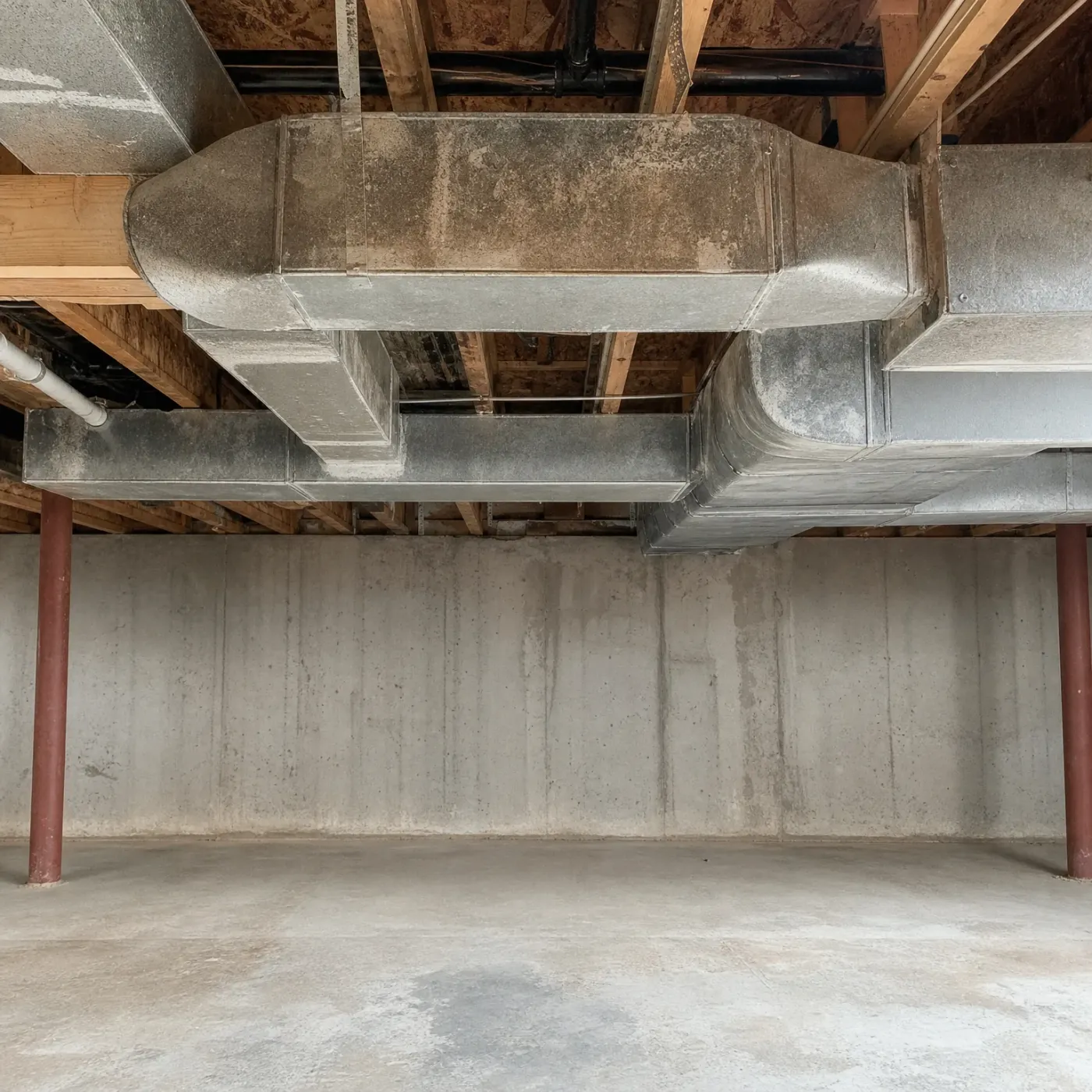
Unfinished basement with bare concrete walls and floor, galvanized sheet-metal HVAC ducts running beneath wooden floor joists, and two red steel support columns.

Leaking into the basement

Here the ducts run exposed along the joists, and a gap at a seam lets conditioned air spill out before it ever reaches a room. In a basement that air is gone, not just late. The blower keeps running to cover what slipped out along the way.

Why does one room never feel right?

Walk through your house and check the vents. If one bedroom stays warm in January while the rest of the house is comfortable, or a back room never cools off in August no matter how long the AC runs, that's air leaving the duct before it gets there. Hold your hand near a duct joint in the attic or crawlspace and feel for a draft. Look at the floor near your registers for a fine layer of dust that collects faster than it should, that's attic or crawlspace air getting pulled in through the same gaps. Left alone, the furnace and AC both run longer to cover the loss, and the parts inside them wear down faster for it.

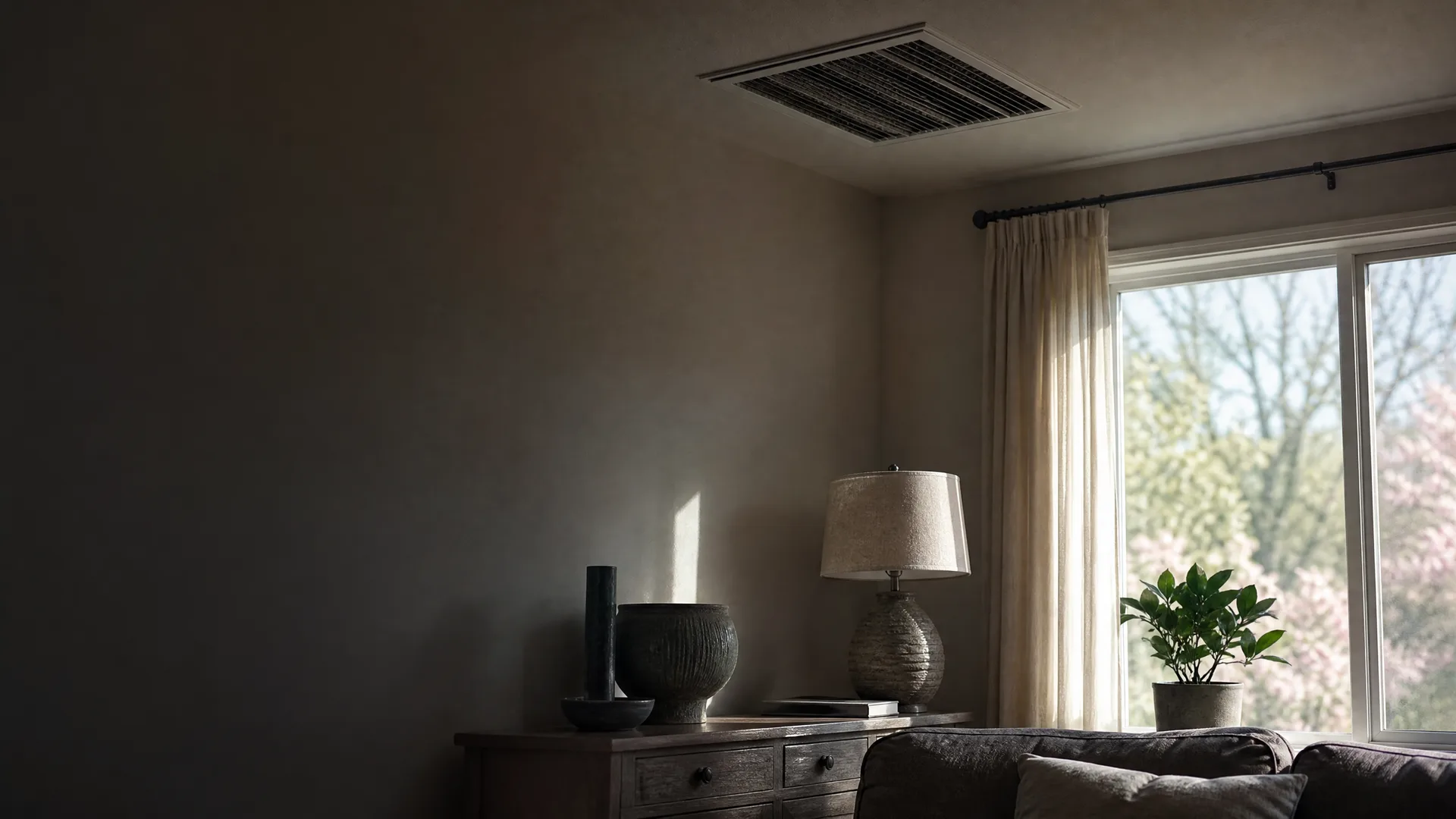
A dim living room corner with a ceiling air vent, a curtained window showing blossoming trees, a table lamp and dark ceramic vessels on a wooden dresser, a potted plant, and a sofa in the foreground.

It's a Saturday afternoon in April, the kind of mild day Fort Smith gets before the real heat sets in. The ceiling vent in the living room has gone gray around the edges, a ring of dust thick enough to see from the couch. Across the room, a line of it sits on the bookshelf and along the top of the TV stand, the kind that was wiped away a week ago and is already back. The air handler clicks on in the hall closet, and a faint puff stirs the dust on the end table nearest the vent. Nobody's tracked anything in. The windows have stayed shut for two days.


Power here costs 12.56 cents per kilowatt-hour

At 12.56 cents per kilowatt-hour, every extra minute your blower runs to cover lost air shows up on the bill. Sealing the leaks means the blower can shut off when the house actually reaches temperature, instead of running past it.

EIA-861 2025

You sealed your ductwork a few years back, or the home came with ducts still tight and taped at every joint. Air leaving your furnace reaches the registers, the blower cycles off on schedule, and no room runs hotter or colder than the rest of the house.

You've never had the ducts checked, and a few rooms have quietly stopped keeping up. The blower runs longer than it should, your bill reflects that extra runtime, and nothing about the system looks broken from where you're standing.

A smiling bearded man in a dark green sweater sits at a dinner table with a glass of red wine, a bowl of salad and a lit candle in the foreground, in a dimly lit room with a framed picture, lamp and potted plants behind him.
A woman in a cream knit sweater reclines on a sofa with her eyes closed and a slight smile, a closed dark book resting on a blanket in the foreground and a lit lamp and small potted plant behind her.
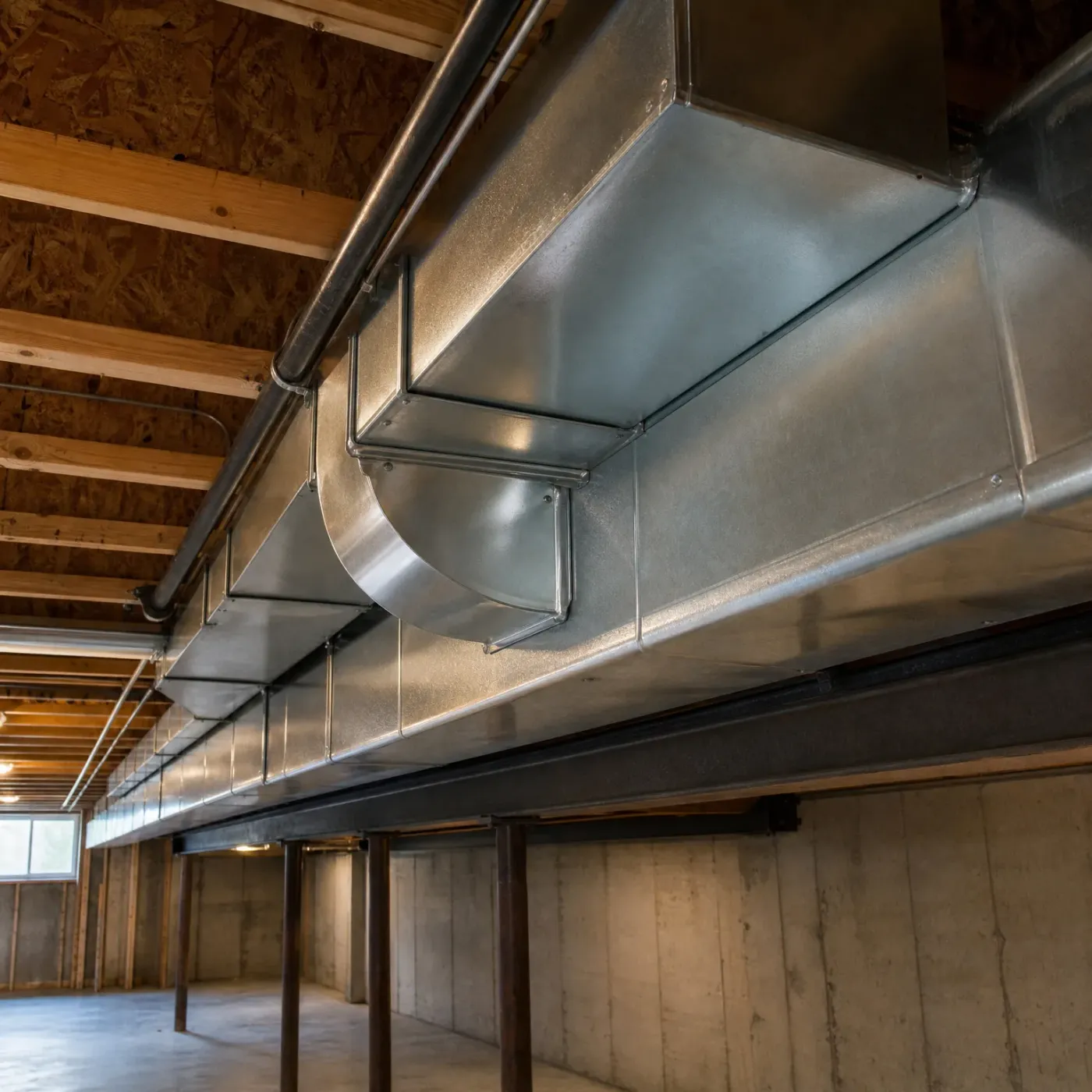
Galvanized sheet metal HVAC trunk ducts and branch takeoffs running below a wood-joist ceiling in an unfinished basement with concrete walls, steel support columns and a concrete floor.

No calling every shop in Sebastian County

The pro who gets in touch is licensed in Arkansas and works in Sebastian County.

Skip calling around for someone who cleans ducts.

Get a licensed local pro

No charge to send it. You decide if you hire them.

How can you tell if it's your ductwork and not the furnace itself?

You've noticed the house isn't heating or cooling evenly, and before you call anyone, you want to know whether the furnace itself is the problem or whether the ductwork is losing the air after it leaves the unit. It matters because a furnace repair and a duct repair are different jobs, done by checking different things.

Check the air coming straight out of the furnace against what reaches the rooms

A furnace that's working right puts out hot air at the supply plenum, right where the ductwork starts. Hold your hand near a register close to the furnace and one far away. If the air near the furnace is plenty warm but the far register barely moves any air or feels lukewarm, the furnace is doing its job and the duct run between the two is losing it along the way. If every register in the house runs weak, including the ones close to the unit, that points back to the furnace or the blower instead. Attics and crawlspaces are where most of that loss happens, since that's where the duct joints sit out of sight.

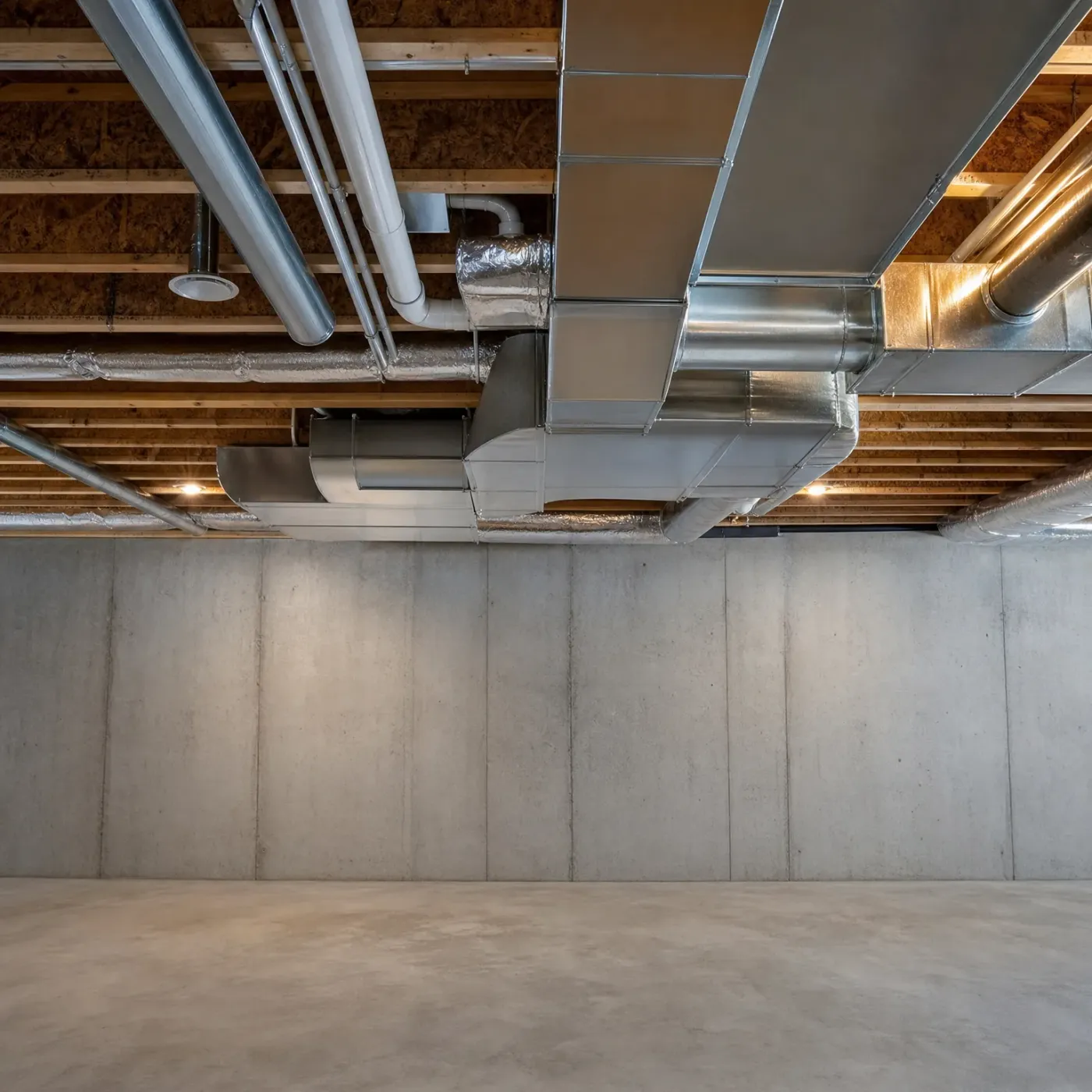
Empty basement room with bare concrete walls and floor, and an exposed wood-joist ceiling carrying sheet-metal ductwork, insulated pipes, and recessed lights.
Air moves from the furnace through sealed metal and round pipe, so every room gets the full output of the blower.
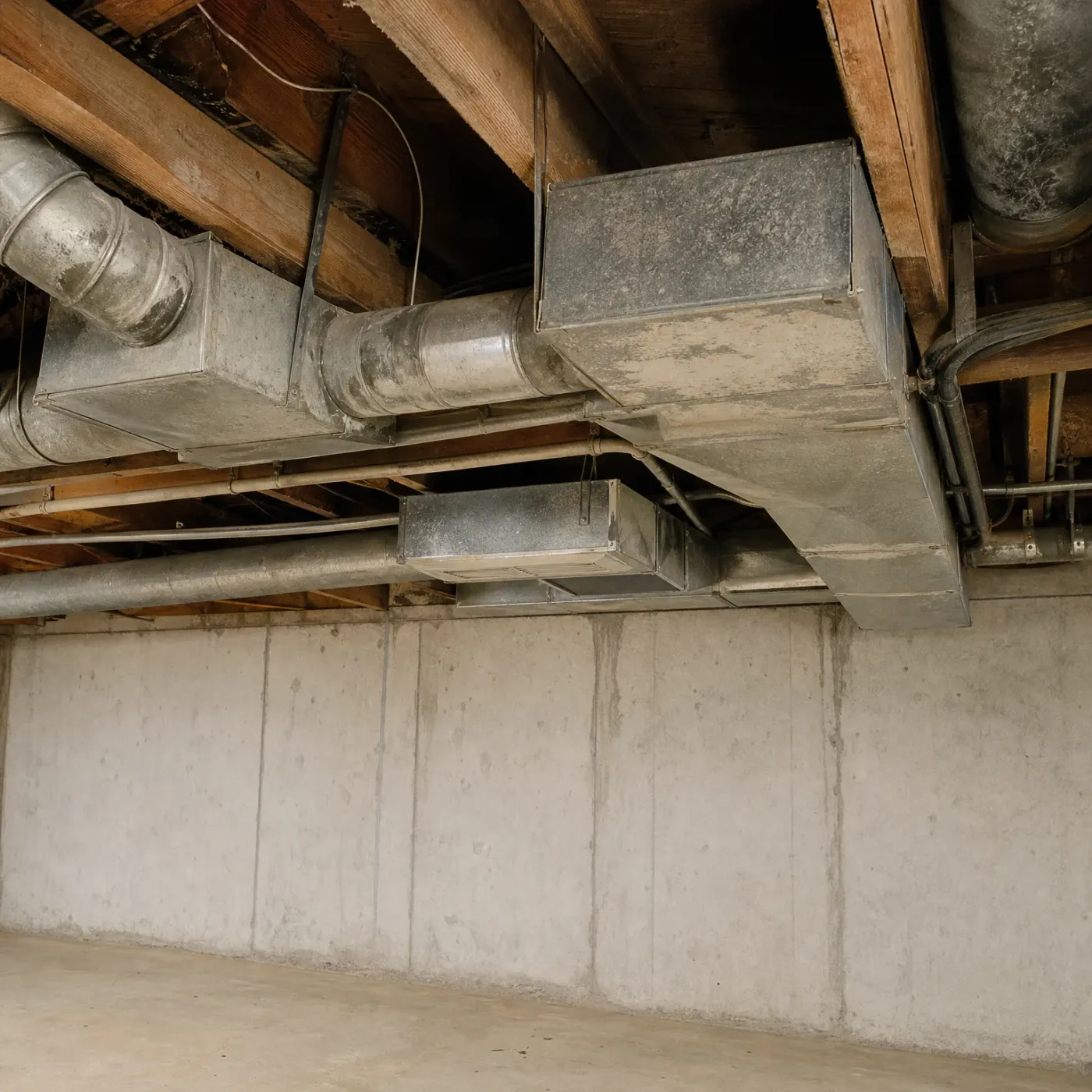
Basement ceiling with galvanized sheet metal ductwork, round pipes and rectangular plenums running between wooden joists above a bare concrete foundation wall and floor.
Gaps at the joints and fittings let conditioned air spill into the joist space before it ever reaches a register.

A contractor who deals with ductwork every season in Fort Smith doesn't start by guessing. They test for leaks before touching a joint, because sealing without a number to compare to means nobody knows if the work helped. That duct tape on your joints was never meant to last, no matter what the name tells you. It dries out in a few years and peels back, and the gap reopens. Mastic and metal-backed tape go on the same joints and hold because they don't dry and crack the way tape does. Supply leaks get the attention, but the return side moves just as much air, and a leak there pulls hot attic air or crawlspace air straight into your system before it's been conditioned at all. Flex duct itself rarely fails along its length. It's the metal collar or boot where it connects that opens up first. Sealing half your ductwork and skipping the other half still leaves your furnace and AC working to cover air that never made it to a register.

What a contractor checks first

  • Duct tape fails within a few years despite the name, drying out and peeling off the seam it was meant to seal.
  • Mastic sealant and metal-backed tape hold up far longer on the same joints because they flex less and don't dry out.
  • A pressure test, called a duct blaster test, measures exactly how much air your system loses before any sealing starts.
  • Flex duct leaks most often where it connects to a metal collar or boot, not along the flexible run itself.
  • Return leaks pull hot attic air or musty crawlspace air into the system instead of pushing conditioned air out.
  • Sealing the supply side without checking the return side only fixes half the air your furnace and AC are losing.
Empty basement with bare concrete walls and floor, with galvanized sheet-metal HVAC ducts, a round duct elbow, and pipes running along the wooden joists of the ceiling.
Before you get your ductwork cleaning
An empty unfinished basement with concrete floor and walls, exposed wood joists, steel beams and support posts, galvanized ductwork and pipes, and a single bare bulb light.
After you get your ductwork cleaning
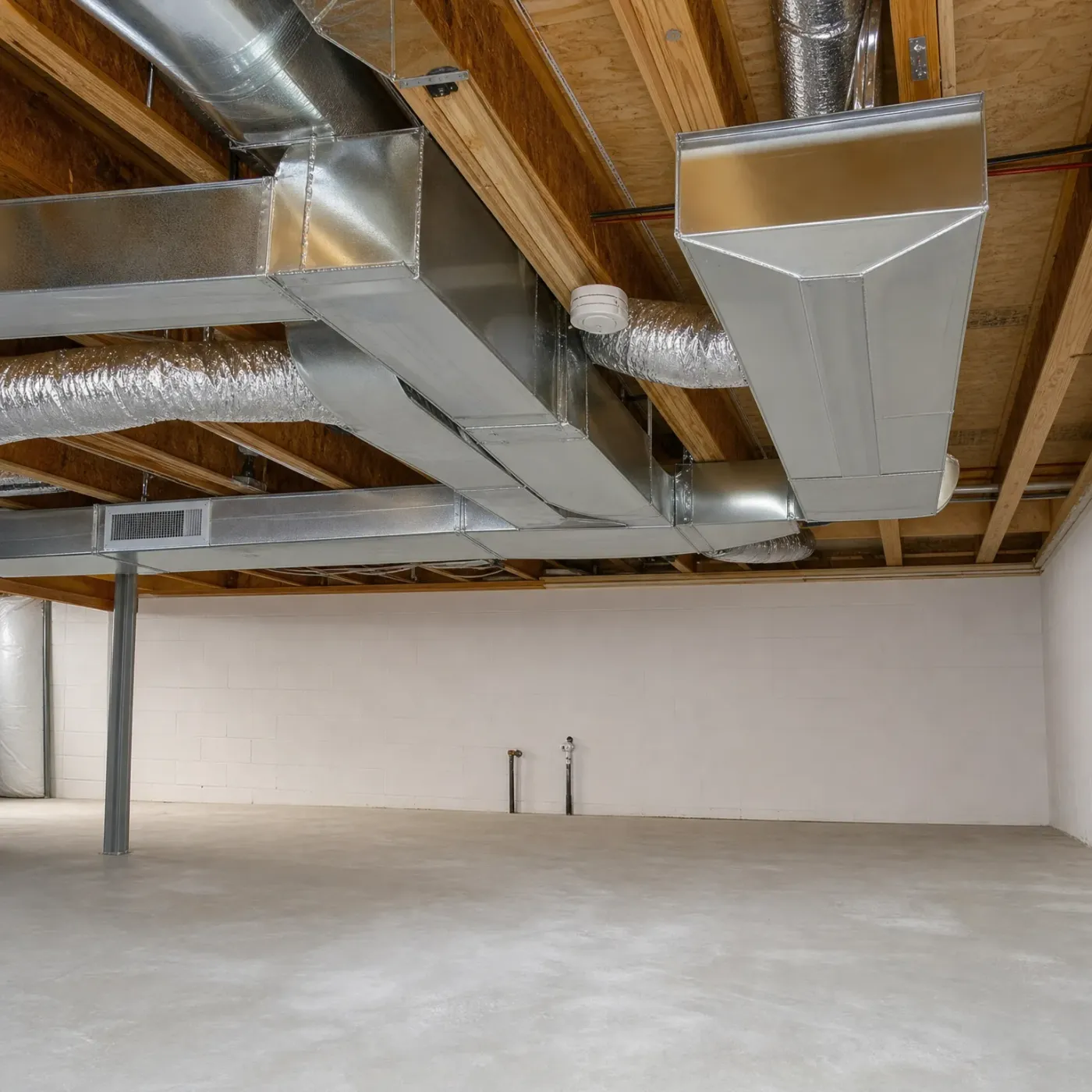
Empty basement with bare concrete floor, painted block walls, and an exposed wood-joist ceiling with sheet-metal and insulated flexible ductwork and a steel support column.

Clean run, no leaks

This is what a duct system looks like when the joints are still sealed. Trunk and branch lines run tight along the joists, and every seam holds. Air moves from the furnace straight to your registers, so the blower doesn't have to run longer to make up for anything escaping along the way.

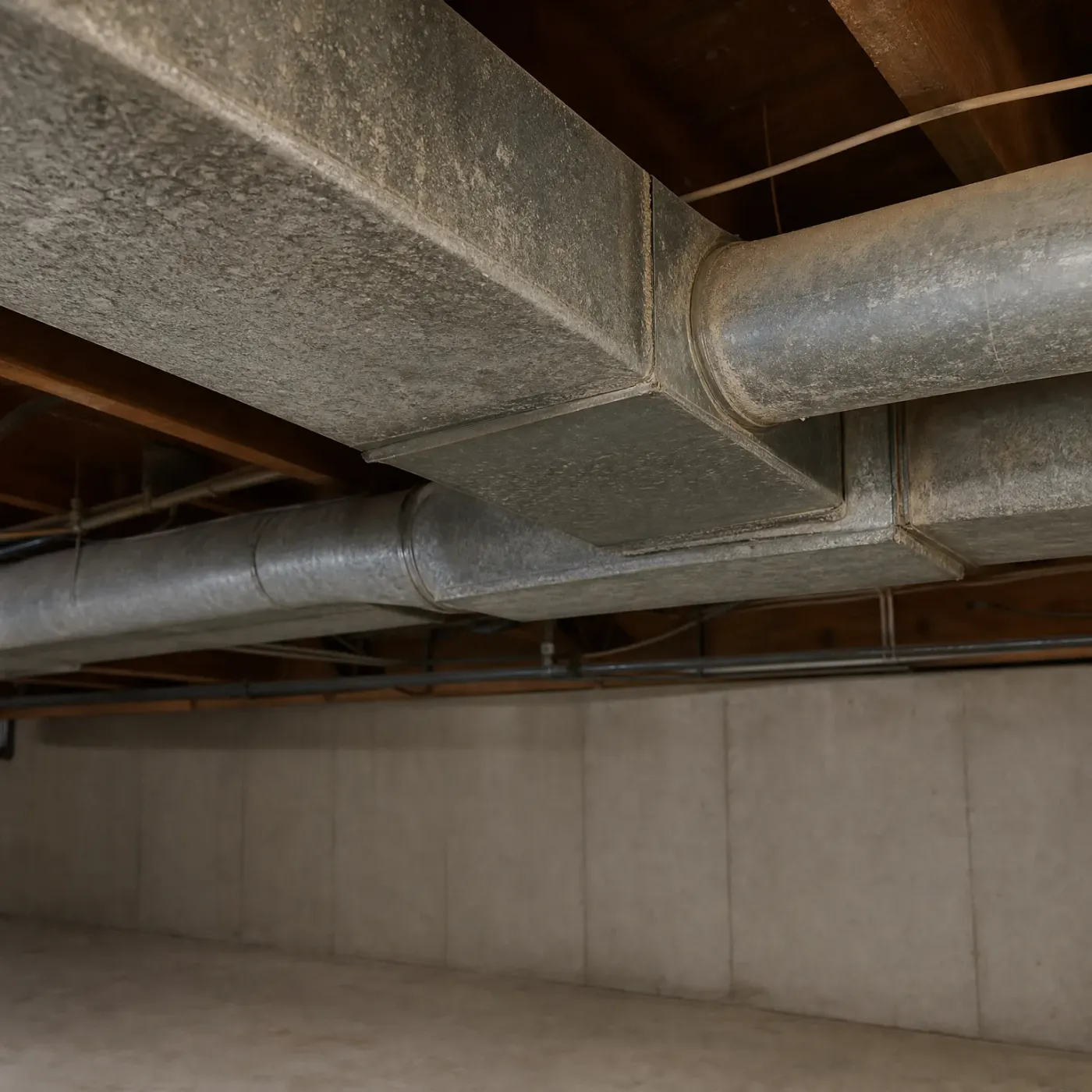
Galvanized rectangular and round sheet-metal ductwork running beneath a wood-joist ceiling in a basement with concrete walls and floor, with pipes and wiring alongside.

Leaking into the joists

This is what a leaking run looks like after years of loose joints. The dust coating the metal and the framing around it is air pulling in through gaps instead of moving clean through the duct. That same dust is landing in your house, and the air that escaped here never made it to a register.

A closed laptop and a ceramic mug on a wooden table in front of a kitchen with green cabinets, marble counter, black pot, cutting board, wooden bowl, and a white vase with greenery.

Where that leaves you

Uneven rooms, a climbing bill, drafts at the registers, dust that comes back fast. Any one of those points at your ductwork, and a few together are a stronger case than one by itself. The joints don't reseal themselves, and the blower keeps running longer to cover what's escaping into the attic or the crawlspace either way.

Finding someone to look at it is its own chore: searching for a contractor who works on ducts and not just furnaces, calling a few, walking each one through the same list of rooms that run hot or cold, then sitting with quotes that don't line up because no two companies checked the same joints. This page sends your situation to one licensed contractor local to Fort Smith, someone who works on duct systems through every Sebastian County summer and winter and knows which joints give out first in homes like yours. You explain it once.

A gray upholstered sofa with a textured cushion sits beside a dark round side table holding a vase of green foliage, with a table lamp and sheer-curtained window behind.
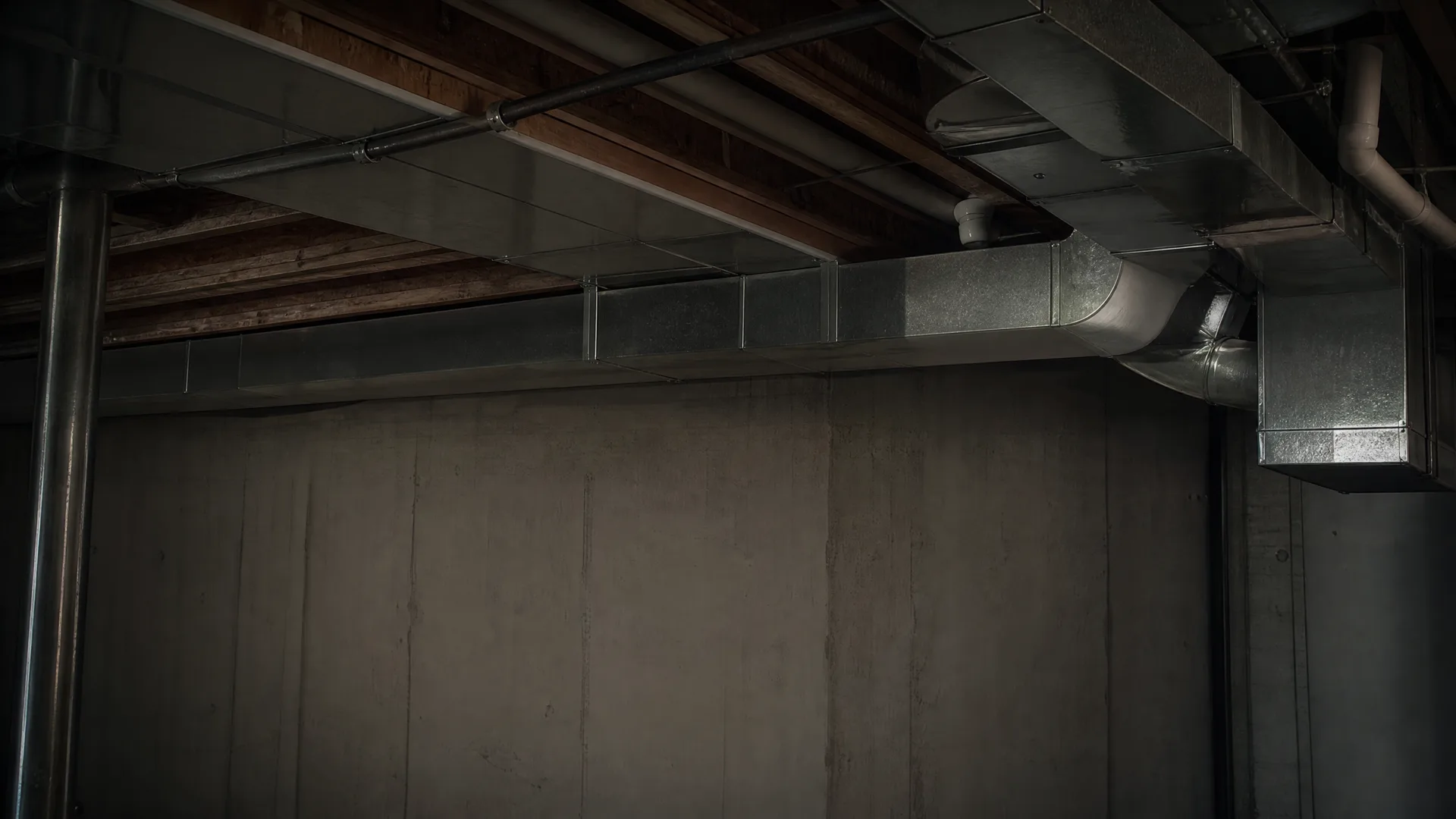
Dimly lit basement interior with galvanized sheet-metal ductwork and round pipes running along wooden floor joists above a bare concrete wall.

No phone calls to make

A licensed pro who works in Sebastian County gets your request.

Duct and vent cleaningDucts or ventsSebastian County, AR
Step 1 of 2

What ZIP code is the job in?