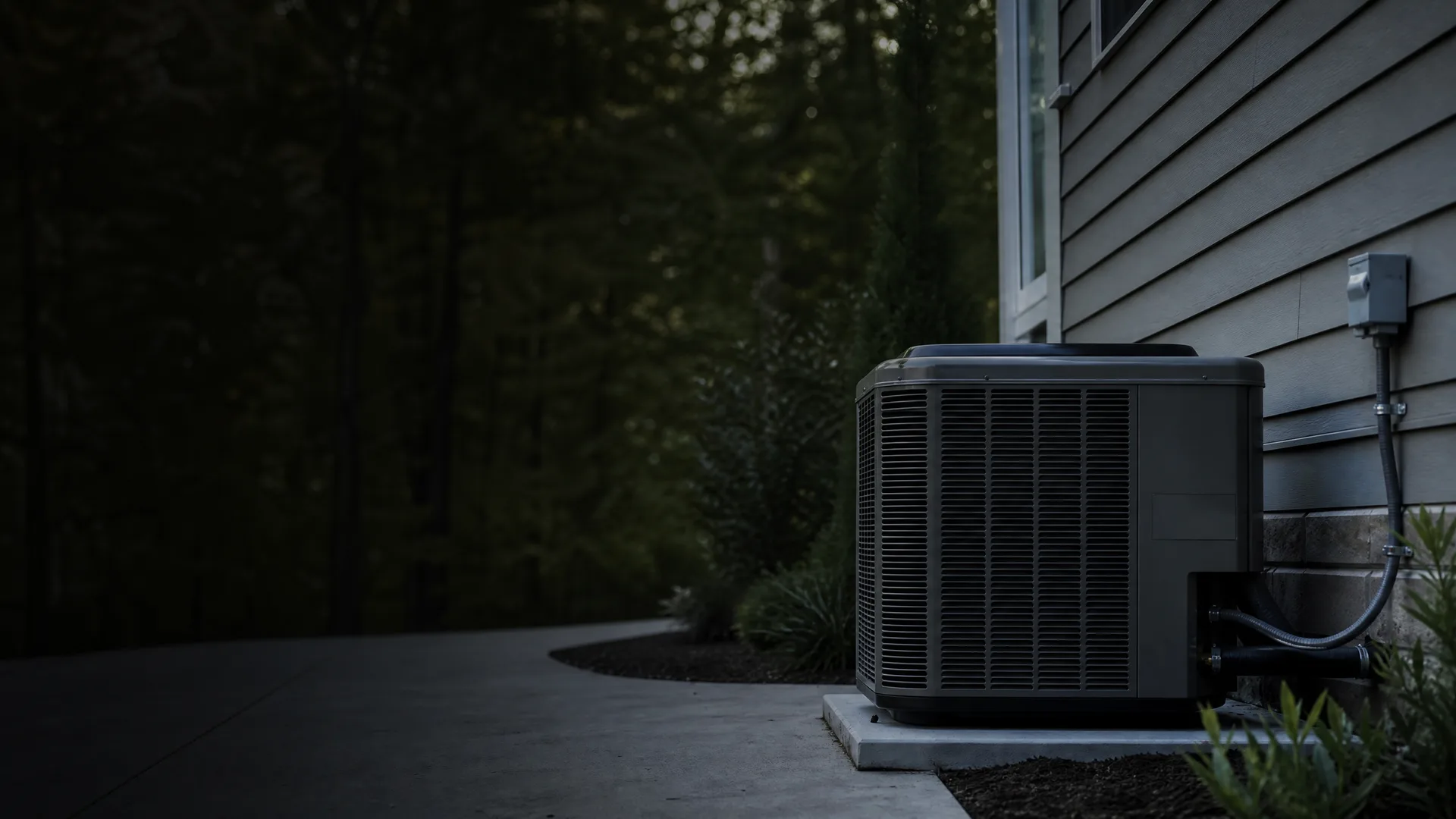
An outdoor air conditioning condenser unit on a concrete pad beside a house with horizontal siding, with an electrical disconnect box on the wall and shrubs to the right in low evening light.

Get your air conditioner to the right pro

Why your AC vents are sweating in Arkansas

Sweating vents usually mean the air coming through is wetter or colder than it should be, and with Arkansas humidity that moisture shows up fast on metal and drywall. This page walks through what causes it and what it means for your system. A local contractor who works on Arkansas AC systems all summer can take a look at yours and tell you what's going on.

Request a pro

Wet vents mean the air moving through your ducts is colder than the air in the room around them, so moisture in that room air condenses on the metal the same way it beads up on a glass of ice water. In Arkansas, summer air already carries a lot of moisture, so that condensation shows up fast and keeps showing up as long as the duct stays cold enough. A few things cause it. Insulation around the duct can be missing or torn where it passes through an attic or crawlspace. The duct itself can be running colder than it should because the system is overcharged with refrigerant or the airflow across the coil is restricted. A vent that stays wet will soften the drywall around it and can leave a stain or a soft spot if it goes on long enough. It is not something to leave alone through the summer, because the moisture behind the vent does its damage quietly, out of sight, until the ceiling shows it.

An outdoor air conditioner condenser unit on a concrete pad beside a house with light horizontal siding, with a small electrical disconnect box on the wall, mulch and shrubs at left, and a plain white wall and concrete slab at right.

Why insulation makes the difference

Supply ducts that run through a hot attic or crawlspace need insulation wrapped around them. Without it, the metal stays cold enough to pull moisture straight out of the air around it, the same way a glass of ice water sweats on a humid porch. If the wrap has come loose, torn, or was never thick enough for how humid it gets here, the vent boot and the duct near it will sweat even when the system is running fine.

A dark gray outdoor air conditioner condenser unit on a concrete pad beside a house with horizontal siding and a plain light wall, with mulch and grass in the foreground and a conduit and electrical box on the wall.

What a stuck damper does

Some vents sweat more than others in the same house. That often points to airflow, not insulation. A closed or partly closed damper, a crushed flex duct, or a blocked return can slow air through one run enough that it sits in the duct longer and drops colder than the rest of the system. A contractor who works on this equipment regularly can check airflow room by room and find which duct is actually the problem.

A man in a dark blue shirt stands in an open front doorway of a stucco and wood-clad house, facing a blond woman seen from behind in the foreground on a stone walkway.

What this does to your house if it keeps going

A sweating vent drips. That water lands on drywall, insulation, or the framing around the duct, and drywall stains or softens long before anyone notices a leak. If the vent is in a ceiling, you'll see a ring form around it. If it's in a closet or a soffit, it can go on for weeks before you catch it, because nobody looks up there.

This isn't something to watch and wait on. Once drywall or insulation has taken on water, drying out the vent doesn't undo that damage, and mold can start in the wet insulation around the duct within days. A local contractor who works on Arkansas ductwork every summer has likely seen this exact setup before, in a house with the same kind of attic or crawlspace runs, and can tell you quickly whether you're looking at a quick fix or something that's been dripping longer than you think.

A living room corner with a beige sofa and cushion, a round wooden coffee table holding a pale ceramic vase of eucalyptus stems and a wooden bowl, and a curtained window with a potted plant above a latticed radiator cover in the background.
A man with grey hair and stubble in a dark sweater sits on a grey sofa indoors, looking off to the side, with a potted plant and a sunlit window behind him.
A man with gray hair, a beard and glasses, wearing a dark green sweater, sits on a gray sofa in a sunlit living room with a potted plant, table lamp and wooden sideboard behind him.
A middle-aged man with graying hair and a short beard sits on a blue sofa in a living room, looking toward a window, with a bookshelf, lamp and framed picture in the background.
A man with graying curly hair and a dark green sweater sits on a gray sofa in a sunlit living room, looking off to the side, with a framed picture, shelving, an armchair and a window with sheer curtains behind him.

The right pro for this job

A sweating vent in July doesn't always mean the same thing a sweating vent in a mild September week means, and that's the part worth having someone look at before drywall is involved. It could be a duct run that was never insulated right when the house was built. It could be a system that's lost refrigerant charge and is running colder and wetter than it should. It could be a return that's too small for the system pulling air through it, which is common enough in Arkansas additions and retrofits. Figuring out which one it is from the attic isn't something you want to guess at, especially with how fast humidity here turns a small drip into a stained ceiling. A contractor who works on AC systems in your area through these summers has likely seen your exact duct layout before, in a house not far from yours, and knows where to check first.

One vent sweating

If it's a single run, the problem is usually local to that duct. A section of insulation came loose, got wet and lost its grip, or was never wrapped when that branch was added or rerouted. The duct itself is fine, and the rest of your system is moving air the way it should. This is the kind of thing a contractor can often find by looking at the attic side of that one run, and fixing it is a matter of resealing or re-wrapping that section rather than touching the furnace or the air handler.


Several vents sweating

When it's happening at multiple vents at once, especially ones on different runs, the cause is more likely at the equipment. A dirty filter, a low refrigerant charge, or a coil running colder than it should will push air that's colder and wetter than normal out through every duct it reaches. That's not a spot you patch at the vent. Someone needs to check the system itself, not just the ductwork, and the fix might be a filter change, a charge adjustment, or a repair to the part that's making the coil run too cold.

Power costs 12.87 cents per kilowatt-hour statewide

At 12.87 cents per kilowatt-hour, running your AC harder than it needs to runs up real money fast. A system working overtime because of a stuck damper or a low charge, the kind of strain that also feeds a sweating vent, costs you more every month it goes unfixed.

EIA-861 2025 statewide residential average

An outdoor air conditioning condenser unit on a concrete pad beside a house with white horizontal lap siding, with an electrical disconnect box and insulated refrigerant line on the wall and a shrub over mulch to the right.

System working as it should

A condenser like this cycles on and off, holding the house at temperature without strain. Refrigerant lines stay insulated, the disconnect box is intact, and the unit cools steadily even on a humid Arkansas afternoon. No sweating vents, because the air it sends through the ducts is doing what it's supposed to do.

An outdoor air conditioner condenser unit on a concrete pad beside a house with light horizontal lap siding, with an electrical disconnect box and conduit on the wall behind it.

System under strain

A weathered unit like this one works harder to reach the same temperature, and a low charge or a failing part can send air through the ducts colder than it should be. That's often where sweating vents start. A local contractor who works on these units every summer can tell you if that's what's happening here.

A woman with shoulder-length brown hair wearing a beige knit cardigan sits in a gray upholstered armchair near a window, looking off to the side with a slight smile, with bookshelves blurred in the background.
A woman with her hair in a bun holds a sleeping young child against her chest, both wrapped in a textured beige knit blanket on a sofa in a dimly lit room with a lamp, framed picture, and bookshelf behind them.

What a sweating vent comes down to

  • A sweating vent almost always traces back to duct insulation, airflow, or a refrigerant charge that's off, not a mystery.
  • A single wet vent points to that one duct run; sweating all through the house points to the system itself.
  • Left alone, the moisture reaches drywall and framing before you see a drip on the floor.
  • Someone who services Arkansas systems all summer has seen which of these it usually is before they open the attic.
  • Getting matched means one licensed local contractor looks at your ducts and your system, not a string of calls to field.
  • What's actually wrong decides the fix, and that's worth knowing before anything gets opened up or replaced.

A sweating vent has a reason behind it, and that reason is almost always one of a few things: insulation that failed or was never there, air that isn't moving the way it should, or a system low on refrigerant and running colder than it was built to. None of that is guesswork once someone traces it back to the actual duct run or the condenser outside. Where the moisture shows up tells its own story. One vent means the problem lives in that stretch of duct. Vents sweating all over the house point to the system itself working harder than it should, and in Arkansas humidity that strain shows up as water before it shows up on a utility bill. Left alone, none of this stays cosmetic. The water that beads on a vent today is the stain on your drywall or the soft spot in your framing next month, and by then the fix is bigger than the duct it started in. Someone who works on Arkansas systems through a full summer has seen this pattern enough times to know where to look first, attic insulation, a stuck damper, a charge that's drifted low, before anything gets cut open. Getting matched puts one licensed local contractor on your ducts and your system, the same person from start to finish, not several companies working the problem at once. What's actually wrong is what decides what gets fixed, and that's worth knowing before any of it happens.

An outdoor air conditioner condenser unit sits on a concrete pad beside a house with horizontal lap siding, with a refrigerant line, electrical disconnect box, a concrete driveway and dark trees in the background.

Matched to your air conditioner job

The pro who reaches out is licensed in Arkansas.

RepairCentral ACArkansas
Step 1 of 2

What ZIP code is the job in?