

Musty smell from vents in Little Rock, AR

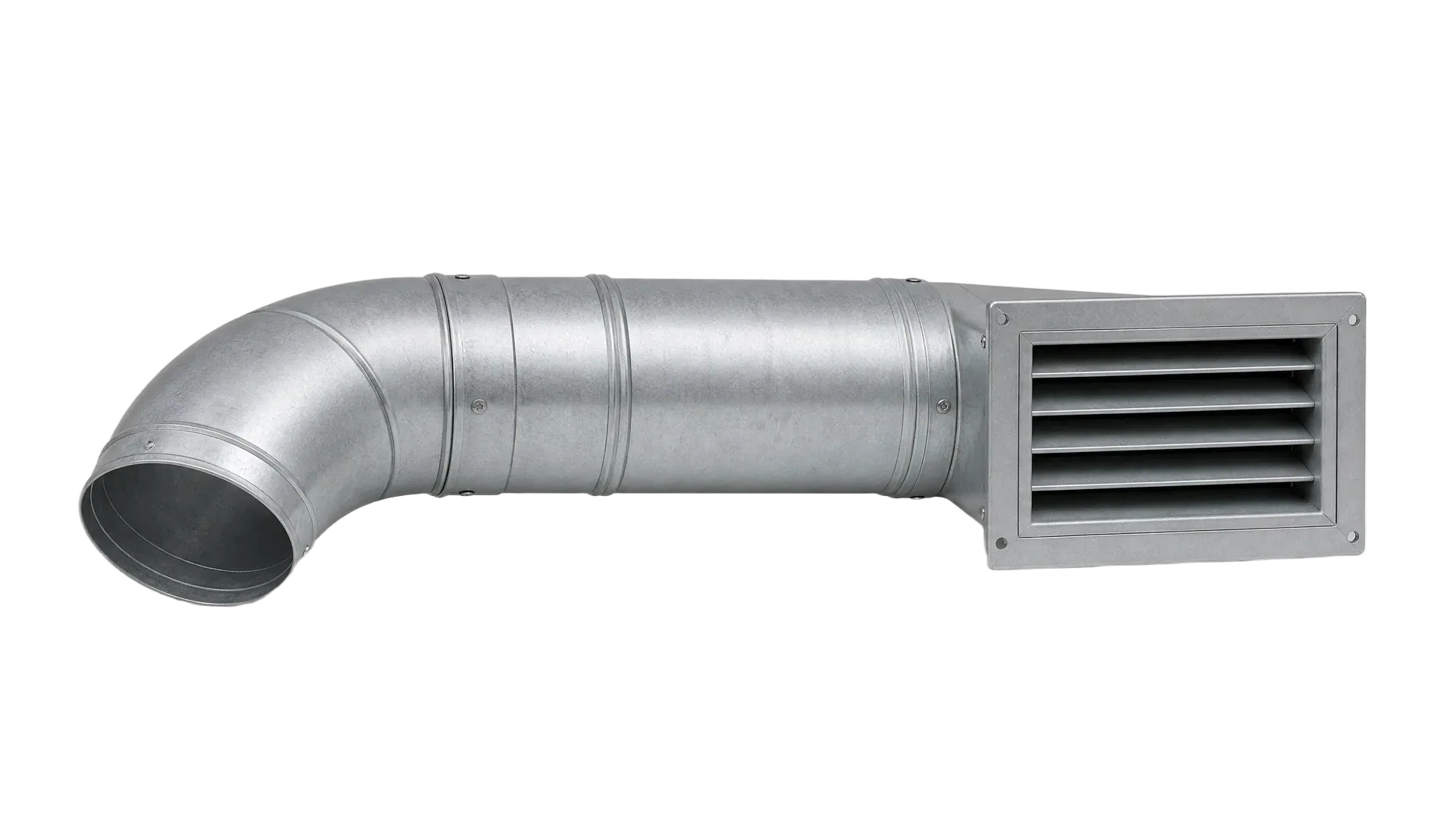
A galvanized metal round duct with a 90-degree elbow connected to a rectangular louvered vent grille, shown against a plain gray background.
Let a pro reach out

Why do my vents smell musty?

You walk by a vent and catch that damp, closed-up smell, the kind that reminds you of a basement. It's not strong enough to call an emergency, but it's enough that you notice it every time the system kicks on. Little Rock summers run long and muggy, and that moisture has to go somewhere, so a smell like this usually points at something specific inside the ductwork rather than anything wrong with the air itself.

Moisture sitting in your ducts is growing mold

That smell is mold or mildew growing somewhere air passes through, usually the evaporator coil or the ductwork right after it. Humid air moves across a cold coil all summer long here, and some of that moisture collects instead of draining off. Dust and skin cells in the duct give it something to feed on, and once it takes hold, every time the blower runs it pushes that smell through the house. A dirty filter makes it worse, since it slows airflow and keeps the coil wetter longer than it should be. The smell usually means a cleaning is overdue, for the ducts, the coil, or both, and it is worth dealing with before the summer humidity gives it more to work with.

Basement interior showing a furnace with sheet-metal ductwork, a round flue pipe and copper lines running beneath exposed wooden floor joists next to a plain light-colored wall.

Where the smell actually starts

That smell is almost never the vents themselves. It's the evaporator coil inside the air handler, sitting wet most of the summer as it pulls moisture out of the air. Dust settles on that wet coil, and so do spores. Air moves across it every time the system runs and carries the smell straight into the duct system and out through every vent in the house.

Interior corner of a building with a large blank white wall beside an unfinished ceiling showing wood joists, galvanized sheet-metal ductwork, and white and copper pipes.

Why the drain line matters

Every central air system has a condensate drain that carries the water off the coil and out of the house. If that line gets a film of algae in it, or the drain pan holds standing water, that becomes another spot for the smell to grow. A contractor cleaning the system checks the coil and the drain line together, since cleaning one and leaving the other means the smell comes back in a few weeks.

Why does this happen so much in a Pulaski County duct system?

  • Half the homes here were built by 1981

    Half the homes in Pulaski County were built in 1981 or earlier. Ductwork and coils that old have had decades to collect the dust that mold needs to grow on.

  • Heat runs November through March

    Cooling runs May through September here, five months of the coil staying wet. That is five months of standing moisture for mold to work with every year.

  • Cooling runs May through September

    Heat runs November through March, so for most of the year the system is doing one job or the other. The duct system rarely gets a long stretch to just sit dry.

ACS 2020-2024 · NOAA nClimDiv 1991-2020

A smell that comes and goes

Sometimes it's only there the first few minutes after the system kicks on, then it fades. That usually means moisture sitting somewhere it shouldn't, most often that coil, and the smell airs out once the air moving past it dries a little. A duct cleaning gets the dust and buildup off the coil and out of the line so there's less for mold to hold onto. It's worth doing, but if the coil stays wet the same way each time the system runs, the smell is likely to come back in a few months rather than staying gone for good.


A smell that's always there

If it's there every time the air kicks on, not just at the start, and it doesn't let up, that points to something growing further back in the system or sitting in standing water, not just dust on a surface. A cleaning still matters here, since it clears out what's built up and gives you a clean line to start from. But a steady smell like this is also worth having looked at directly, since it can mean a drain that isn't draining or a coil that's staying wet longer than it should.

A smiling man in a dark green sweater sits at a wooden table with a light gray mug in a kitchen with white tile backsplash, pendant lights, and an adjoining living room visible.
A smiling man in a dark gray sweater stands indoors looking to the side, with a kitchen counter holding a ceramic mug and open wooden shelves behind him and a living area in the background.
A smiling man in a dark blue button-up shirt stands at a white kitchen island, with open shelving, a gas range, a potted plant and a window in the background.
A smiling man with dark wavy hair and a beard, wearing a dark green knit sweater, sits in an open-plan living room and kitchen with a brown sofa, large windows, and a counter holding a mug and a wooden bowl.

Send one request and you're done looking

The pro who gets in touch is licensed in Arkansas and works in Pulaski County.

No fee to send it, and nothing to sign.

What that smell is doing to your house

The smell is mold spores moving through your ducts and settling on whatever they reach. Carpet, curtains, bedding, the inside of closets that don't get much air movement. You notice it most near the vents because that's where the concentration is highest, but it's not staying there. Anyone in the house with allergies or asthma usually feels it before anyone else does, a stuffy nose or a cough that's worse at home than away from it. None of this means your air is dangerous. It means the system is feeding a problem instead of solving it, and the longer it runs that way, the more surfaces in the house end up holding onto that smell.

What it costs you if you wait

A coil doing its job with mold and dust packed onto it has to work harder to move the same amount of heat, so your summer power bill climbs even though the house feels about the same. Dust and spores built up on the coil and in the ductwork don't flush out on their own. They wait for the system to run less, like through the winter, then build right back up when you switch to cooling again next May. Left long enough, that buildup can corrode the coil itself, which is a repair instead of a cleaning. Catching it now is the cheaper problem to have.

Unfinished basement with bare concrete walls and floor, and galvanized sheet-metal HVAC ducts, pipes and wiring running along the wood-joist ceiling.
Before you get your ductwork cleaning
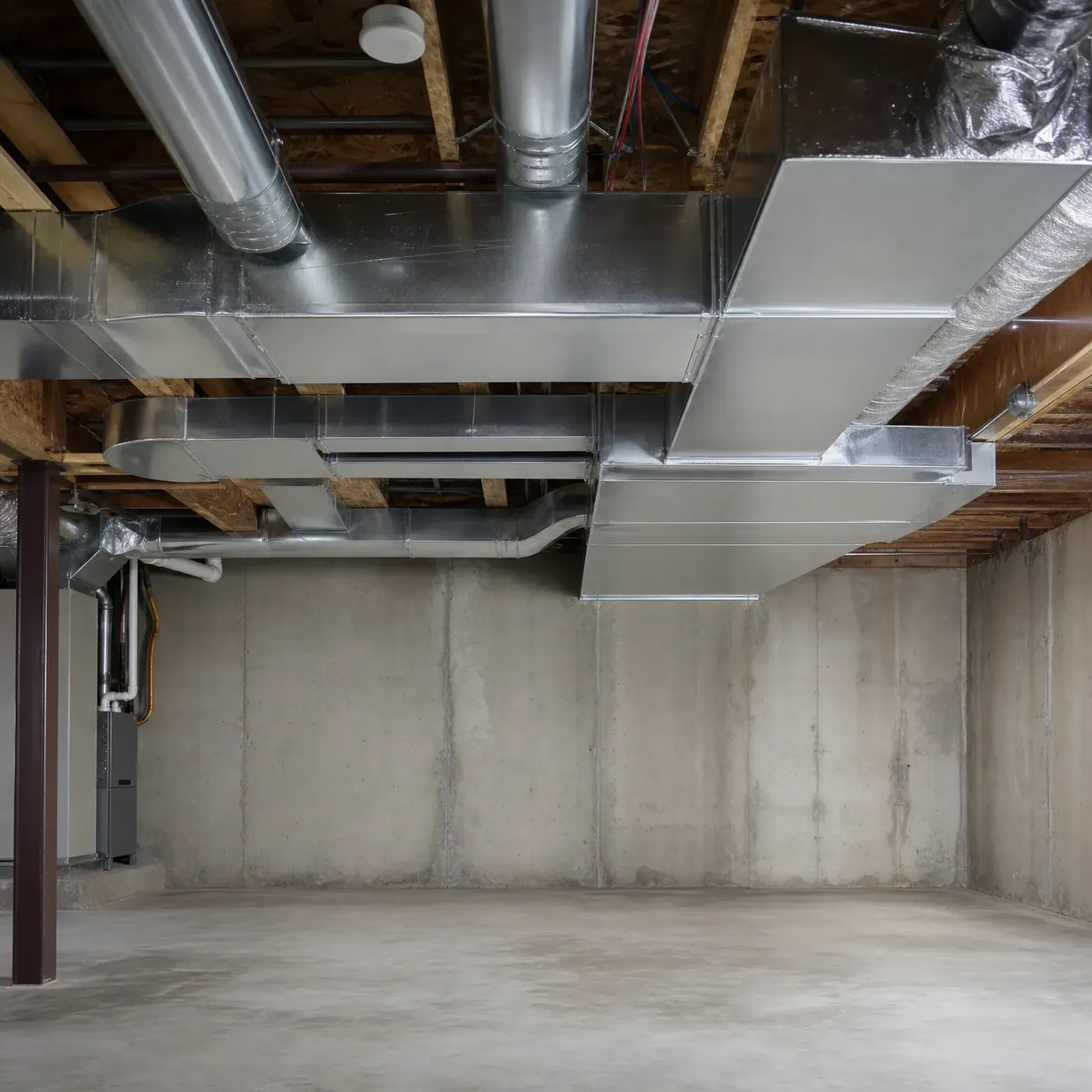
Unfinished basement with concrete walls and floor, a steel beam on posts, and exposed wooden joists with sheet-metal ductwork and piping overhead.
After you get your ductwork cleaning

You can live with a musty smell and nothing in the house will fail because of it. It's unpleasant, not dangerous to your system, and plenty of people run a few more summers before they deal with it.

The smell doesn't come from a problem that fixes itself. Whatever is holding moisture and growing on that dust keeps doing it every time the air handler runs, so the longer you wait, the more of your ducts and coil it has had time to settle into.

Power here costs 13.15 cents per kilowatt-hour

Cheap power at 13.15 cents a kilowatt-hour is part of why that coil stays wet all summer. Running the blower longer, or adding a stand-alone air cleaner, costs you less here than almost anywhere else, so there's little reason to let mold keep feeding on a dirty coil instead of dealing with it.

EIA-861 2025

Unfinished basement with bare concrete walls and floor, exposed wood joists, and large sheet-metal HVAC ducts and pipes running along the ceiling.

Ductwork doing what it should

This is a dry system. The metal runs stay clean enough that dust doesn't have anywhere to take hold, and the furnace and coil nearby aren't feeding moisture into the joints. Air moves through without picking up anything on the way.

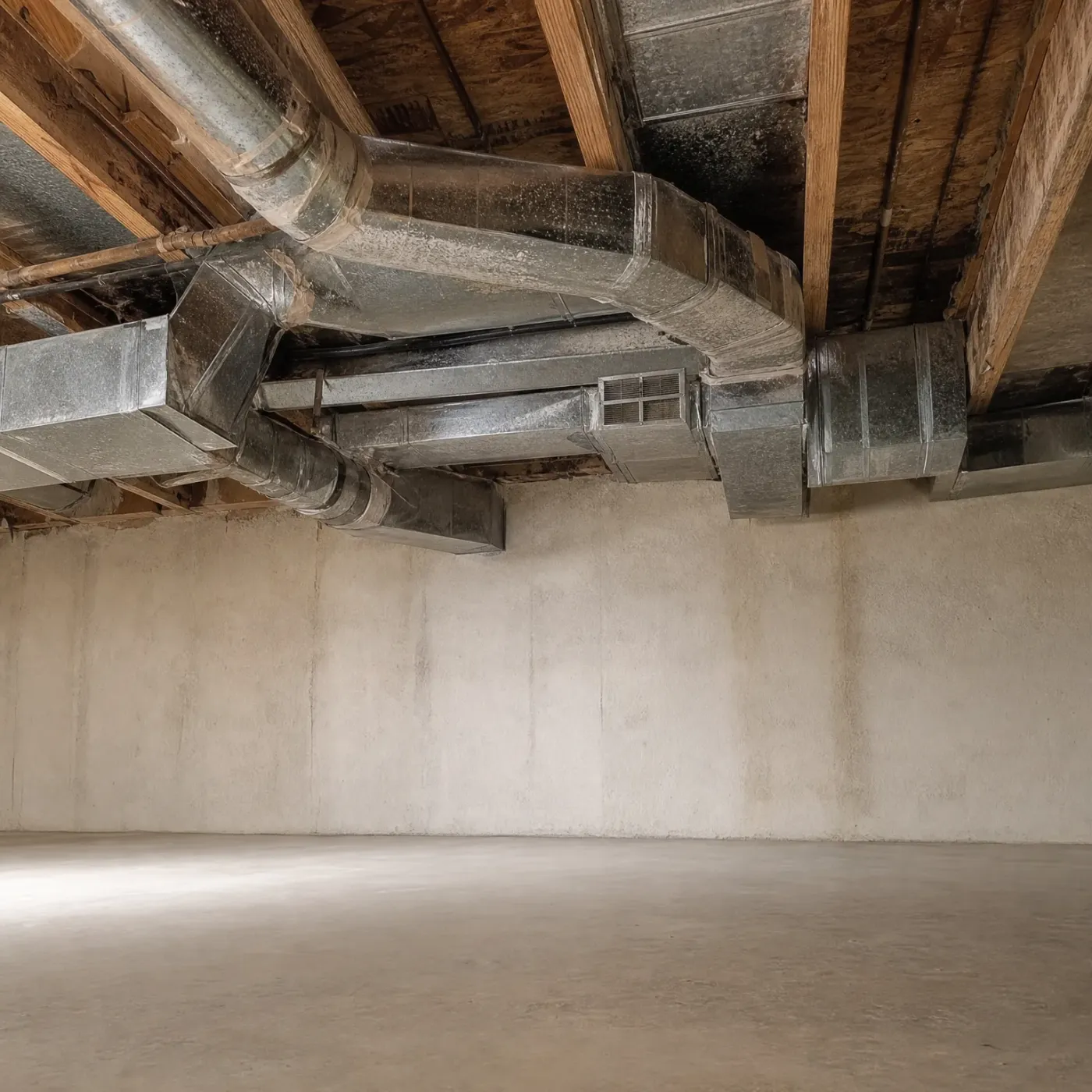
Basement interior with galvanized rectangular and round sheet-metal ductwork and copper piping running below a wood-joist ceiling, above a concrete wall and bare concrete floor.

Ductwork holding onto moisture

Here the runs sit in a damp basement or crawlspace, and that dampness works into the duct joints and seams. Dust and condensation inside the metal give mold somewhere to grow, and every time the blower runs, it pushes that air into the rooms above.

A bearded man in a navy t-shirt sits on a beige sofa, laughing while looking toward a laptop screen visible in the lower foreground, with a houseplant, shelves, and a framed picture behind him.
A bearded man in a plaid flannel shirt stands indoors looking out a condensation-covered window at a snowy landscape, with a speckled mug on the sill and kitchen shelves behind him.
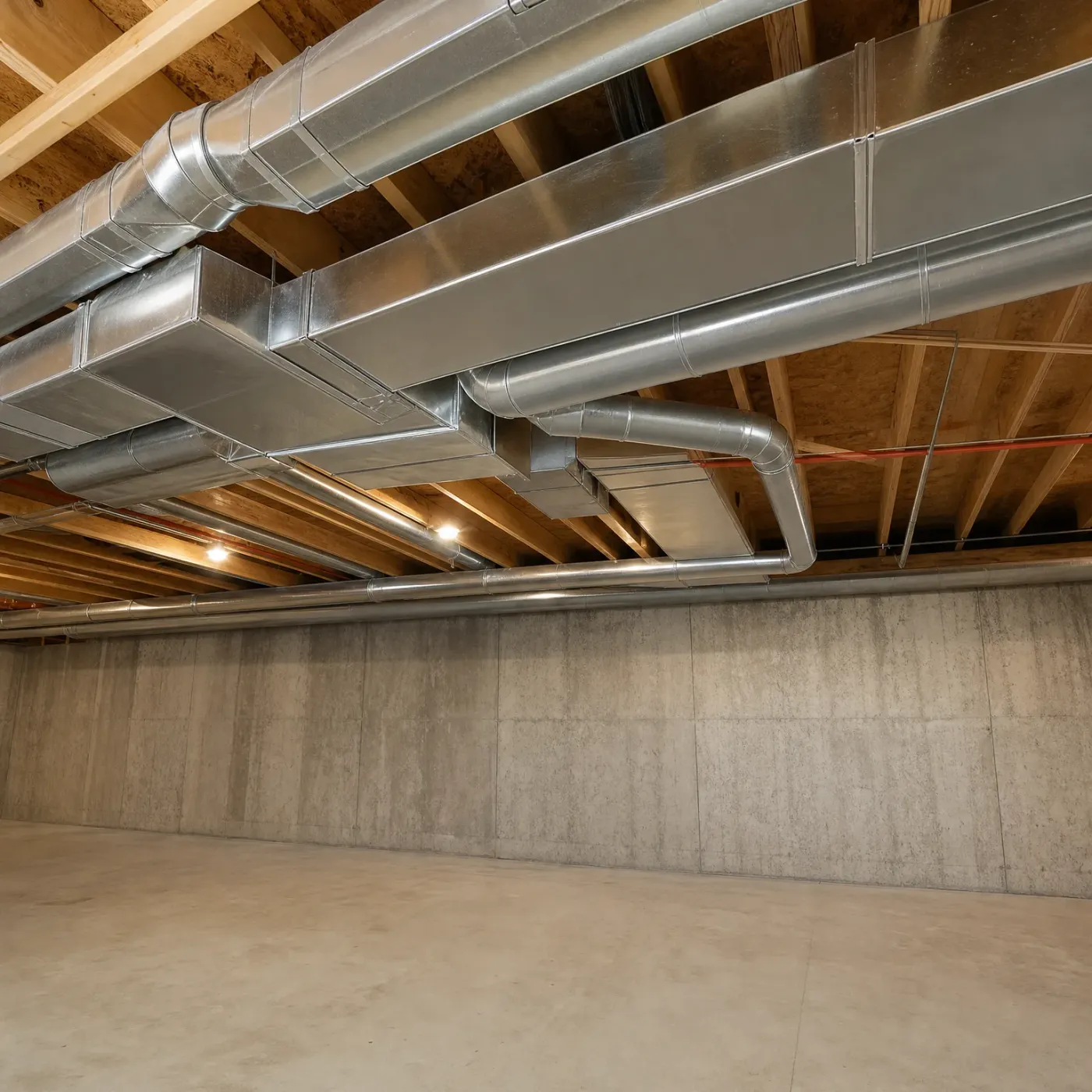
Unfinished basement with bare concrete floor and walls, showing galvanized sheet-metal HVAC ducts, pipes and recessed lights beneath a wood-joist ceiling.

Clean, dry ductwork

This is what a duct system looks like when moisture isn't getting into it. The metal stays dry, so dust just passes through instead of sticking to the walls of the duct. Air comes out of the vent the same as it went in, nothing added.

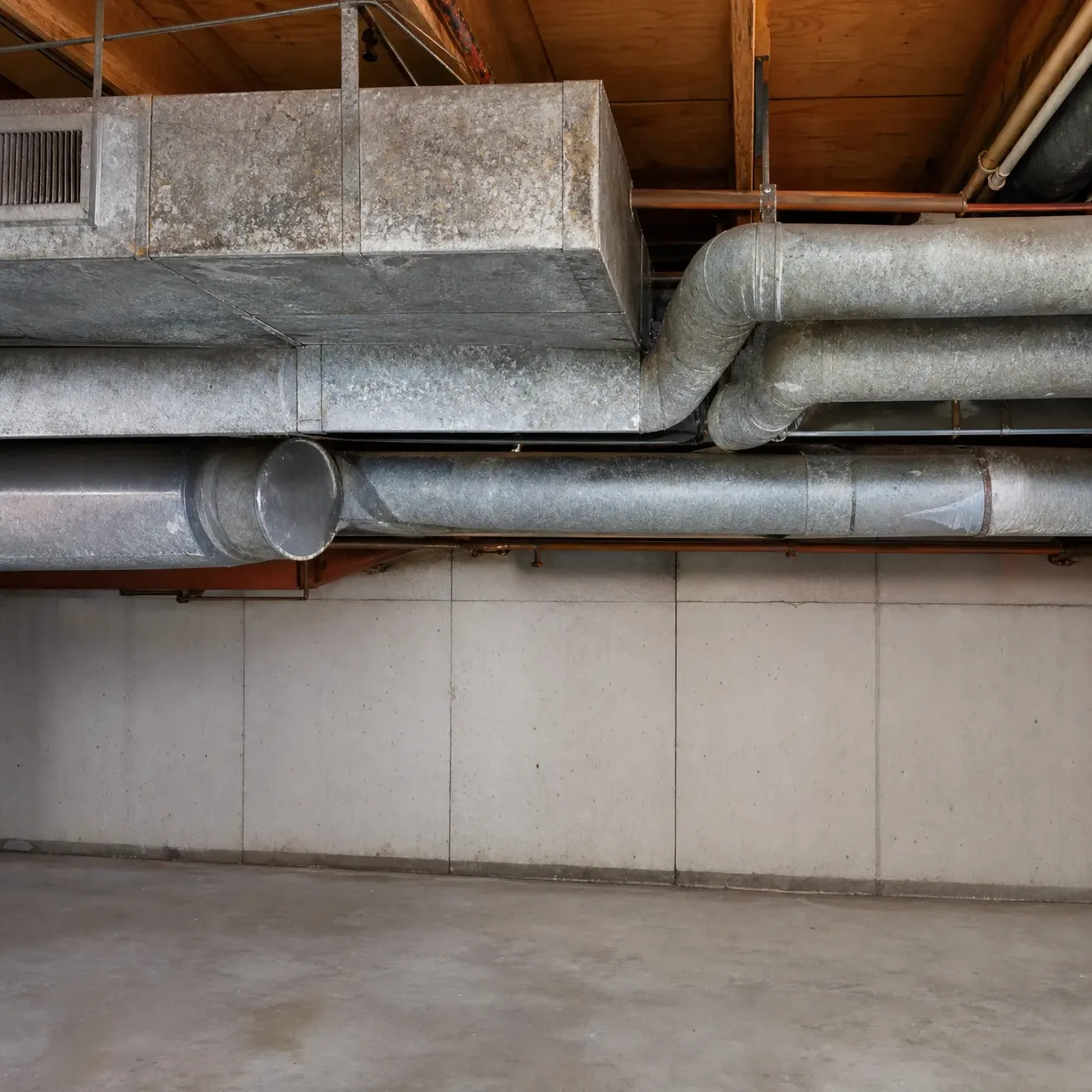
An empty basement room with bare concrete walls and floor, with galvanized sheet-metal HVAC ductwork and a vent grille running along the wooden joist ceiling.

Dust-coated, neglected ductwork

Years of dust have built up on the inside of this metal, dark enough to see in places. Once it's held onto that much, moisture from the coil nearby has something to work with. That's the duct a musty smell is coming from.

What am I actually noticing around my house

You catch it most in rooms that stay closed up, a bedroom with the door shut all day or a closet near a vent. Clothes pulled out of that closet can carry the smell with them. Bedding feels the same way after a few days, even right after washing. If anyone in the house has allergies or asthma, you may notice more sneezing or a stuffy feeling when the system has been running a while, especially overnight. None of this means the system is about to fail. It means the air moving through your home all summer is carrying something it shouldn't, and it's settling into fabric and closed rooms faster than you can air them out.

  1. A technician seals the vent openings in each room first.

  2. A vacuum line connects to the main trunk through an access port.

  3. Spinning brushes knock dust and mold loose from the duct walls.

  4. Negative pressure pulls the loosened debris into the vacuum.

That musty smell is the coil, not the ducts, and it clears once the coil and the runs around it get cleaned out. You don't need to guess at what's causing it anymore or live with it through another Little Rock summer. A local contractor who works on Pulaski County duct systems all season knows what a coil that's been sitting wet since May looks like, and what it takes to clear one that old ductwork has let collect for years. You'll be matched with one contractor, not a handful of companies calling at once, someone who already knows this kind of system and what usually turns up inside it. Send the request and the search is off your plate. The smell has an answer, and it's one a technician who does this work every summer can take care of without you having to figure out who to call or what to ask for.

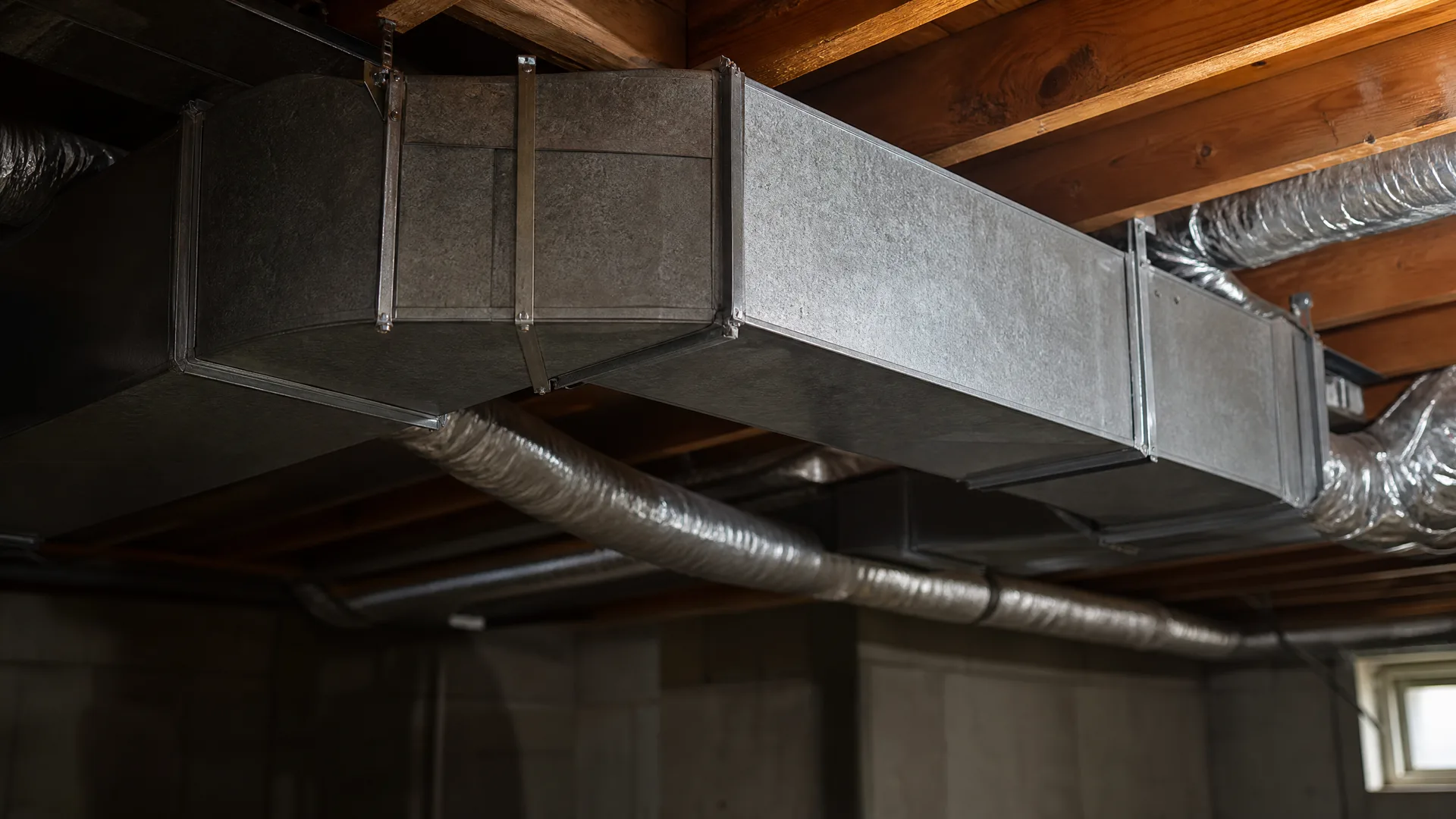
Rectangular sheet-metal HVAC trunk ducting and insulated flexible ducts running along wooden floor joists in an unfinished basement ceiling above concrete block walls.

Finding a pro stops being your job

Duct and vent cleaningDucts or ventsPulaski County, AR
Step 1 of 2

What ZIP code is the job in?