




Side profile of a bearded man wearing a faded dark blue baseball cap and a matching dark T-shirt against a plain light gray background.

Mold in air ducts in Rogers, AR

Duct and vent cleaningDucts or ventsBenton County, AR
Step 1 of 2

What ZIP code is the job in?

Mold in your air ducts usually means moisture got in somewhere, condensation on a cold coil, a drain pan that isn't draining, or air leaking into the ductwork from a crawlspace or attic. Rogers summers run long and muggy, and that humidity gives mold what it needs to grow once it has a damp surface to sit on. You'll usually notice it as a musty smell when the air handler kicks on, or sometimes dark specks around the vent covers themselves. It does not go away on its own, because the moisture source that started it is still there every time the system runs. A contractor can clean the ductwork and find where the moisture is coming from, since cleaning without fixing that part just means it comes back. Left alone, it keeps circulating through the air you're breathing in the house every day.

Why does mold keep growing back in your ducts?

  • Half the homes here were built by 2001

    Half the homes in Benton County went up by 2001 or earlier, so duct runs and seals have had decades to crack, loosen, or let in damp attic or crawlspace air.

  • Heat runs October through April

    Cooling runs May through September here, five months of a cold coil producing condensation right where mold needs it most to take hold in the ductwork.

  • Cooling runs May through September

    Heat takes over October through April, seven months where the system sits idle in between, giving any moisture left behind time to turn into mold instead of drying out.

ACS 2020-2024 · NOAA nClimDiv 1991-2020

Galvanized sheet-metal ductwork and pipes running along an unfinished basement ceiling beside a plain beige wall, with a gray equipment cabinet below.

Mold you can see

Dark spots or a fuzzy patch around a supply vent or return grille mean mold has already spread past that one spot. By the time it shows at the grille, it's usually coating the inside of the duct for some distance back. A contractor can open the run and check how far it goes before cleaning it out.

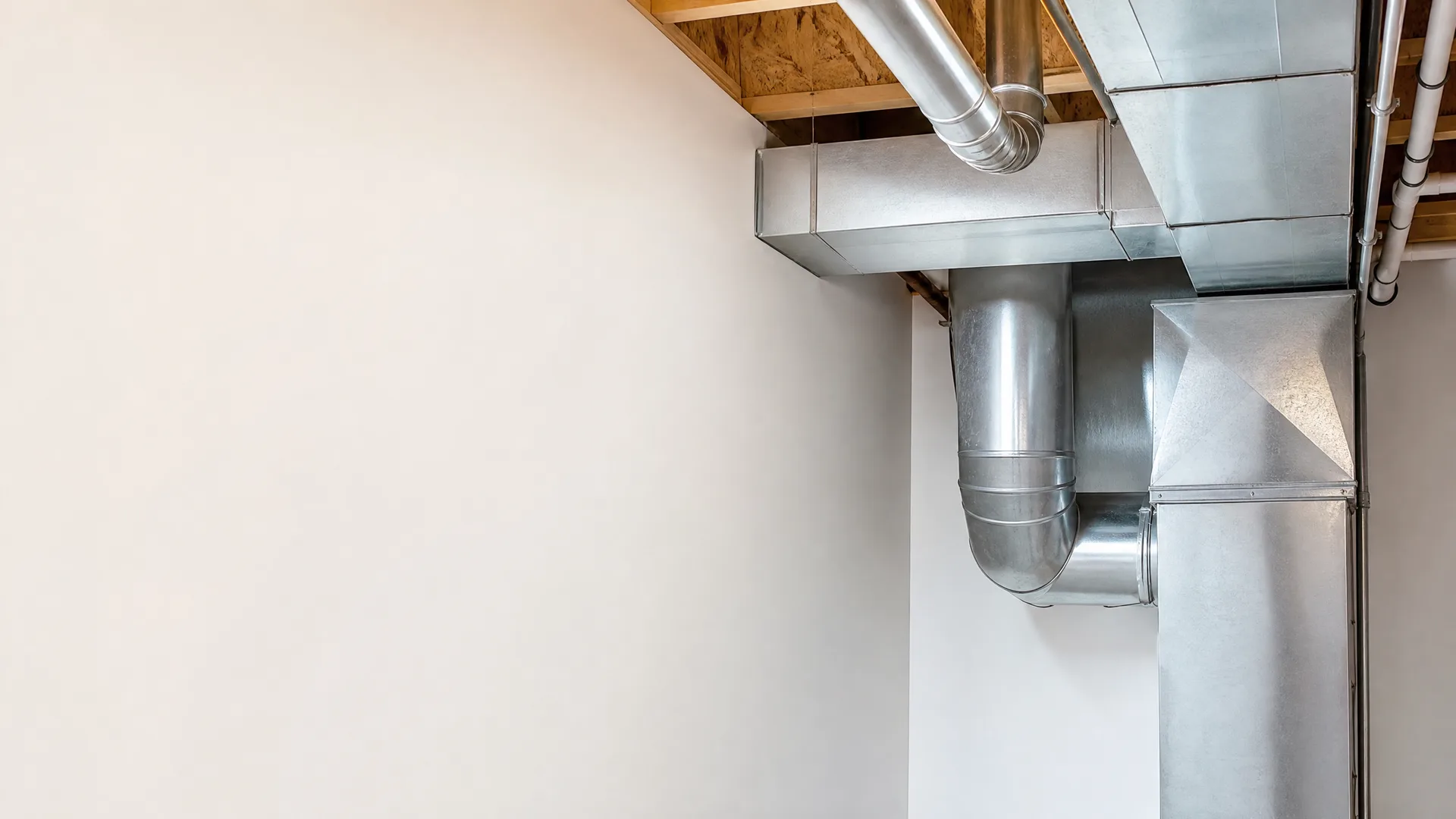
Galvanized sheet metal rectangular and round HVAC ducts running along a ceiling and down a white interior wall, with exposed wood joists and subfloor above.

Mold you can only smell

A musty smell when the system kicks on, with no visible spots anywhere, often means the mold is sitting on the evaporator coil or in the drain pan rather than in the ductwork itself. It still needs a look, because a wet coil or a pan that won't drain will keep feeding mold back into the air long after a duct cleaning.

Clean the Ducts or Stop the Moisture

Duct cleaning

  • A contractor clears mold growing on the inside walls of the ducts themselves, including runs you can't see from a grille.
  • It addresses what's already there, so it matters most when mold has spread past a single vent or return.
  • Cleaning alone won't stop mold from coming back if a drain pan still backs up or attic air still leaks into a seam.
  • It's the right call when the moisture source has already been fixed and what's left is the growth itself.
  • A thorough job reaches the branch lines and the plenum, not just the sections nearest the grilles.

Fixing the moisture

  • This means finding where water or damp air is getting in, a condensate line that isn't draining, a leaky seam, a coil sweating onto insulation.
  • It stops mold from growing back, which cleaning by itself doesn't do.
  • A contractor has to inspect the coil, the drain pan, and the duct seals to find the actual source.
  • Without this step, mold that's cleaned out in June can be back by August.
  • It won't remove mold that's already coating a duct run, only keep new growth from starting.
A man in a gray knit sweater stands smiling and looking off to the side beside a white marble kitchen island, with a dining table, pendant light, and open shelving in the background.
A smiling man with short dark hair and stubble in a gray sweater sits at a stone-topped counter with a white ceramic mug, in a room with a framed picture, a plant, and shelves holding bowls.
A smiling man in a dark navy sweater sits at a wooden kitchen counter with a light ceramic mug, with white tile backsplash, open shelving and a window with potted plants behind him.
A smiling man with dark hair and a beard, wearing a dark green knit sweater, stands at a kitchen counter with a ceramic mug, with an open living room, sofa, armchair and large windows behind him.

Let someone else find the pro

You've already smelled it or seen it, and now you're the one who has to deal with it. That usually means calling around to find someone who actually cleans ducts rather than just vents, explaining the mold, the musty smell, maybe a cold coil or a drain pan that's been backing up, then doing it again with the next company while you wait on callbacks and try to line up quotes against each other. Benton County's long muggy summers mean this isn't a one-time fix you can put off and forget. Once mold is established in a duct run, it tends to hang around until someone actually gets in there and clears it. Send the request once and that search is off your plate. You're not sorting through five bids or repeating yourself to five different people. One contractor gets your information, and you're back to dealing with your house instead of dealing with finding help.

Why the smell lingers after cleaning

A contractor can clear mold from the duct walls and the smell can still hang around for a day or two, especially in rooms near the return. Mold spores settle into carpet, curtains, and furniture too, not just metal ductwork. The ducts being clean doesn't mean every surface the air touched is. If the moisture source behind the growth, a cold coil or a bad seal, hasn't been fixed, the smell coming back within a few weeks usually means mold is forming again, not that the first cleaning missed anything.


What a drain pan has to do with it

Your air conditioner pulls moisture out of the air and drips it into a drain pan, which carries it outside through a condensate line. When that line clogs or the pan cracks, water backs up instead of draining, and it sits right next to the ductwork and the coil. Standing water next to warm, humid duct runs for months at a time is enough to start mold growing on its own, even if nothing else in the system changed. A contractor checking the ducts usually checks this line too.

A smiling man with short dark curly hair and stubble, wearing a navy T-shirt, sits on a beige sofa looking down toward a dark object in the foreground, with a living room, round mirror, lamp and bright window behind him.
A man with graying hair and a beard in a plaid flannel shirt stands indoors looking out a frosted window at snow-covered trees, with a ceramic mug on the sill.

What's riding on your supply air

Every time the blower kicks on, air passes over whatever is growing in that duct and comes out the vent into the room you're sitting in. In a bedroom that runs all night, that's hours of exposure. If anyone in the house has asthma or allergies, a musty smell that wasn't there last year is worth paying attention to. Mold doesn't stay put either. Spores move through the house on that same airflow and settle on surfaces far from the duct itself, which is part of why the smell can show up in a room with no vent problem at all.

What it does to the system itself

Mold growing inside a duct usually means standing moisture somewhere, and that same moisture corrodes metal and breaks down insulation over time. A coil or drain pan that stays wet feeds the mold and shortens its own life at the same time. Left alone, it's not just a smell problem. Register covers can show rust, duct liner can start to sag or flake, and the musty air gets pulled back through the return and recirculated instead of clearing out. None of that reverses on its own once the weather turns, since whatever let the moisture in the first place is still there.

Power here costs 12.77 cents per kilowatt-hour

At 12.77 cents per kilowatt-hour, running the blower longer to chase a musty smell or push more air through moldy ducts doesn't hit your bill that hard here. That's worth knowing before you decide whether to live with it or get the ducts actually cleaned.

EIA-861 2025

A closed laptop and a ceramic mug of coffee on a wooden table, with a blurred kitchen counter, cutting board, utensil jar and plant in the background.

Mold in the ducts doesn't go away on its own

Moisture got into the system somewhere, a cold coil, a drain pan, a leaky seam near the attic or crawlspace, and mold took hold in the dark, damp inside of the ductwork. It shows up as a smell or a dark patch at a vent, but by then it's usually spread further back than you can see. Cleaning the duct walls is what deals with it. Nothing about that changes with time except that the mold keeps growing.

You already know what's wrong. What's left is finding someone who cleans ducts rather than just vents, and who can tell you honestly whether a cold coil or a bad drain pan is feeding it. Send the form and that search is done. No calling around, no repeating the story about the smell and the cold coil to three different companies, no sorting through quotes that don't say the same thing. Someone who does this work gets in touch, and you're not the one hunting anymore.

Interior corner of a room with a dark upholstered sofa and textured cushion, a potted plant, sheer curtains at a multi-pane window showing blurred green and yellow trees, and a dark table holding a wooden tray with stacked coasters and a small ceramic vase.
A gray standing-seam metal roof with two stone chimneys in the foreground, framed by pine branches and moss-draped trees, overlooking misty forested hills and distant mountains under an overcast sky.

One request and it's handed off

Skip calling around

No fee to send it, and nothing to sign.

You already know the smell comes back before you've forgotten it was ever gone. Sending the request means you're not the one calling around Rogers for someone who actually cleans ducts instead of just vents. One form, and that part of it is off your plate.