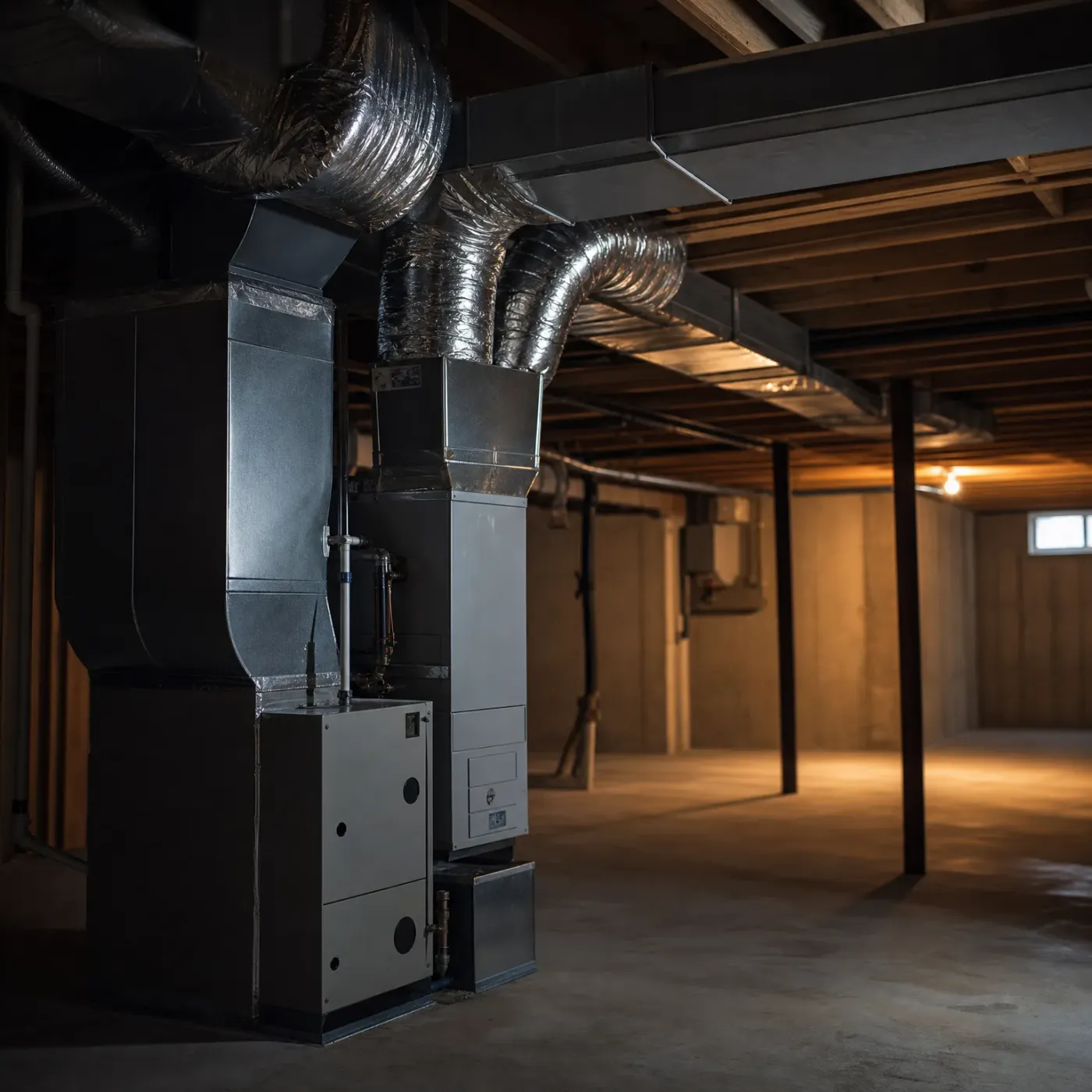




Unfinished basement with concrete floor and walls, exposed wood joists, steel support columns, and two furnace-type units connected to sheet-metal and flexible insulated ducts.

One request and it's handed off

Signs of mold in your air ducts in Arkansas

A musty smell when the air kicks on, dust that comes back days after you clean, a dark ring around the vent cover. Arkansas summers push your system hard, and that moisture is exactly what mold needs. This page walks through what to look for in your ducts and what it means. Send the form and skip the part where you call around and explain the problem over and over.

Let a pro reach out

A musty smell when the air kicks on, dust that keeps coming back days after you wipe it down, dark spots around the vent cover: those are mold, growing inside the ductwork itself. It needs moisture to grow, and a humid Arkansas summer gives it plenty, especially if the air conditioner is sized wrong or the ducts run through a damp crawlspace. Once mold takes hold in the ducts, every cycle of the system pushes spores into the rooms you live in, so the smell and the dust are not separate problems, they are the same one. Visible growth on a vent cover means there is more you cannot see further back in the line. Catching it at the musty smell stage, before it shows on the cover, means a smaller job and less of it has spread through the system. A duct cleaning crew can tell you what is actually growing back there and how far it runs.

Galvanized sheet-metal ductwork and round pipes running along an exposed wood-joist ceiling with insulation, above a furnace unit beside a blank painted wall.

Why the vents show it first

Mold grows where moisture collects, and the supply vents are where that damp air meets the room. A dark ring around the cover means spores are settling there every time the blower runs. The return vent matters too. Air pulls in through it before it crosses the coil, so a musty pull of air at the return often means the growth is further back in the duct, not just at the opening you can see.

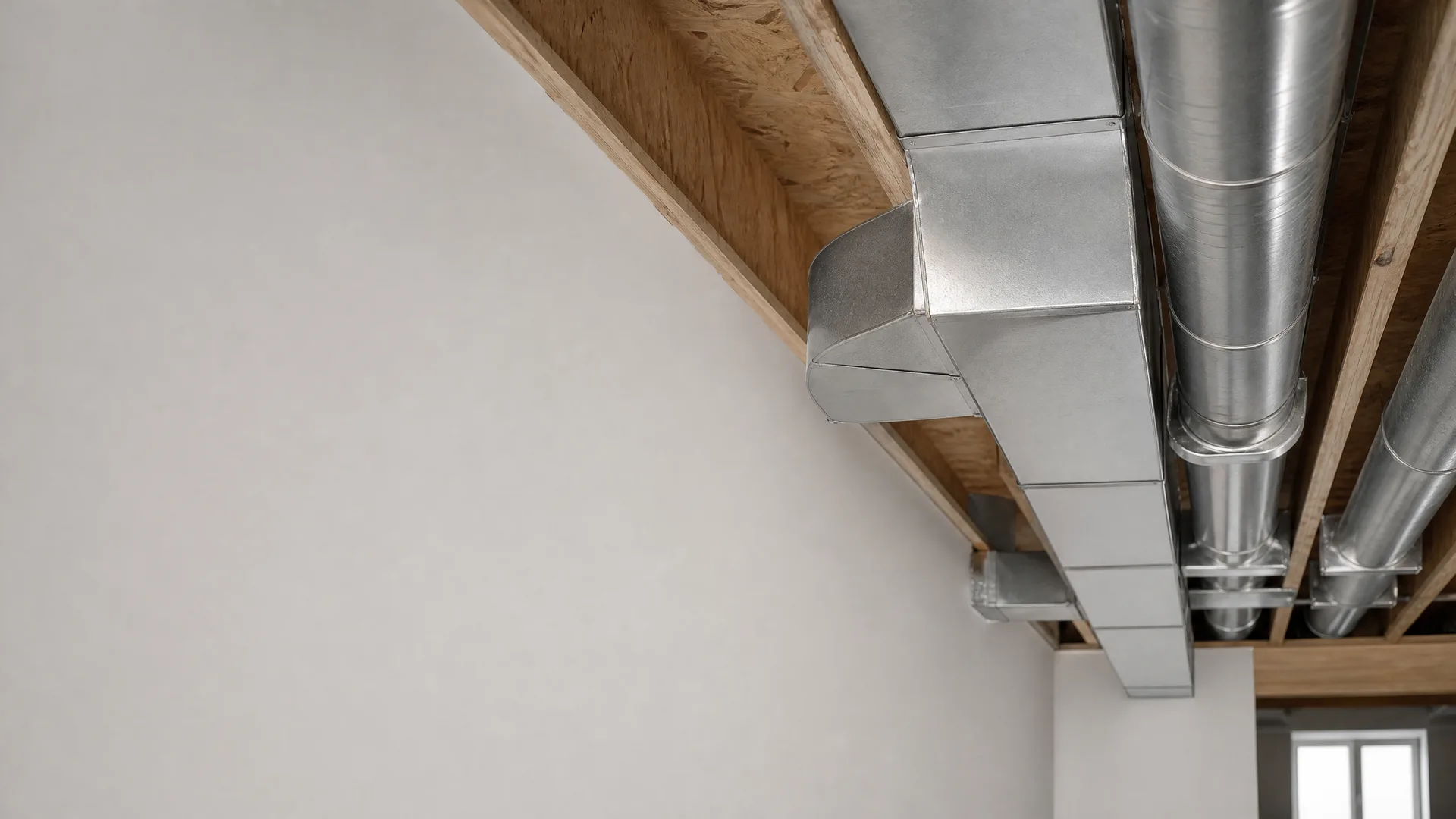
Galvanized rectangular and round sheet-metal ductwork mounted beneath an exposed wooden joist and OSB ceiling, next to a plain white wall and a window at lower right.

What the coil has to do with it

Your air conditioner's coil drops below the dew point every time it runs, and condensation drains off it into a pan below. If that pan drains slowly or the line clogs, water backs up into the duct connected to it. A system that short-cycles on hot afternoons runs that coil wet more often, and wet duct lining near the coil is where mold tends to start before it spreads toward the vents.

A wooden table in the foreground holds a closed laptop and a ceramic mug of coffee, with a spindle-back wooden chair behind it, a beige wall with paneled wainscoting, a window at left, and a kitchen counter with a cutting board, bowl of fruit and greenery at right.

What it means for your house

Once mold is established in the ducts, it rides the air into every room the system reaches. Bedrooms, the living room, wherever a supply vent sits. You can bleach the bathroom tile all you want, but if the source is inside the ductwork, it comes back. That's the pattern that tells you this isn't a surface problem anymore.

It also costs you in ways you won't connect to mold at first. A system working through buildup and moisture runs longer to do the same job, and with electric heat in most Arkansas homes, that shows up on the power bill even though power here is cheap. Instead of tracking down a duct cleaner on your own, calling around for quotes, and explaining the same symptoms to three different companies, you can send one form and let someone qualified take it from there.

Interior corner with sheer white curtains at a window, a brown upholstered sofa in the foreground, and a wooden multi-drawer cabinet holding a round ceramic vase with leafy branches.
Unfinished basement with concrete floor and walls, exposed wood joists, steel support posts, and large galvanized sheet-metal ductwork running to a furnace or air handler against the far wall.

Ducts running clean

This is what the system looks like when air moves through dry. The ducts carry air to every room without adding anything to it. No musty pull when the blower starts, no dark ring building around the vent cover. A dry duct can't grow mold, no matter how hot the attic gets above it.


Galvanized sheet-metal ductwork and round pipes run along a wooden floor joist ceiling above a bare concrete wall and floor.

Ducts holding moisture

Here the same kind of ductwork has damp sitting inside it. The humid air it moves never fully dries between cycles, and that's enough for mold to take hold on the metal. From the outside it still looks like ductwork. What's different is what's growing on the inside, out of sight above this ceiling.

Empty basement with bare concrete walls and floor beneath an exposed wood-joist ceiling carrying galvanized sheet-metal ductwork, round ducts and pipes.
Before you get your ductwork cleaning
Unfinished basement with bare concrete floor and walls, exposed wood joists, metal ductwork, a furnace unit, steel support posts, and a small window.
After you get your ductwork cleaning

Wait and see

The smell keeps coming back after every cleaning you try yourself, and the spores keep riding the air into every room while you hope it clears on its own.

Describe it once

Get it inspected

A contractor can confirm what's growing in the ducts and clean the source, so you're not guessing which room it's coming from or whether wiping vents is doing anything.

Describe it once
A smiling man in a navy long-sleeve shirt sits at a wooden table in a kitchen and dining area, with a ceramic mug, a potted plant, and a sliding glass door behind him.
A smiling bearded man in a green henley shirt stands at a kitchen island with a gray mug, looking off to the side, with a dining area and shelves blurred behind him.
A smiling bearded man in a navy sweater sits at a white kitchen island with a ceramic mug, with open shelves, potted plants and a range hood behind him.
A smiling man in a dark olive long-sleeve shirt sits in a kitchen beside a counter with a dark mug, with a dining table, sideboard and hallway visible in the blurred background.
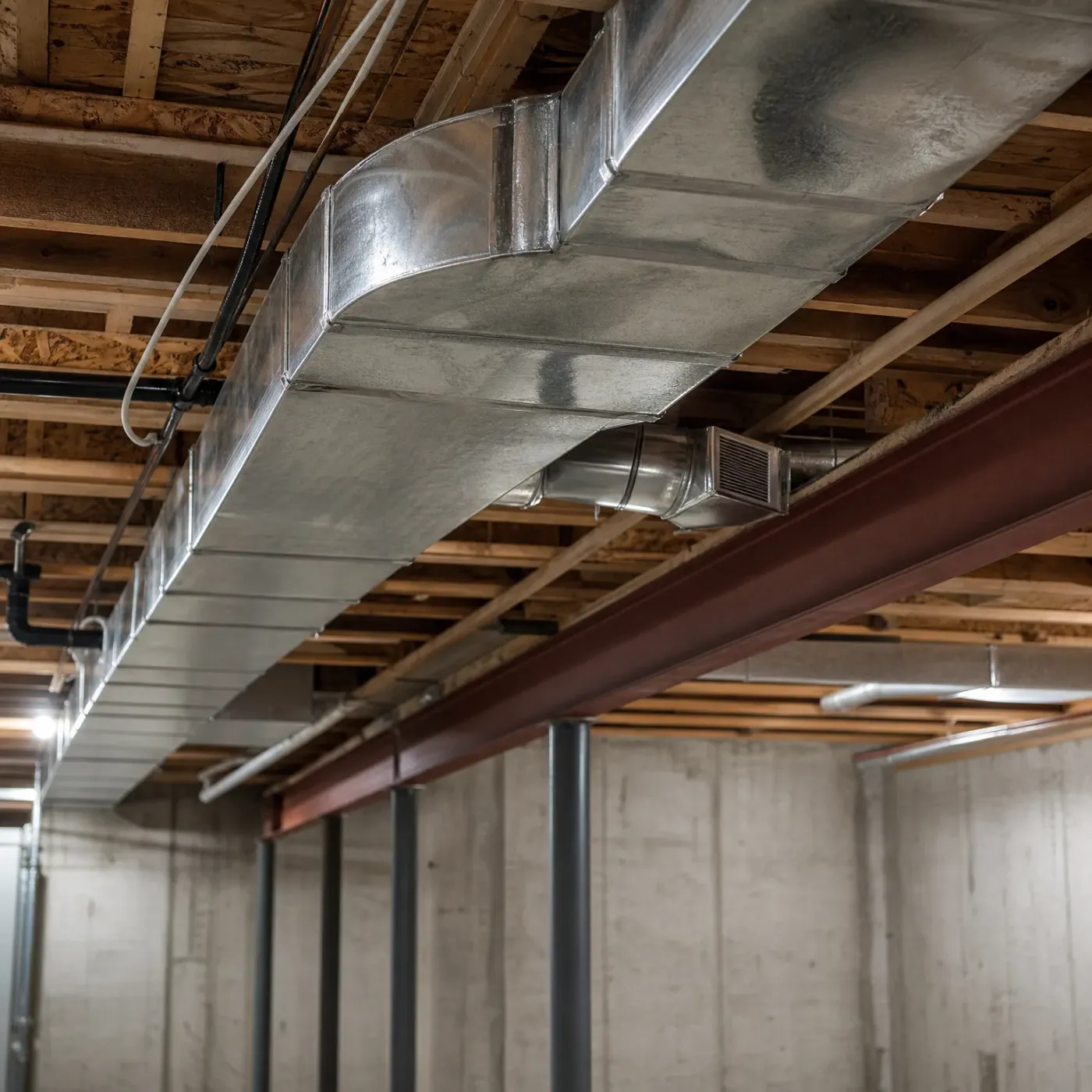
Galvanized sheet metal trunk ductwork with a round branch and register running beneath wood floor joists in an unfinished basement, alongside pipes, wiring, a steel beam and concrete walls.

It's off your list after this

Skip calling around for someone who cleans ducts.

After this form, you can stop searching for a duct system pro.

I'm done searching

You're not committing to anything by asking.

Power costs 12.87 cents per kilowatt-hour statewide

At 12.87 cents a kilowatt-hour, running the blower longer than it should doesn't cost much here. That's part of why mold in the ducts goes unnoticed so long: the system never forces your hand on price, so a musty smell is often the only warning you get.

EIA-861 2025 statewide residential average

One vent, or every room

A single musty vent in one bedroom could be a local problem, a bit of standing water in that one run, or a cover that was never sealed right. That's worth a look, but it's contained. Mold showing up at several vents across the house, or at the return as well as the supply side, points to growth somewhere upstream in the shared trunk line, where every room's air passes through on its way out. The difference matters because it tells you how far the problem has spread before you ever open an access panel. One bad vent is a smaller job. Several bad vents means the air handler itself has likely been sitting in moisture long enough for mold to take hold where it can reach the whole house at once.

A smell that fades, and one that doesn't

Run the blower after a window's been open, or right after a hard rain, and a faint musty note that clears in a few minutes isn't unusual. Humid air moving through the house for the first time in a while can carry that smell briefly. What's different is a smell that's there every time the system kicks on, no matter the weather outside, and doesn't fade as the air keeps moving. That's not a passing bit of dampness, that's a colony established somewhere in the ductwork, feeding the air continuously as long as the blower runs. If you can set your watch by it, every cycle, every day, that's the sign worth acting on instead of waiting out.

A smiling bearded man in a green t-shirt sits on a gray sofa, looking down toward a device at the bottom of the frame, with a bookshelf and a green plant blurred behind him.
A bearded man in a plaid flannel shirt stands indoors looking out a window at snow-covered conifers, with a ceramic mug on the wooden sill and wooden cabinets behind him.

What the signs are telling you

  • A musty smell, returning dust, and dark rings on vent covers together mean mold is established in the ducts, not just one damp spot.
  • Mold in the ducts rides the blower's air into every room the system reaches, not only the room where you first noticed it.
  • A dry duct cannot grow mold, so a system that smells clean and shows no ring at the vent is doing what it should.
  • A single musty vent in one room can be a local problem, but the same smell at several vents points to the duct system itself.
  • Once you've spotted the signs, the next step is confirming what's actually growing in there and getting it cleaned out.
  • Finding a contractor who handles duct cleaning, checking they're licensed, and getting quotes back to compare takes its own time and effort.

The smell, the dust, the ring around the cover: those three together mean mold has taken hold somewhere in the duct system, not just in one spot you can wipe away. It won't stay put. Every time the blower runs, it carries spores into whatever room that duct feeds, which is why a clean bathroom or a bleached windowsill doesn't fix what's coming through the vent. The flip side is just as true. A system with dry ducts has nothing for mold to grow on, so no smell and no ring means the air moving through your house is doing what it's supposed to do.

Where it shows up matters too. One musty vent in a back bedroom might be its own small problem, something local to that run of duct. The same smell showing up at several vents across the house means the ducts themselves are the source, and that calls for a real look, not a spray and a hope.

Once you've noticed these signs, the next step isn't guesswork. It's finding out what's actually growing in there and having it removed. That part, tracking down someone licensed to do duct work, calling around for availability, explaining the same musty-vent story two or three times, then sitting with quotes trying to compare them, is its own chore on top of the problem itself. Confirming what's in your ducts is the only way to know you've actually dealt with it, not just masked it for a few weeks.

Dim interior with a dark gray wall, exposed wood joist ceiling, sheet-metal ductwork, conduit, pipes and a sprinkler head.

Stop chasing a duct system pro

Answer a few questions about the duct cleaning and skip the search.

Duct and vent cleaningDucts or ventsArkansas
Step 1 of 2

What ZIP code is the job in?