Mini Split Installation in Mountain Home, AR
A new system here will heat from October through April and cool from May through September every year. Tell us about the house, and a licensed contractor who covers Baxter County will get in touch.
Tell us about the job
It takes about a minute.
What a mini-split in Mountain Home has to handle
Your mini-split will run almost every month of the year here. Heat from October through April, cooling from May through September. That's a compressor working in nearly every season, with almost no time off.
Winter nights average 28°F, and summer afternoons average 88°F, so the system has to hold up at both ends. Any mini-split installed new has to meet the federal minimum for a split-system heat pump, 14.3 SEER2 for cooling and 7.5 HSPF2 for heating. This area also sees its share of winter storms and damaging wind, and with over half of homes here heating with electricity, a mini-split that keeps running when the power blinks matters more than it might somewhere else.
- 7 months
- October through April, your system heats
- 5 months
- May through September, it cools
- 28°F
- the average winter night it heats against
- 88°F
- the average summer afternoon it cools against
NOAA nClimDiv, 1991–2020 normals
Arkansas requires HVAC contractors to hold a state license.
The license belongs to the contractor, not to the job itself. Arkansas tested this contractor and keeps a record of them before they ever set foot in your house. Because the state holds this licensing power, Baxter County and the city cannot add their own HVAC license on top of it. One license, issued by the state, is what stands behind the work.
For a mini-split installation, that license is the main protection you have. Most cities and counties also require a permit for a job like this, along with an inspection once the work is finished. That inspection checks the installation itself, separate from whatever the state license already tells you about the contractor.
Source: Arkansas Department of Labor and Licensing
- Is a mini split worth it?
- For a lot of homes here, yes. Mountain Home needs heat from October through April and cooling from May through September, so the system runs nearly year round, and a heat pump does both jobs with one piece of equipment. Winter nights averaging 28°F are within the range a modern mini split is built to handle, so it can carry the heating load and not just take the edge off. A contractor can look at the space you want to cover and tell you what size unit fits it.
- How many rooms can a mini split cover?
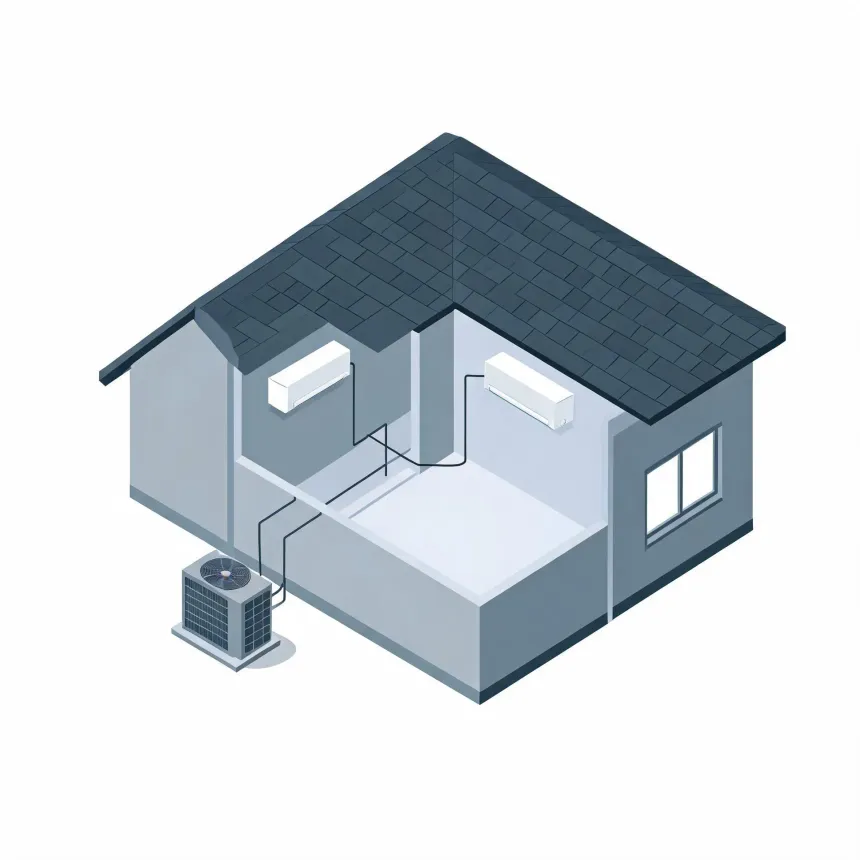
- A single indoor head is meant to heat and cool the one room or open area it sits in. If you need coverage in several rooms, a multi-zone system runs more than one indoor head off a single outdoor unit, and each head can be set on its own. How many zones a house can support depends on the layout and where the outdoor unit can go, so that part is worth having a contractor walk through in person.
- Can a mini split heat a whole house?
- It can, if it is sized and placed for the whole house rather than one room. That usually means a multi-zone system with an indoor head in each area that needs heat, not one unit trying to reach through walls and hallways. With winter lows here averaging 28°F, whole-house heating with a mini split means picking equipment rated for that cold, which a licensed contractor can confirm when they size the job.