
Furnace Installation in Mountain Home, AR
A new furnace here will run from October through April every year. Tell us about the house, and a licensed contractor who covers Baxter County will get in touch.
Tell us about the job
It takes about a minute.
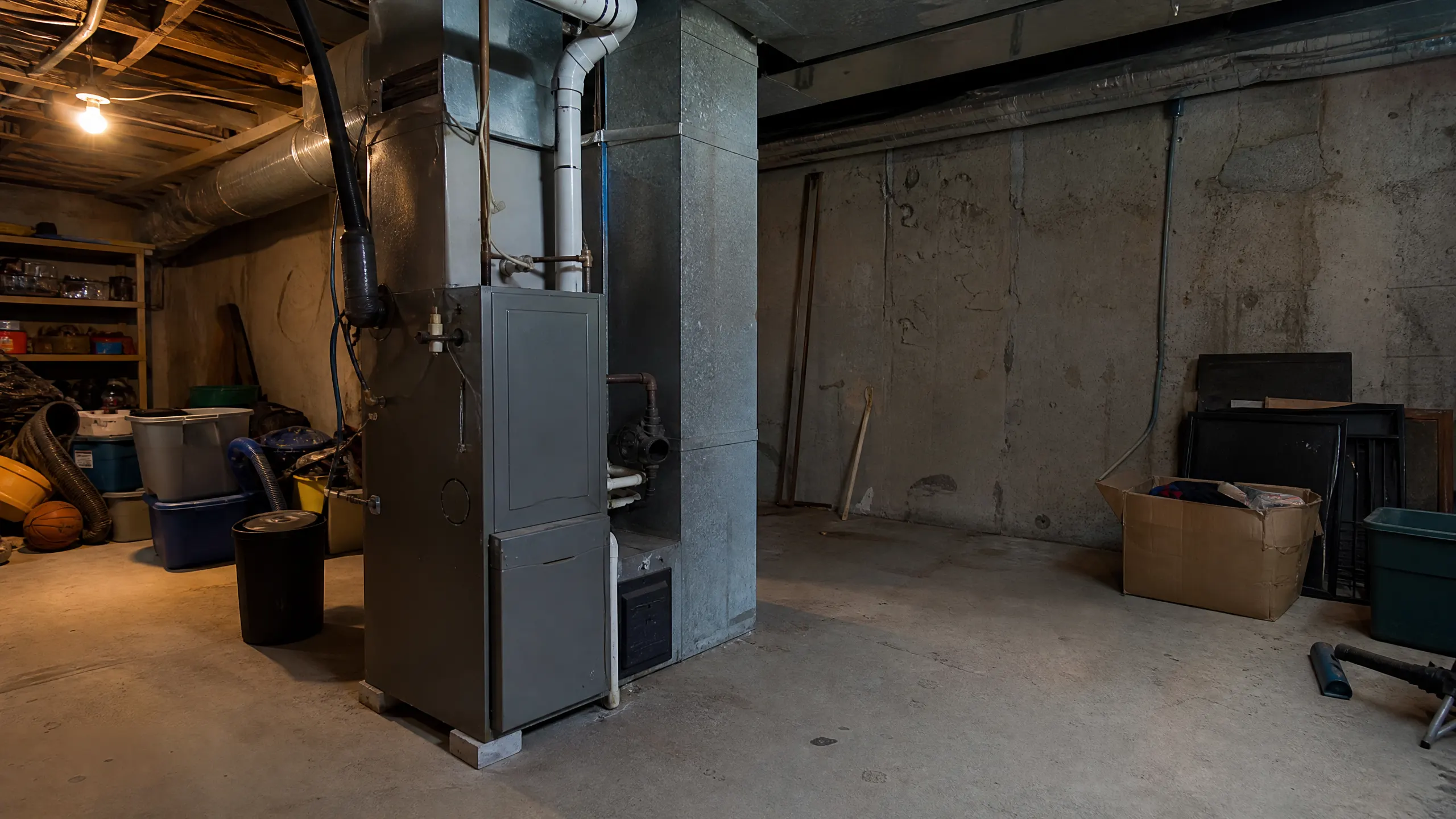
Seven months of heating in Mountain Home
Your furnace works October through April here, seven months of the year. Winter nights average 28°F, so it runs long stretches most nights of the week, not just during a few cold snaps.
More than half the homes in the area heat with electricity, and storms take that power down. Over the last ten years the county has seen 13 winter storms and 51 damaging wind events, and in 2024 nearly a quarter of Arkansas households lost power for at least 24 hours at some point. A new gas furnace installed today has to meet 80.0 percent AFUE by federal rule, and that efficiency matters over a season this long.
- 7 months
- October through April, your furnace is on duty
- 28°F
- the average winter night it heats against
- 80% AFUE
- the federal minimum any new unit must meet
NOAA nClimDiv, 1991–2020 normals
Arkansas requires HVAC contractors to hold a state license.
Arkansas tests and licenses the contractor, not the furnace going into your house. The license is tied to the business, so any crew that shows up under that license is covered by the same state record. Cities and counties in Arkansas cannot layer on their own HVAC license, so the state's is the one that applies no matter where in Baxter County you are.
For a furnace install, that license is the main thing standing behind the work, but it is not the only check. Most cities and counties still require a permit for a furnace replacement, along with an inspection once it is done, and that inspection is what catches a bad gas connection or a venting mistake before it becomes dangerous. The license says the contractor was tested. The permit and inspection say this particular job got checked.
Source: Arkansas Department of Labor and Licensing
- What size furnace does my house need?
- It depends on your house, not a rule of thumb like square footage alone. A contractor works this out with a load calculation that accounts for how the house is built, how many windows it has, the ceiling height, and how much air leaks in and out. Going bigger than what the calculation shows is not a safety margin, it means the furnace short cycles and wears out faster. With winter nights averaging 28°F here, getting this number right matters more than it would somewhere milder.
- How do I know it's time to replace my furnace?
- Watch for repairs that keep coming back, or a heat exchanger with a crack in it. A cracked heat exchanger is not something to patch, it gets replaced. If your furnace is also struggling to keep the house warm through the coldest nights, that is a sign the equipment is losing ground, not just aging quietly. A licensed contractor can look at the actual unit and tell you whether it is worth repairing again or time to install a new one.
- Is a high-efficiency furnace worth it?
- For a house here that needs heat from October through April, seven months of the year, the difference in efficiency adds up over a full season in a way it would not somewhere milder. Any non-weatherized gas furnace made after November 2015 has to hit at least 80 percent AFUE, so the choice now is really between that baseline and a high-efficiency model rated higher than that. A contractor can walk through what a higher AFUE unit costs to install against what it saves you burning less gas over that long a heating season.