Mini Split Installation in Benton, AR
A new system here will heat from November through March and cool from May through September every year. Tell us about the house, and a licensed contractor who covers Saline County will get in touch.
Tell us about the job
It takes about a minute.

Ten months of work for a Benton mini-split
Benton asks for heat from November through March and cooling from May through September. That's 10 months a year your mini-split is running one mode or the other, with barely a break between seasons.
Winter nights average 33°F and summer afternoons hit 90°F, so the system has to swing between two real workloads, not just take the edge off. Any mini-split installed new has to meet the federal minimum of 14.3 SEER2 for cooling and 7.5 HSPF2 for heating, but in Benton those numbers get tested most of the year, not just a few weeks of extreme weather.
- 5 months
- November through March, your system heats
- 5 months
- May through September, it cools
- 33°F
- the average winter night it heats against
- 90°F
- the average summer afternoon it cools against
NOAA nClimDiv, 1991–2020 normals
Arkansas requires HVAC contractors to hold a state license.
Arkansas licenses HVAC contractors, and that license covers the contractor, not the job itself. Counties and cities cannot add their own HVAC license on top of the state's, so the state license is the one that applies here.
That license is what stands behind whoever installs the mini-split. In most cities and counties, the job itself will still need a permit from the local building office, with an inspection once the work is done. The inspection checks that the installation was done right. The license is what says the contractor doing it was tested and is on record with the state.
Source: Arkansas Department of Labor and Licensing
- Is a mini split worth it?
- For a lot of homes here, yes. A mini split handles both the summer stretch when afternoons run near 90°F and the winter months when nights drop to 33°F, so one system covers the room year round instead of a window unit for summer and a space heater for winter. It also puts heat or cooling right in the room you're using, which matters most in a space that's hard to reach with existing ducts, like a garage conversion or an addition. Whether it's worth it for your house depends on which rooms need coverage and what you're replacing, so a contractor can walk through that with you.
- How many rooms can a mini split cover?
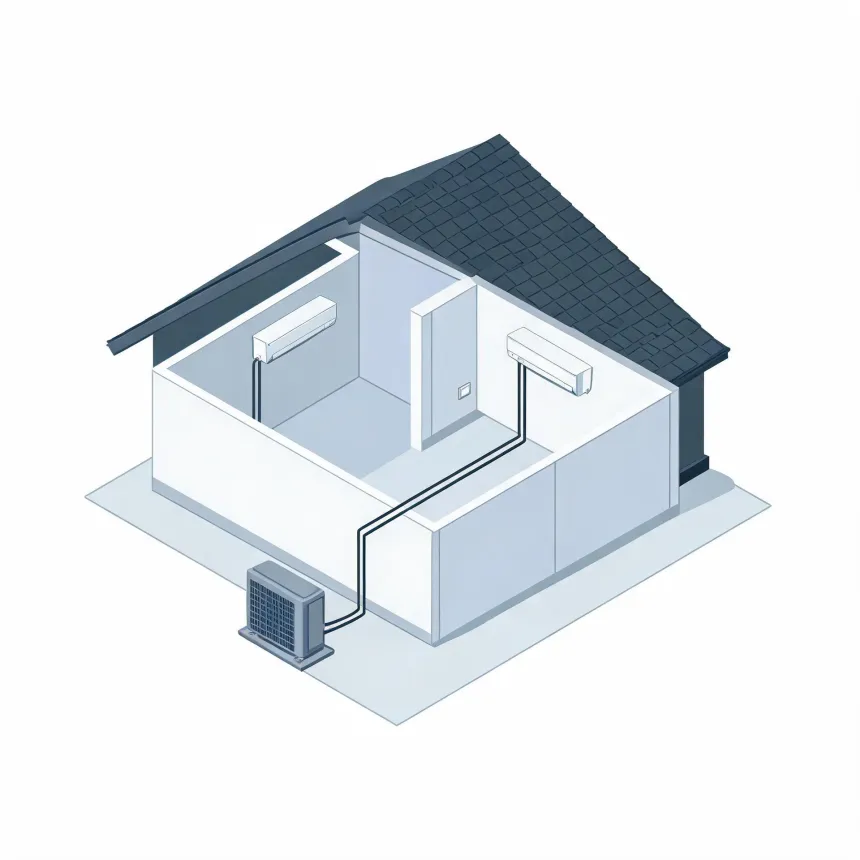
- A single outdoor unit can run one indoor head or several, depending on the system. Single-zone systems cover one room. Multi-zone systems run several indoor heads off one outdoor unit, each with its own thermostat, so you can heat or cool different rooms to different temperatures at the same time. How many zones makes sense for your house depends on the layout and where you need coverage, which is something a contractor will work out on site.
- Can a mini split heat a whole house?
- A multi-zone mini split can heat a whole house if there's an indoor head in enough of the rooms, but a single-zone unit will only heat the room it's installed in. Since homes here need heat from November through March, sizing matters more than usual. A unit that's too small for the space it's covering will run constantly on the coldest nights and still fall short. A contractor can size the system, or the combination of zones, to the square footage and layout of your house.