
135 degrees F
That's the air temperature at the drum that a blocked vent can push back into the dryer housing. Nesting material sitting that close to heat is a real fire risk, not a maybe.
Get matched with a pro who works on dryer vents in Sebastian County.
Find my proA bird builds a nest in your dryer vent because it looks like a hollow tree branch, warm and sheltered from the weather, with an opening that leads straight outside. Spring is when it usually happens, while birds in and around Fort Smith are hunting for places to nest, and a vent hood that sits unused for a few weeks is an easy target. Once twigs and debris pack the duct, the dryer has nowhere to push hot, damp air. Clothes take longer to dry, the laundry room gets warmer than it should, and the exhaust that's supposed to leave the house starts backing up instead. That buildup is lint's problem too, and a blocked vent full of nesting material is a known cause of dryer fires. The fix isn't something to put off. A vent that's nesting-blocked needs the nest cleared and the duct cleaned out, and a cap or guard on the outside opening keeps it from happening again.
2.43 people per household on average
With 2.43 people in the average Sebastian County household, that dryer is likely running several loads a week, each one pushing damp air against whatever's blocking the vent.
Half the homes here were built by 1981
Half the homes here were built in 1981 or earlier, old enough that the vent run may be metal duct that's shifted or separated at a joint, giving birds an easier way in.
Power here costs 12.56 cents per kilowatt-hour
Power here runs 12.56 cents per kilowatt-hour, cheap enough that a blocked vent forcing the dryer to run longer each load doesn't show up as a big jump on the bill.
ACS 2020-2024 · EIA-861 2025
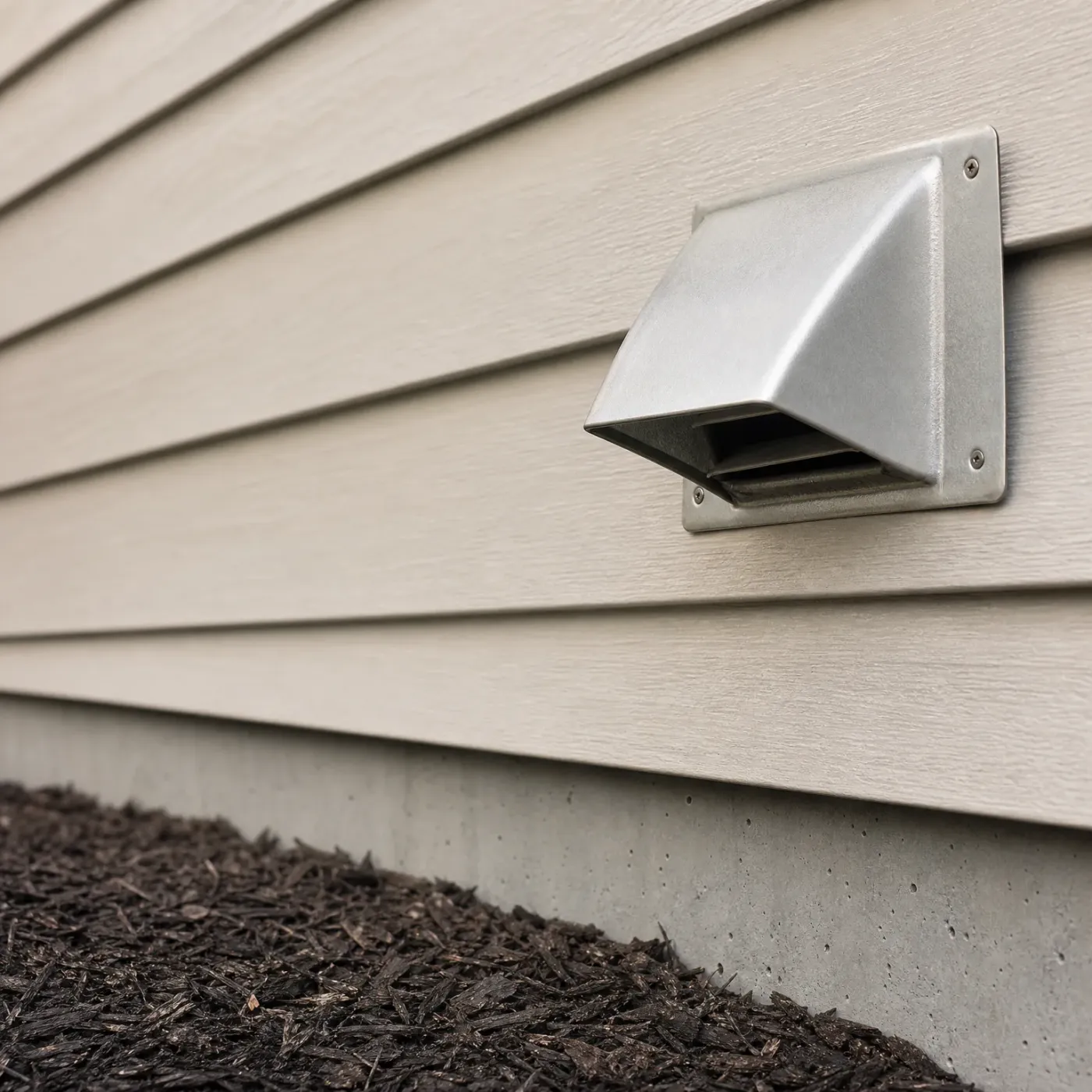
The hood on the outside wall is supposed to keep this from happening. It has a flap, sometimes a set of louvers, that lies shut until the dryer pushes air out behind it. If that flap is bent, stuck open, or missing a spring, it stops doing its job and the opening sits there looking like any other hole in a tree. A bird doesn't need long to take advantage of it. A few trips with dried grass and twigs, packed in tighter each time, and within days the vent has a nest wedged into it instead of open air. From there the problem moves inside the house. Lint that would normally ride the airflow out to the yard has nowhere to go, so it backs up into the duct and settles in the drum housing. The dryer still runs, but it's pushing hot air against a wall of nesting material and lint, so it runs hotter than it should and the thermal limit switch trips more often, cutting a cycle short. The material itself is the bigger worry. Dry grass, feathers, and lint sit directly in the path of the hottest air the dryer produces, right where a stray spark or overheated coil could reach it. Cleaning the vent out helps, but if the hood's flap goes back up broken, a bird can rebuild the same nest before summer's over.
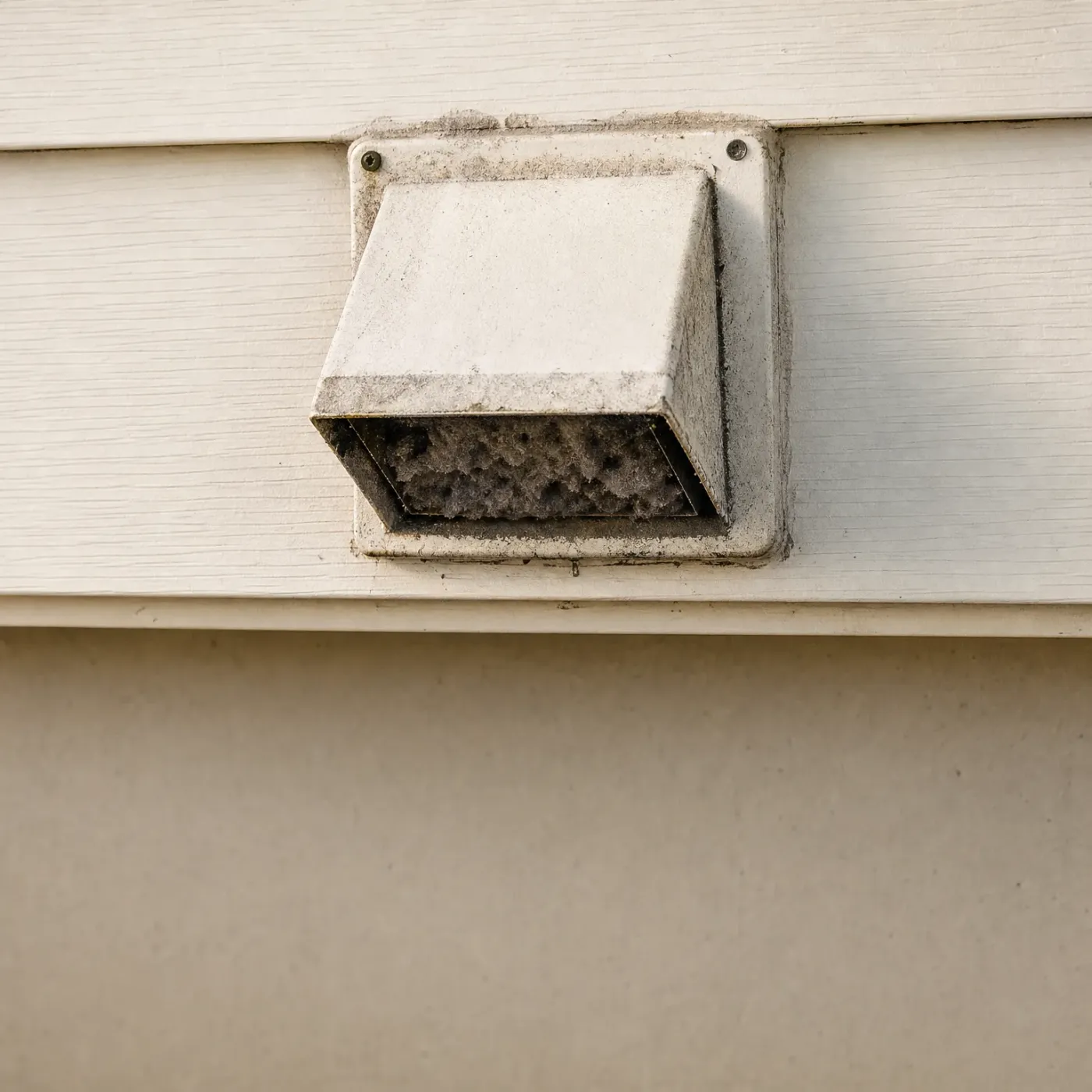
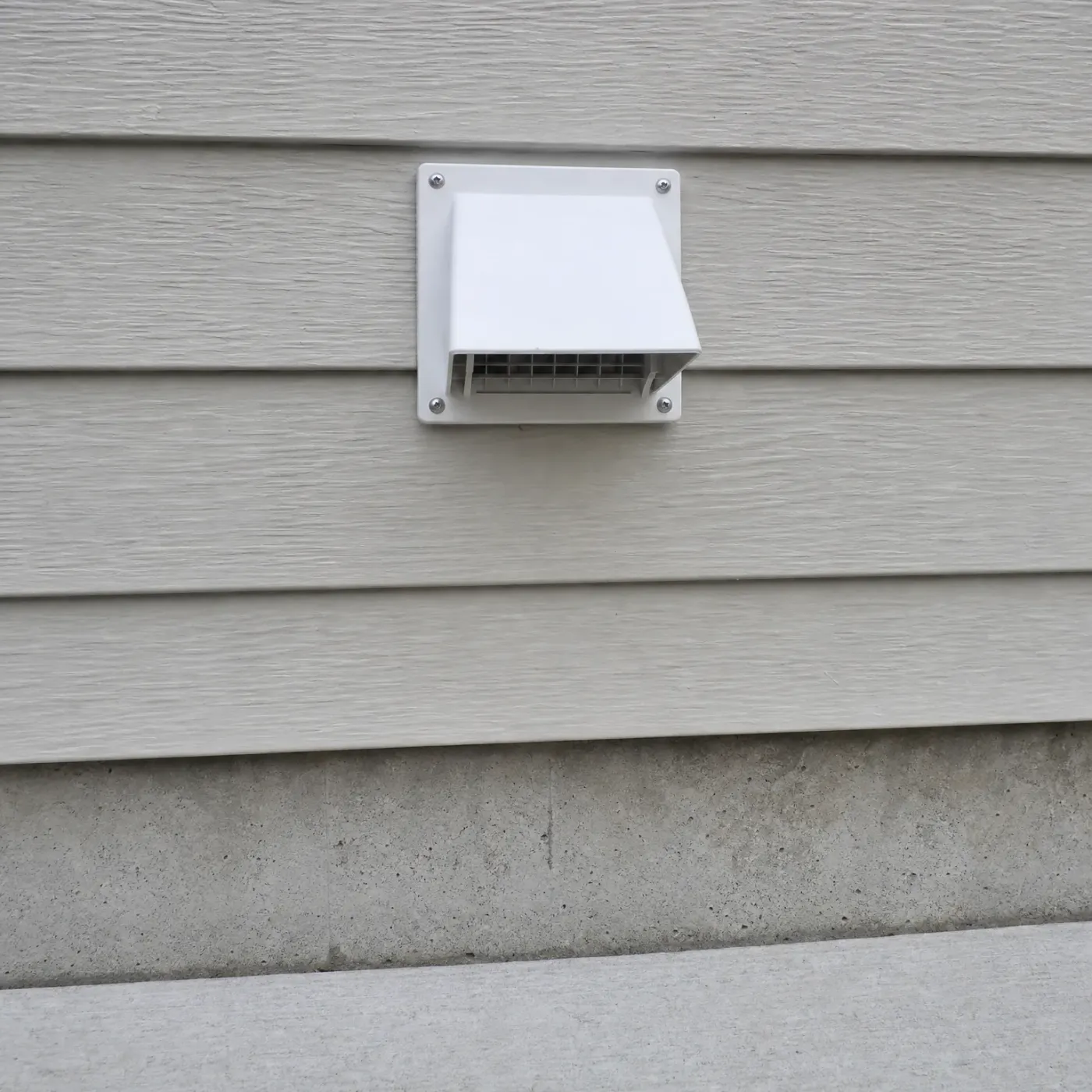
That's the air temperature at the drum that a blocked vent can push back into the dryer housing. Nesting material sitting that close to heat is a real fire risk, not a maybe.
A local contractor who clears vents all spring knows how nests get packed in and how to get the whole thing out, not just the visible part.
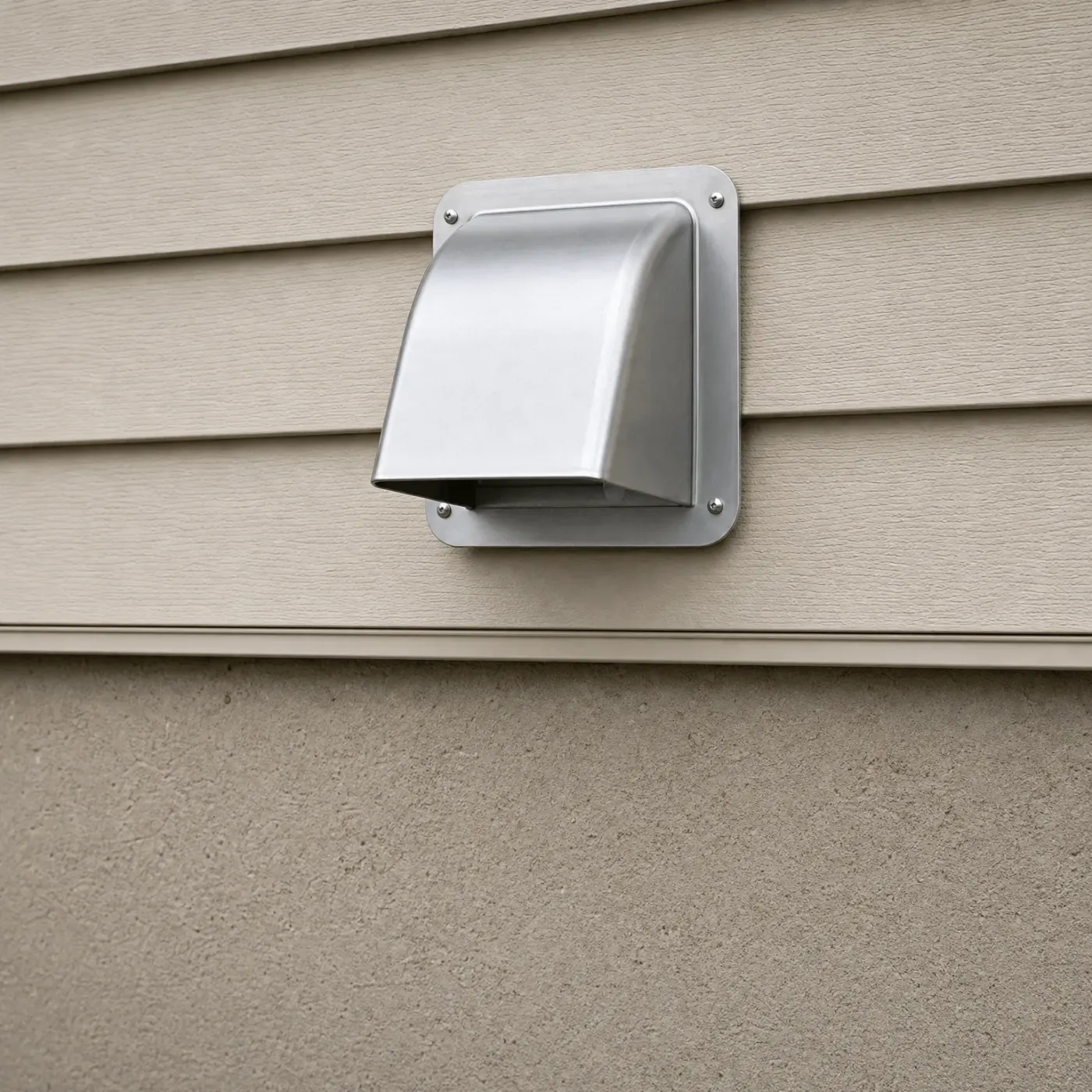
Air pushes the flap open every time the dryer runs, then it closes again. Nothing sits in the opening to catch lint or give a bird a place to start piling twigs. The hood stays clear and the exhaust has a straight path outside.
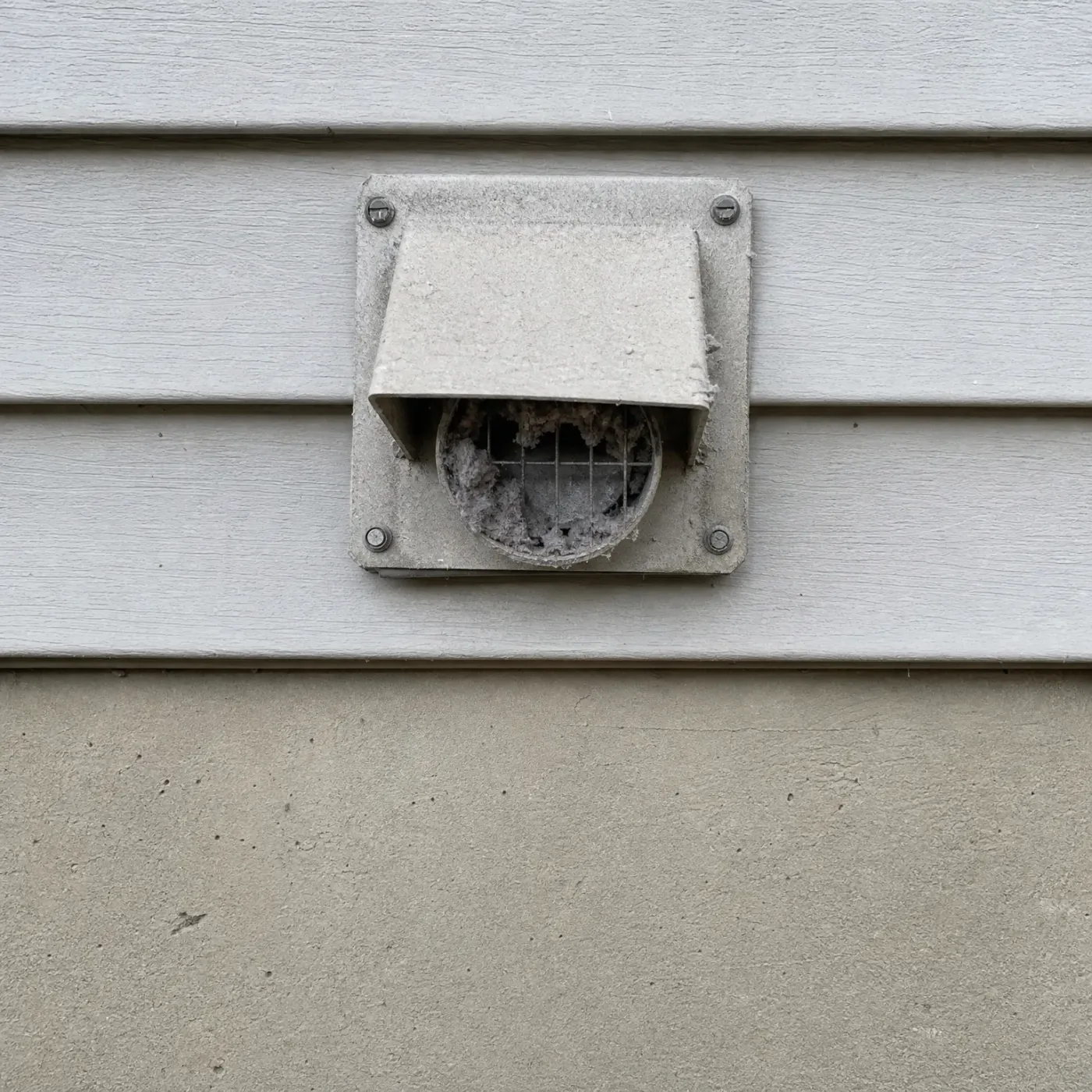
Dried grass and twigs fill the screen until the mesh barely shows through. Air from the dryer has nowhere to go, so it backs up into the duct instead of venting outside. From the yard, this is the sign something built a home where your dryer needs an open path.


A nest packed into your vent means your dryer runs longer to dry the same load, and that heat has nowhere to go but back into the housing.
Run it long enough against a blocked vent and you're looking at a scorched housing or worse, not just a higher power bill at the end of the month.




A licensed pro who works in Sebastian County gets your request.
Get matched with someone who does this kind of work in Sebastian County.
It costs nothing to send, and you don't have to hire anyone.
You load the dryer, run a normal cycle, and pull out clothes still damp at the seams. So you run it again. Touch the vent hood outside and it feels warmer than it should, or you notice no air moving from it at all when the dryer's running. Sometimes there's a musty, feathery smell near the vent, or bits of grass and twig caught in the outside opening. Inside the laundry room, the dryer itself may feel hot to the touch, or the room stays warmer than it used to after a cycle. Left alone, this is more than a slow dryer. Heat that can't escape builds up where the lint and nesting material sit, and that's how a dryer fire starts.


You'd think the noise and rush of air would scare a bird off for good. But the nest usually shows up packed in tight well before anyone runs a load with a bird still around, and by the time the dryer kicks on, there's often nothing alive in there to fly anywhere.
Birds pick the vent hood in spring, before anyone's running loads through a hot dryer for days at a stretch. They build fast, lay eggs, and once the young leave the nest the material stays behind, packed into the duct. Nobody's flying out because nobody's home anymore. The twigs and grass don't move on their own, and the heat and air from a dryer cycle don't clear a nest that's been wedged in tight for weeks. That's why this shows up as a drying problem months after the birds are long gone. Clearing it out takes pulling the material loose, not scaring off something that already left on its own.
A contractor inspects the vent hood and duct run for the blockage.
The nest gets pulled out by hand or with a vent snake.
A brush runs the full length of the duct to clear leftover debris.
The flap and hood get checked so they seal and swing freely again.
With just under two to three people in the average Sebastian County house, your dryer is probably running most days, not once a week. A nest in the vent turns every one of those loads into a longer, hotter cycle until someone clears it out.
ACS 2020-2024
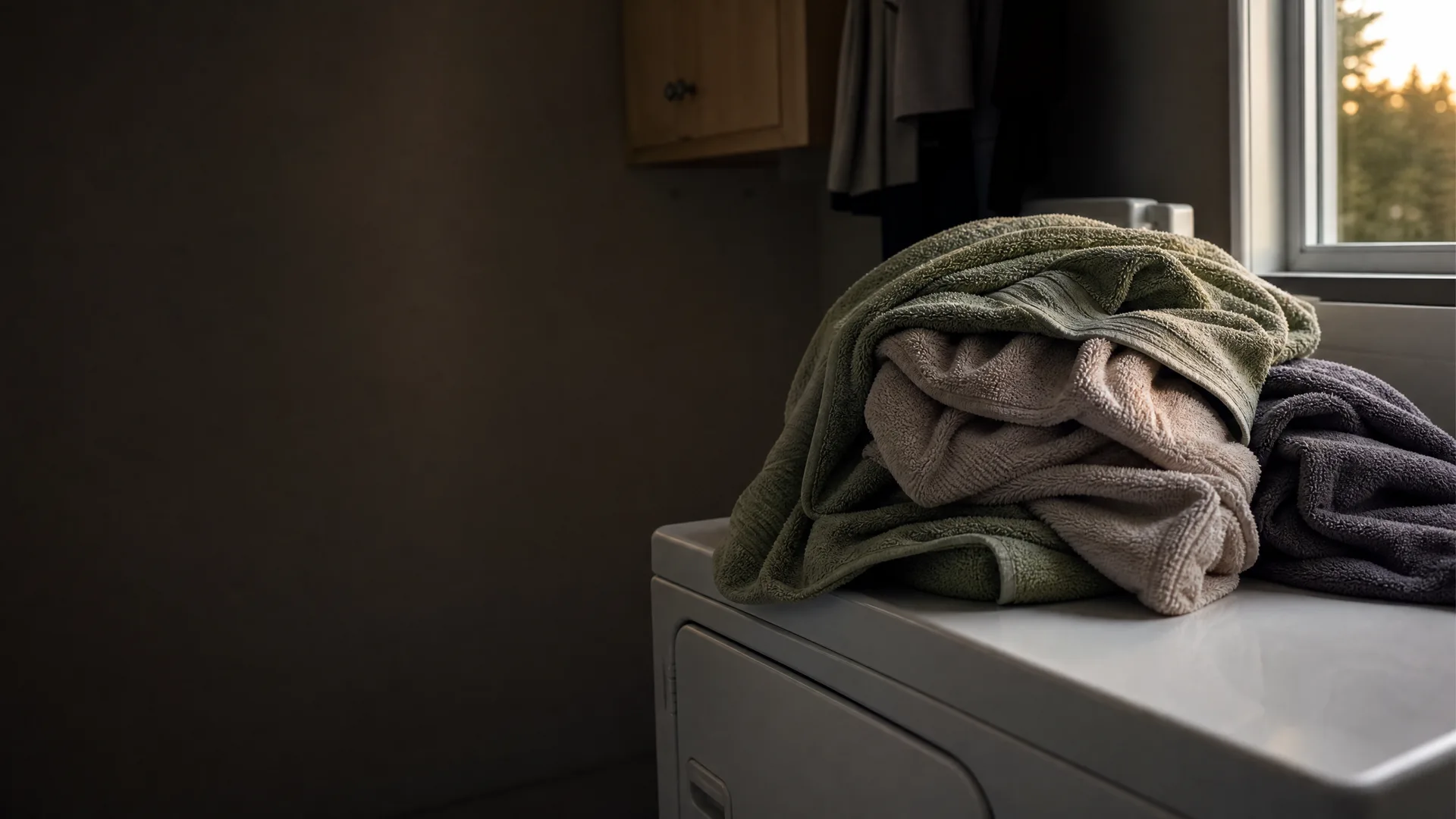
It's almost eight on a Tuesday and you're still in the laundry room because the towels from this morning never dried. You pull them out again, the terry cloth still heavy and cool in the middle, and drape them over the top of the dryer in a pile while the machine clicks and cools behind you. The window over the washer has gone dark. You can hear the dryer's fan spinning down for a few seconds after you open the door, like it's still pushing against something. Tomorrow's load is already sitting in the hamper by the door, and you're wondering if you should just run these towels a third time or wait.

A bird nest in your vent isn't something a few more loads will work loose. It sits there until somebody pulls it out, and every cycle you run in the meantime pushes hot, damp air against it instead of outside. That's the whole problem, plain and simple.
Clearing it means someone reaching the full length of your duct run, not just the opening behind the hood. A local contractor who handles vent cleaning in Fort Smith and Sebastian County can look at your specific setup and get the airflow moving again, and you'll hear back from that one contractor directly, not a handful of companies competing for the job.


Get the right pro for your dryer vent