A loose panel is the easy fix
If the rattle changes when you press on the furnace cabinet, a screw or clip has worked loose. A contractor can tighten it in one visit.

A rattle usually means something inside the furnace has worked loose. Most homes in Arkansas heat with electricity, so that furnace is an electric furnace, and the sound often comes from a blower wheel, a loose panel, or a heating element bracket that has shaken free over time. A loose access panel will buzz or rattle every time the blower kicks on, and it is often the simplest fix. A rattle from deeper inside, especially one that changes pitch with the blower speed, can mean the blower wheel itself is loose on its shaft or that ductwork connected to the unit has come unfastened. None of these fix themselves, and a loose part that is left alone tends to wear against whatever it is hitting until it breaks something else. The sound you hear now is worth checking before it turns into a bigger repair.




If the rattle changes when you press on the furnace cabinet, a screw or clip has worked loose. A contractor can tighten it in one visit.
A wheel knocking out of balance can wear the motor bearings it spins on. Left alone, that turns a rattle into a bigger repair.
Listen for when it happens. A rattle right when the furnace kicks on, then it quiets down, usually points to a panel or screw. One that keeps going the whole time it runs, especially if it gets louder or turns into a knock, is more likely the blower wheel working itself loose or hitting something it shouldn't. You might also notice the furnace cycling on and off more than usual, or the air coming out weaker than it used to. Left alone, a loose blower wheel can wear down the motor bearing, and that turns a simple tightening job into a motor replacement.
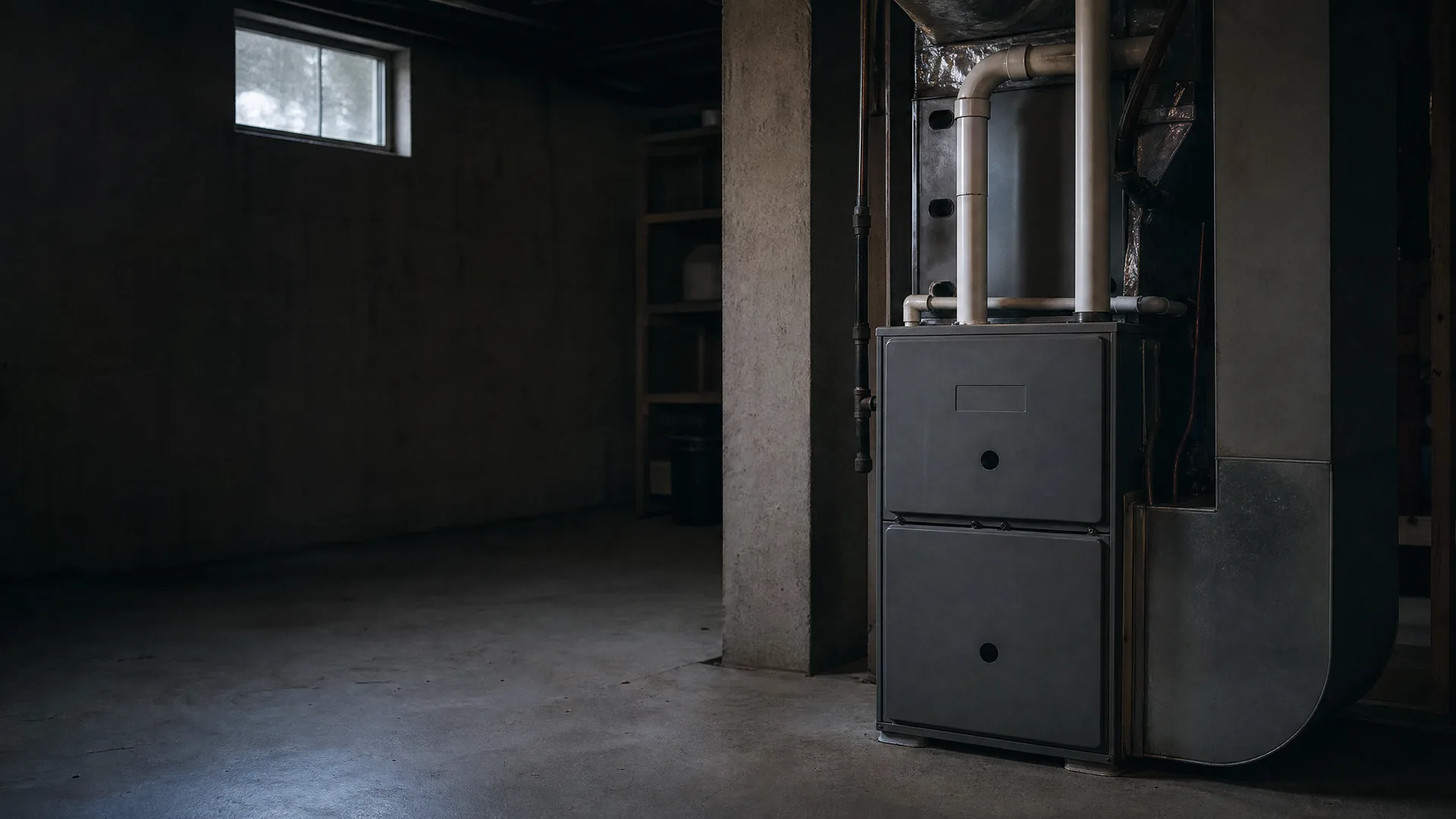
The basement is cold enough that you can see your breath near the stairs. It's a November evening, almost dark outside already. The furnace sits against the far wall, dark, not running. Dust hangs faint in the air where the blower housing is, stirred up from the last cycle before it quit. You crouch down and put a hand near the cabinet, waiting for a hum that doesn't come. Upstairs the house is getting that edge to it. You already called about the rattle. Now there's nothing to do but wait by the stairs for your phone to ring, knowing someone is going to walk you through this instead of you having to figure it out alone.
After you send the request, you're done searching.
You only hire the pro if you want to.
An electric furnace has fewer moving parts than a gas one, which makes it easier to track a rattle down. There's no burner, no gas valve, nothing to ignite. Just heating elements and a blower pushing air across them and out into the ducts. That blower wheel is called a squirrel cage, a cylinder of curved blades mounted straight on the motor shaft. No belt, no pulley. When the motor spins, the wheel spins with it, at the same speed, every time.
Trouble starts when something on that wheel shifts. A blade that's bent, or a wheel that's worked loose on the shaft, throws the whole thing off balance. It still spins, but now it wobbles slightly with every rotation, and that wobble shakes the motor mount and the cabinet around it. The faster it spins, the more it shakes.
Not every rattle comes from the blower, though. The sheet metal panels on the furnace cabinet are held on with screws or clips, and a winter of heat cycling and vibration can back those out just enough to let the panel buzz against the frame. Heating elements have their own brackets too, holding them steady inside the housing. If one of those brackets cracks or slips, the element can knock against the housing every time the furnace cycles on and off.




Winter nights here average 32°F, so your furnace is cycling on and off most of the night to hold temperature. All that starting and stopping is what works a screw or bracket loose in the first place, and once something's loose, the rattle usually shows up on one of those overnight runs.
NOAA nClimDiv 1991-2020 county normals weighted by homes
the blower motor starts and spins the wheel up
a loose screw or bracket begins to vibrate against the cabinet
the rattle grows louder as the blower reaches full speed
the cabinet panel resonates and carries the sound through the house

A rattle means something inside your furnace has come loose, whether that's a panel, a screw, or a blower wheel out of balance. It won't fix itself. Left alone, a loose wheel keeps wearing at the motor bearing it spins on, and a problem that started as noise can end as a motor that needs replacing.
You don't have to figure out which part it is before you ask for help. Once you request service, you're matched with a contractor who handles furnaces like yours and reaches out to go over what you're hearing. From there, finding the right person stops being something you have to manage on your own.


Send the request today and stop worrying about who to call.
Asking costs nothing, and the choice to hire stays yours.