

Why your dryer takes so long to dry in Arkansas

A white square plastic dryer vent hood with a hinged flap propped open, revealing a round duct opening, shown against a plain light gray background.
Hand it off

Why does my dryer take forever to dry clothes in Arkansas?

You put a load in, come back forty-five minutes later, and the clothes are still damp. You run it again, and maybe a third time. It's not your imagination, and it's probably not the dryer itself breaking down. With Arkansas summers running muggy for months, you've noticed drying feels slower some times of year than others, but even accounting for that, something about this feels off.

A clogged vent is almost always the reason

Lint builds up inside the vent line over time, not just in the trap you clean after every load. As it narrows, the hot moist air from your clothes has nowhere to go, so it stays in the drum instead of venting outside. The dryer keeps running, the clothes stay damp, and you run another cycle to finish the job. Arkansas summers already add moisture to the air your dryer has to push out, so a vent that's partly blocked struggles even more during those months. A dryer that needs two or three cycles for one load, or one that runs hot to the touch on the outside, is telling you the vent isn't clearing the way it should.

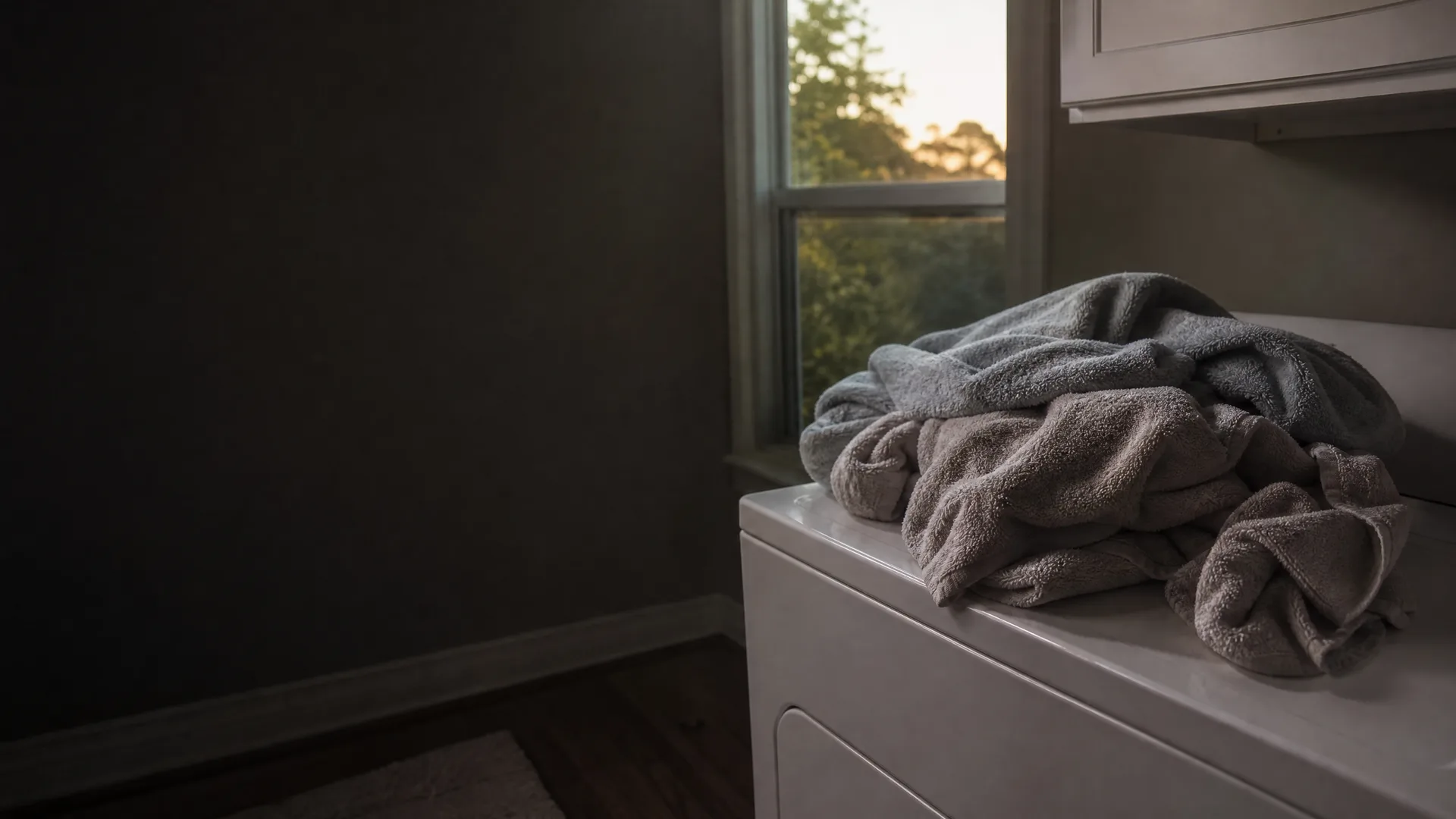
A pile of gray and taupe towels sits on top of a white laundry appliance in a dim room beside a window with trees and sunlight outside.

It's almost nine, and you're back in the laundry room for the third time tonight. The dryer's still running, and the towels on top of it, the ones you pulled out an hour ago, are damp enough that you set them back down instead of folding them. Outside it's already sticky, the kind of evening where the air doesn't let go of anything. You open the dryer door and feel the heat roll out, thick and wet instead of dry. Another twenty minutes, you tell yourself, and go back to whatever you were doing before this started.

Is this your dryer, or is it actually the vent?

Touch the front of the dryer. If it's hot to the touch and the room feels warmer and stickier than it should, that's air being pushed out slower than it should leave. Check the lint trap. If you're pulling less lint off it than you used to, some of it is building up further down the line where you can't see it. Go outside and find the vent hood. If the flap barely moves while the dryer runs, air isn't getting through. A load that used to finish in one cycle now needs two or three. Lint sitting in a vent that isn't moving air is also the main reason dryer vents catch fire.

A white hooded exterior dryer vent with a mesh screen, screwed to light gray horizontal lap siding above a concrete foundation.

Vent running clear

Air pushes straight out through the flap with enough force to swing it open. Lint stays in the trap where it belongs instead of building up past it. A load finishes in one cycle, and the room stays about the same temperature as the rest of the house.


A metal dryer vent hood mounted on beige horizontal lap siding, with gray lint clogging its open flap, above a lighter textured foundation wall.

Vent clogged with lint

The flap barely lifts, caked with lint it can't shed. Moist air backs up into the dryer instead of leaving the house, so it has to push through a load two or three times. The hood here is doing the same job as the clear one above. It just can't anymore.

A smiling bearded man in a dark green hooded jacket and blue t-shirt sits on a couch in a living room with shelves, a potted plant, and a bowl of popcorn on a wooden table.
A smiling man in a green long-sleeved shirt sits on a beige sofa in a living room, with a bowl of popcorn in the foreground, a large potted plant and shelving behind him.
A smiling man in a dark blue T-shirt sits on a couch in a dimly lit living room with a bowl of popcorn and a remote on a wooden table, a lit floor lamp and bookshelves behind him, and windows showing greenery.
A smiling bearded man in a dark green long-sleeved shirt sits on a leather couch in a living room, with a bowl of popcorn and a remote control on a wooden table in the foreground.

Finding a pro stops being your job

A clogged vent doesn't fix itself, and running another load through it just adds more lint to what's already sitting in the duct. In Arkansas summers, when the air outside is already heavy, a vent that's half blocked has even less room to push that moisture out, so the dryer runs long and the room stays warm and damp after. Left alone, that lint keeps building, and the motor keeps working against it every single load. You could spend an evening calling around, explaining the same thing to three or four companies, waiting to hear back, then comparing what each one quotes you. Or you could send this request once and let someone else sort out who's available and when. The laundry room shouldn't be where you're spending your nights. Hand off the finding part and get back to folding towels instead of resetting the dryer a third time.

Why airflow decides drying time

A dryer doesn't dry clothes with heat alone. It dries them by pulling in air, heating it, and pushing it back out through the vent, carrying the moisture with it. If the vent is restricted, that heated, damp air has nowhere to go fast enough, so it sits in the drum and gets pulled back through the clothes instead of leaving the system. The heating element isn't working any less hard. It's working against a duct that can't move the air it's producing. That's why a dryer in good mechanical shape can still take three cycles to finish a load that should take one.

What a full vent does to the motor

Lint buildup doesn't just slow drying. It makes the blower motor push against more resistance every time it runs, and that motor isn't built to run longer than it has to. Some newer dryers have a thermal cutoff that shuts the machine down if it senses the exhaust path is too restricted, which is the machine protecting itself, not a sign something's broken inside it. A vent that's clear lets the same motor, same element, and same drum finish a load the way they're designed to, without the extra cycles.

A beige plastic dryer vent hood mounted on horizontal vinyl siding, with clumps of gray lint protruding from the open flap.
Before you get your dryer vent cleaning
A white hooded exterior vent cover with a louvered underside, screwed to beige horizontal lap siding above a lighter stucco lower wall.
After you get your dryer vent cleaning
A metal hooded dryer vent with a louvered opening mounted on beige horizontal lap siding above a concrete foundation wall.

What a clear vent looks like

The cap sits flush against the siding and the flap opens freely when the dryer runs. Air moves out with enough force to push it open and keep it open. Nothing builds up around the edges.

A white hooded dryer vent mounted on horizontal lap siding, with a thick mass of gray lint clogging the opening beneath the hood.

What a clogged vent looks like

Lint has packed in around the flap until it can't close all the way. It's gray, thick, and built up over time, not from one load. Once it gets like this, the dryer is pushing air against a wall of lint instead of out through it.

Power costs 12.87 cents per kilowatt-hour statewide

At 12.87 cents per kilowatt-hour, every extra cycle a clogged vent forces costs something real. A dryer that should run once now runs two or three times for the same load, and electric is how most homes here are already heating. A clear vent is what keeps that third run from happening.

EIA-861 2025 statewide residential average

What's really slowing your dryer down

  • A dryer that runs two or three cycles for one load is almost always fighting a restricted vent, not a broken machine.
  • Heat that doesn't move air out brings damp air back into the drum and slows every load after it.
  • A hot front panel and a laundry room warmer than the rest of the house both point to the vent, not the dryer itself.
  • Lint sitting past the trap, a flap that barely lifts, or a cap that's packed shut are signs the duct is doing the blocking.
  • Arkansas summers already carry heavy air, so a vent that's half clogged has even less room to push moisture out.
  • Clearing the vent is what brings a load back down to one cycle instead of three.

A dryer that takes three cycles to do one load isn't failing. It's working against a vent that won't let the air it heats go anywhere. Every pound of moisture in a wet load has to leave as vapor carried out through that duct, and if the duct is packed with lint, the vapor comes right back into the drum instead. That's why the load in front of you still feels damp after forty-five minutes, and why running it again doesn't fix much. The front panel running hot and the laundry room feeling warmer than the rest of the house are both the same signal. So is a flap that barely moves when the dryer kicks on, or a cap outside packed tight with lint. None of that points to the dryer itself. It points to the vent. Arkansas summers make it worse, because the air coming in from outside is already carrying moisture of its own, and a half blocked vent has that much less room to push anything out. Clear the duct and the dryer goes back to doing what it was built to do, pulling air in, heating it, and getting it back out the other end, one cycle at a time instead of three. Nothing about the machine changes. What changes is whether the air it moves has somewhere to go.

A woman in a dark knit turtleneck sweater reclines on a couch under a cream knit blanket, looking down at an open book, with a lit table lamp and framed pictures behind her.
A smiling middle-aged man in a dark green sweater sits at a candlelit table with wine glasses and a plate of greens in a dimly lit interior.

Dryer Vent Cleaning

Let someone else find the pro

Answer a few questions about the dryer vent cleaning and skip the search.

A black-framed smartphone standing upright against a plain light gray background, its screen filled with solid green.
Duct and vent cleaningArkansas
Step 1 of 3

What kind of equipment?









