
HVAC Installation in Van Buren, AR
A new system here will heat from October through April and cool from May through September every year. Tell us about the house, and a licensed contractor who covers Crawford County will get in touch.
Tell us about the job
It takes about a minute.

A system that has to work almost all year in Van Buren
Heat is needed here from October through April, cooling from May through September. That's twelve months, with almost no season where the system sits idle. Winter nights average 30°F, cold enough that a furnace or heat pump runs often through those seven months. Summer afternoons average 90°F, and whatever cools the house has five months of that to keep up with.
More than half the homes here heat with electricity, so the equipment and the power feeding it both matter. Arkansas saw storms strong enough to knock out power to nearly a quarter of households for a full day or more in 2024. A new system here has to run long hours most of the year, and it helps if it can start back up on its own once the power comes back.
- 7 months
- October through April, your system heats
- 5 months
- May through September, it cools
- 30°F
- the average winter night it heats against
- 90°F
- the average summer afternoon it cools against
NOAA nClimDiv, 1991–2020 normals
Arkansas requires HVAC contractors to hold a state license.
The license is issued to the contractor, not to this one job, and Arkansas does not let counties or cities layer on a license of their own. Wherever you are in Crawford County, the same state license applies.
For an installation, that license is what stands behind the person doing the work, but the job itself still goes through the local building office. Most cities and counties require a permit for a new furnace, air conditioner or heat pump, and an inspection once it's in, and that inspection is what checks the work itself rather than the contractor's standing.
Source: Arkansas Department of Labor and Licensing
- When should I replace my HVAC system?
- Replace it when repairs start piling up or your energy bills climb even though nothing else changed. An aging system that struggles to keep up is a bigger risk here, since homes need heat from October through April and cooling from May through September, with winter lows around 30°F and summer highs around 90°F. If your equipment is old and you're facing another repair, that's the point to start thinking about replacement instead. A contractor can look at the age and condition of your equipment and tell you whether repair still makes sense.
- Should I replace my furnace and air conditioner at the same time?
- If both units are close in age, it usually makes sense to replace them together. They share the same blower and ductwork, and pairing a new furnace with an old air conditioner, or the other way around, can leave you with equipment that doesn't work well together. If one unit is much newer than the other, there's no reason to replace it early just because its partner failed. A contractor can check whether your current setup will work with a single new unit or needs both replaced.
- What happens during an HVAC installation?
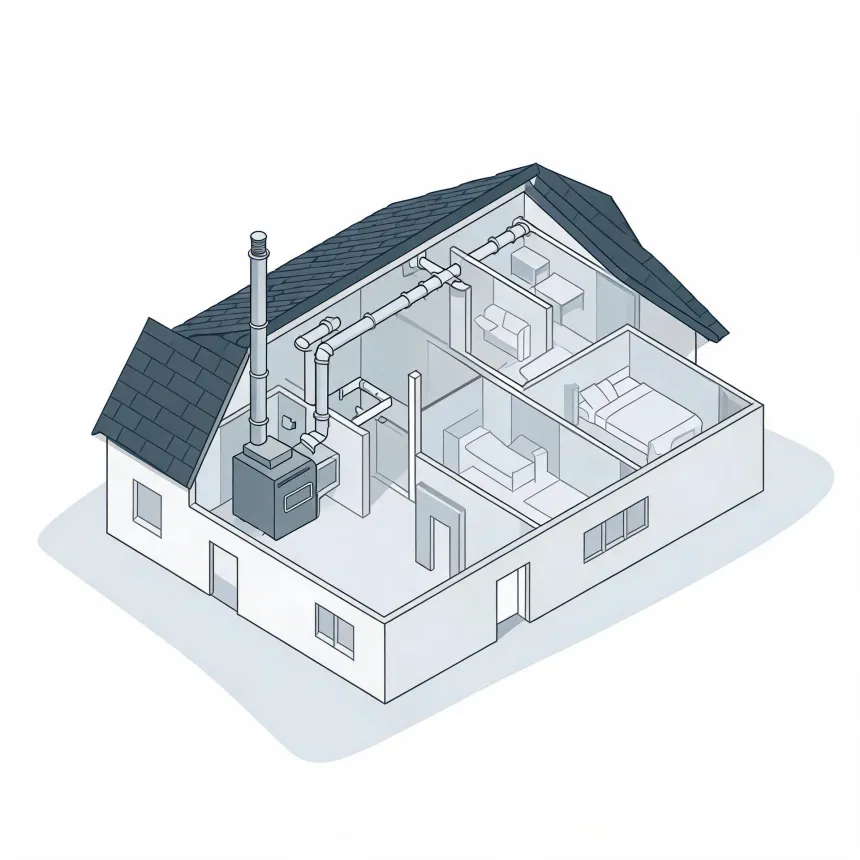
- A contractor removes the old equipment, sets the new unit in place, and connects it to your ductwork, electrical, gas line, or refrigerant lines depending on what you're installing. They check the ducts for leaks or sizing problems, since a new unit still has to push air through the same system. Once it's connected, they test it, check refrigerant charge or gas pressure, and confirm the thermostat is talking to the new equipment correctly. Arkansas requires the contractor doing this work to hold a state license.