Heat Pump Installation in El Dorado, AR
A new system here will heat from November through March and cool from May through September every year. Tell us about the house, and a licensed contractor who covers Union County will get in touch.
Tell us about the job
It takes about a minute.
Ten months of work a year for a heat pump here
A heat pump in El Dorado runs most of the year. Winter nights average 35°F from December through February, and homes here need heat from November through March. Summer afternoons average 92°F, with cooling needed May through September. That covers ten months where the system is either pulling heat into the house or pushing it out.
Any split-system heat pump installed new has to meet the federal minimum of 14.3 SEER2 for cooling and 7.5 HSPF2 for heating. More than half the homes here already heat with electricity, so the heat pump is doing that work through the winter months too. This area has also seen its share of winter storms and damaging wind, and a good number of Arkansas households went at least a day without power in 2024. Worth asking how a new system comes back on once power is restored.
- 5 months
- November through March, your system heats
- 5 months
- May through September, it cools
- 35°F
- the average winter night it heats against
- 92°F
- the average summer afternoon it cools against
NOAA nClimDiv, 1991–2020 normals
Arkansas requires HVAC contractors to hold a state license.
The license belongs to the contractor, not to this one job, so it covers whatever work that contractor takes on. Because Arkansas holds this license at the state level, no county or city in Union County can add its own HVAC licensing rule on top of it. The requirement is the same wherever the address is.
On a heat pump install, that state license is what stands behind the person doing the work. Most cities and counties also require a permit for a heat pump replacement, with an inspection once the work is done, so the local building office has its own record of the job apart from the state license.
Source: Arkansas Department of Labor and Licensing
- Is a heat pump better than a furnace?
- A heat pump can do something a furnace cannot. It cools your home in summer and heats it in winter, all from one system. A furnace only heats. Here, homes need heat from November through March and cooling from May through September, so a heat pump covers both jobs instead of pairing a furnace with a separate air conditioner. With winter nights averaging 35°F, a heat pump still has plenty of heat to pull from the outside air. Whether it fits your home better than a furnace depends on your ductwork and how your home is set up, and a contractor can walk through that with you.
- What's the difference between a heat pump and an air conditioner?
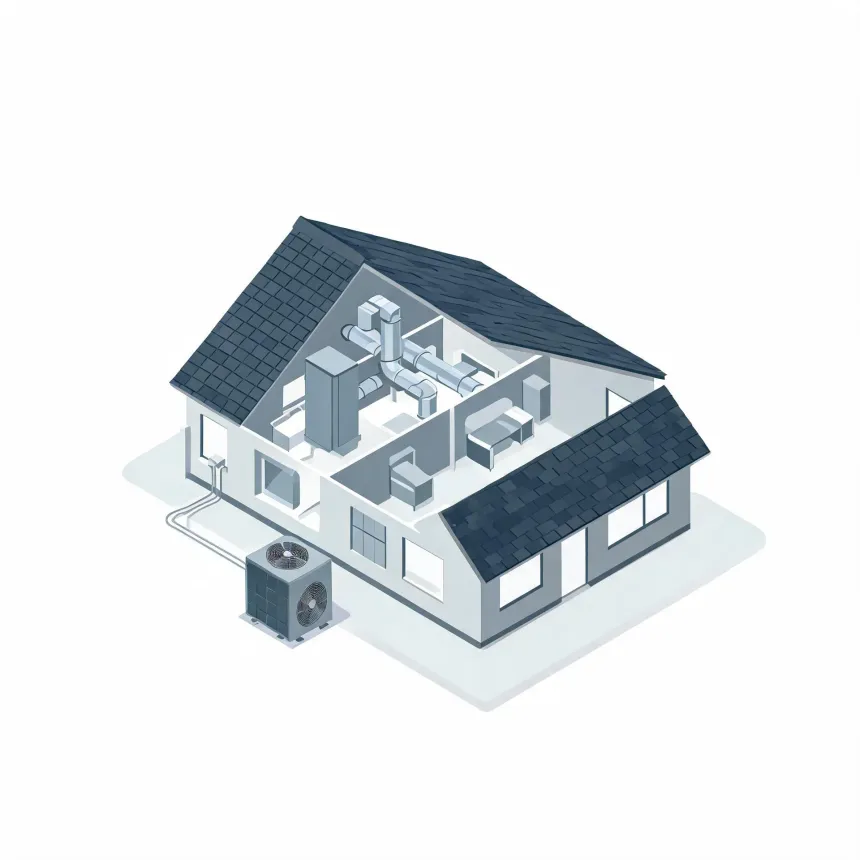
- An air conditioner only moves heat out of your home. A heat pump does that same job in summer, then runs in reverse in winter to move heat into your home instead. The compressor and the reversing valve are what let a heat pump replace both your air conditioner and your furnace. In a place like this, where cooling runs May through September and heat is needed November through March, that reversing valve is doing real work most of the year.
- Does a heat pump work in cold weather?
- Yes, a heat pump pulls heat from outside air even when it is cold, because air still holds heat down to well below freezing. Winter nights here average 35°F, which is well within the range a heat pump handles without trouble. As outdoor temperatures drop further, a heat pump has to work harder to pull the same amount of heat, and some systems add electric resistance heat to help on the coldest nights. A contractor can tell you whether the heat pump model you're considering is sized to handle the coldest nights this area sees.