Arkansas HVAC Guide

Does closing vents help your AC in Arkansas

Send the request and finding a pro stops being your problem.

Hand off the search

Does closing vents in unused rooms help my AC in Arkansas?

You've got a guest room or a den nobody sits in, and closing the vent seems like the obvious way to stop paying to cool air nobody feels. With Arkansas summers running humid for months, every bit of help with the power bill seems worth trying before you just accept the cost.

No, closing vents can make your AC work harder, not less

Your air conditioner is sized to move a certain amount of air through the whole duct system. Close off a few vents and that air has nowhere to go, so pressure builds up in the ducts. The system pushes against that pressure, which can strain the blower motor and in some systems cause the coil to ice up. Any cooling you save in that one room gets offset by the system running less efficiently everywhere else. If a room runs warmer than the rest of the house, closing its vent partway might help a little, but shutting it all the way is more likely to cost you in repairs than it saves on the bill.

A man in a gray sweater reclines in a brown leather armchair with his eyes closed, beside a wooden side table holding a mug, a folded newspaper and a potted plant, with a bookshelf and sunlit window behind him.
A man with greying hair and a dark sweater leans back on an armchair with his eyes closed and a slight smile, in a living room with a bookshelf, plant, folded newspaper and mug on a wooden table.
A man in a gray fleece jacket sits reclined in a leather chair with his eyes closed, in a room with bookshelves, a table lamp, a window, and a desk holding a folded newspaper and a dark mug.
A bearded man in a gray fleece pullover sits with eyes closed in a brown leather armchair in a living room, with a floor lamp, bookshelf, potted plants, a side table holding newspapers and a dark mug, and a bright window behind him.
A gray outdoor air conditioning condenser unit on a concrete pad beside a house with horizontal lap siding, with a conduit and electrical disconnect box on the wall and a green shrub in mulch to the right.
Leave the vents open and the system pushes air through the ducts the way it was designed to, no extra strain on the blower.
A weathered outdoor air conditioner condenser unit on a concrete pad beside a house with horizontal vinyl siding, with a conduit and disconnect box on the wall to the right.
Close enough vents and pressure builds in the ducts, and a unit already caked with dirt has even less room to breathe.

Why Closed Vents Backfire

  • Your blower is sized to move air against a set amount of resistance, figured for every vent in the house open.
  • Close off more than a couple of rooms and the blower works against pressure it wasn't built for, so it draws more power to push the same air.
  • That built up pressure finds the weak spots in the ductwork, the loose joints and seams, and pushes conditioned air out there instead of into your rooms.
  • The evaporator coil needs a steady flow of air across it to stay at the right temperature, and closing vents slows that flow down.
  • Less airflow over the coil lets it run colder than it should, and in Arkansas humidity that is how a coil ices over mid-summer.
  • Closing one or two vents in rooms you never use is a different matter than shutting off whole sections of the house.

Your system was set up to move a certain amount of air, and that figure assumes every vent in the house is open. Shut several of them and the blower doesn't just coast. It has to push against pressure it wasn't built for, pulling more power to move the same volume of air through a smaller path. That pressure has to go somewhere. Ductwork has joints and seams that were never meant to be airtight, and once pressure builds, conditioned air starts leaking out through them instead of reaching the rooms you're actually trying to cool. Meanwhile the evaporator coil, the part that actually cools the air, depends on steady airflow passing over it. Choke that airflow down and the coil runs colder than it's supposed to. In Arkansas, where the air carries a lot of moisture all summer, a coil running too cold is exactly how you end up with ice forming on it in July. Once that happens, airflow drops even further and the system stops cooling the house at all. None of this means every closed vent is a problem. Shutting the vent in a guest room or a den you rarely use is a small adjustment the system can absorb. The trouble starts when half the house gets closed off at once, because that's when the blower, the ducts, and the coil all start working against conditions they weren't designed for.

Power costs 12.87 cents per kilowatt-hour statewide

At just under 13 cents a kilowatt-hour, running your AC in Arkansas doesn't cost much compared to a lot of the country. That's exactly why closing vents to save power is a bad trade. You're risking the blower and the coil to shave pennies off a bill that's already low.

EIA-861 2025 statewide residential average

What the pressure actually does

Closed vents don't disappear the air, they just back it up. The blower keeps pushing the same volume it's rated for, and with fewer places for that air to go, the pressure inside the ducts climbs. Some of it leaks out through the duct seams and joints before it ever reaches a room, which is air you paid to cool and never got. The coil on the other end is built to have air pulled across it at a certain rate. Starve that airflow and the coil runs colder than it should, which is how you end up with ice on the lines in August.

Why this shows up as a repair call

A coil that ices over doesn't fix itself when you notice it. It keeps icing until someone shuts the system off and lets it thaw, and if that cycle repeats over a summer, it's usually the compressor that pays for it. That's a part worth having a local contractor look at before it fails outright, since replacing a compressor costs a lot more than letting a room run a few degrees warmer. Someone who services AC units around Arkansas every summer has seen this exact pattern, closed vents in spring, an ice-up call by July, and knows to check static pressure as part of a regular maintenance visit.

A gray-haired man in a blue quarter-zip sweater sits in an armchair with his eyes closed, beside a large window with bare trees outside and a potted plant and lamp nearby.
A woman in a cream knit sweater sits in an armchair with her eyes closed and head tilted back, beside a window showing orange autumn foliage and a wooden side table with a mug.

Stop chasing an air conditioner pro

Your request stays with one local pro.

It costs nothing to send, and you don't have to hire anyone.

A gray outdoor air conditioner condenser unit on a concrete pad beside a house with horizontal lap siding, with a wall-mounted disconnect box and conduit at left and a green shrub and mulch bed at right.

Running the way it should

This is a system with every vent open, pulling air through the ducts at the pressure it was built for. The blower isn't straining, the coil stays dry and cold the way it's supposed to, and the unit outside just has to move heat, nothing more.


An outdoor air conditioner condenser unit on a concrete pad beside a house with horizontal lap siding, with a conduit running to a gray electrical disconnect box on the wall.

Working against itself

Close off rooms and this same unit is pushing air into ducts that won't take it. The blower draws harder to move the same volume, the coil can ice up with too little airflow across it, and a compressor that was only ever built to move heat ends up under load it wasn't designed for.

What do you notice if you've been closing vents

Walk past the hall closet and the air handler is running longer than it used to, even on a mild afternoon. The room with the vent open the most is barely getting cold anymore, like the system can't keep up. Check the filter and it's pulling dirty fast, or there's a thin layer of dust settled around the vent covers in the rooms you left open. Sometimes it's a hiss or a whistle from the ductwork itself, air trying to squeeze somewhere it doesn't have room. If none of that gets looked at, the coil can start icing over, and a blower working against that much pressure wears out sooner than it should.

  1. Air handler pulls return air and pushes it past the coil.

  2. Blower forces that air into the duct system at set pressure.

  3. Closed vents block part of the duct's normal exit path.

  4. Pressure backs up inside the ducts with nowhere to go.

Closed vent or open duct

Close the vent

  • You stop paying to cool a room nobody sits in, at least on paper, since the air still gets pushed into that duct.
  • The blower keeps moving the same volume of air whether the vent is open or shut, so the power draw doesn't actually drop much.
  • Pressure inside the ducts climbs, and that pressure has to go somewhere, usually out through gaps and seams you can't see.
  • A system already running with a dirty coil or a weak capacitor has less room to compensate once you start closing vents off.
  • Rooms with vents left open can end up colder than they should be while the rest of the house falls behind.

Leave it open

  • The blower moves air against the resistance it was built for, so it isn't drawing extra power just to push through a smaller opening.
  • The coil stays at the temperature it's designed to run at, instead of getting colder than it should with less air moving across it.
  • Humidity gets pulled out of the air evenly through the house, which matters more in Arkansas than in a drier climate.
  • Every room cools at roughly the rate it was designed to, so you're not left guessing why one room never gets comfortable.
  • A technician checking the system during a maintenance visit sees the readings it's supposed to show, not numbers skewed by closed vents.
A gray outdoor air conditioning condenser unit on a concrete pad beside a house with horizontal lap siding, with a wall-mounted disconnect box and conduit, and shrubs to the left.

Outside unit, clear and clean

This is what a condenser looks like when air moves through it the way it should. No leaves packed against the coil, no grime choking the fins, just a clean path for the heat to leave the house. A system that breathes like this doesn't need vents closed to help it along.

An outdoor air conditioning condenser unit on a concrete pad beside a house with horizontal siding and a concrete foundation, with dry brown leaves on the ground to either side.

Outside unit, clogged and struggling

Leaves piled against the coil and dirt caked on the fins already cut down how much heat this unit can shed. Close vents on top of that and the blower inside is pushing harder while this coil outside is working with less room to let go of the heat it just picked up.

An outdoor air conditioning condenser unit on a concrete pad beside a house with light vinyl siding, an electrical disconnect box and conduit on the wall, bare shrubs and mulch to the right, and a concrete walkway in the foreground.
Before you get your air conditioner maintenance
An outdoor air conditioner condenser unit on a concrete pad beside a house with beige horizontal siding and a stone-veneer base, with refrigerant lines running to a gray wall-mounted electrical box, surrounded by dark mulch, a flowering shrub and an evergreen on the left.
After you get your air conditioner maintenance
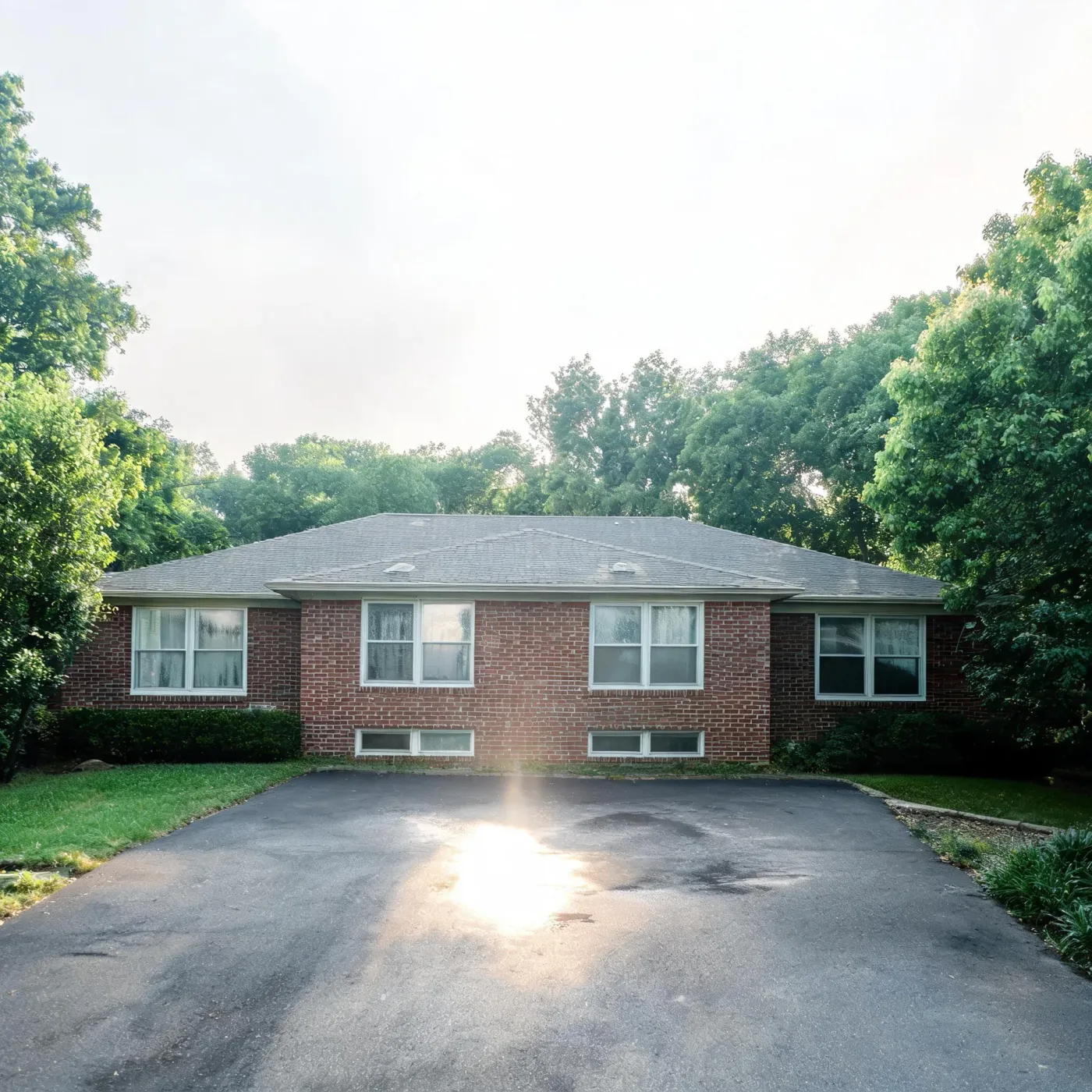
A single-story brick ranch house with a gray shingled hip roof, white-framed windows and basement windows, fronted by a wide asphalt driveway with sun glare, surrounded by green lawn and leafy trees under a bright hazy sky.

Averaged across the state, summer dew points in Arkansas sit around 68°F, per NOAA climate data. That's heavy, sticky air, the kind where a towel left on the rack never quite dries. Your AC isn't just dropping the temperature in that weather, it's wringing water out of the air to get the room to feel right, and that's the harder half of its job. Close off vents and add duct pressure on top of that load, and the coil has less airflow to work with while it's already fighting moisture most of the year. That's when you notice a room that used to cool down in twenty minutes now taking twice as long.

NASA POWER T2MDEW county cells weighted by homes

Closing vents doesn't help your AC in Arkansas. It makes the blower work against pressure it wasn't built for and leaves the coil with less airflow to stay dry, and that's how coils ice up and blowers burn out early. Open the vents, every one of them, and let a contractor check what closing them may have already strained. A tech who works on these systems all summer in your part of Arkansas has seen what a few closed vents do to a blower motor or a coil, and knows where to look first. You'll get matched with one licensed local contractor, not a handful of companies competing for your call, so the person who shows up already has a sense of what's likely wrong before they knock. That's worth more than a guess about which vents to shut. Leave the vents open, let the system move air the way it's built to, and let someone who does this for a living tell you where things actually stand.

An outdoor air conditioner condenser unit on a concrete pad beside a dark horizontal-lap sided house, with mulch beds, shrubs and ornamental grasses nearby.

Send one request and you're done looking

A licensed local pro takes the request for your air conditioner tune-up.

Tune-up, service, or cleaningCentral ACArkansas
Step 1 of 2

What ZIP code is the job in?