
Furnace vs Boiler in Lonoke County, Arkansas
When a furnace makes sense
A furnace makes sense if your ductwork is already in place and working well. Winters here only average 34°F and last about five months, so you want a system that responds fast on the cold nights, and forced air heats a house up quickly. If your home already has ducts for air conditioning, running a furnace off the same system is the simpler path.
When a boiler makes sense
A boiler fits a home already set up with radiators or in-floor piping rather than ductwork. It runs about 5% cheaper to heat with here at current Arkansas gas prices, which matters over a five-month heating season even if it's a modest difference. If your house has no ducts, or you want the steadier, less drafty heat radiators give off, a boiler is worth choosing even though a furnace is the better fit for most homes here.

Furnace
- Runs on
- Natural gas
- What it does
- Heats only
- Tax credit
- No federal tax credit since the end of 2025
Sources: U.S. Department of Energy · Internal Revenue Code
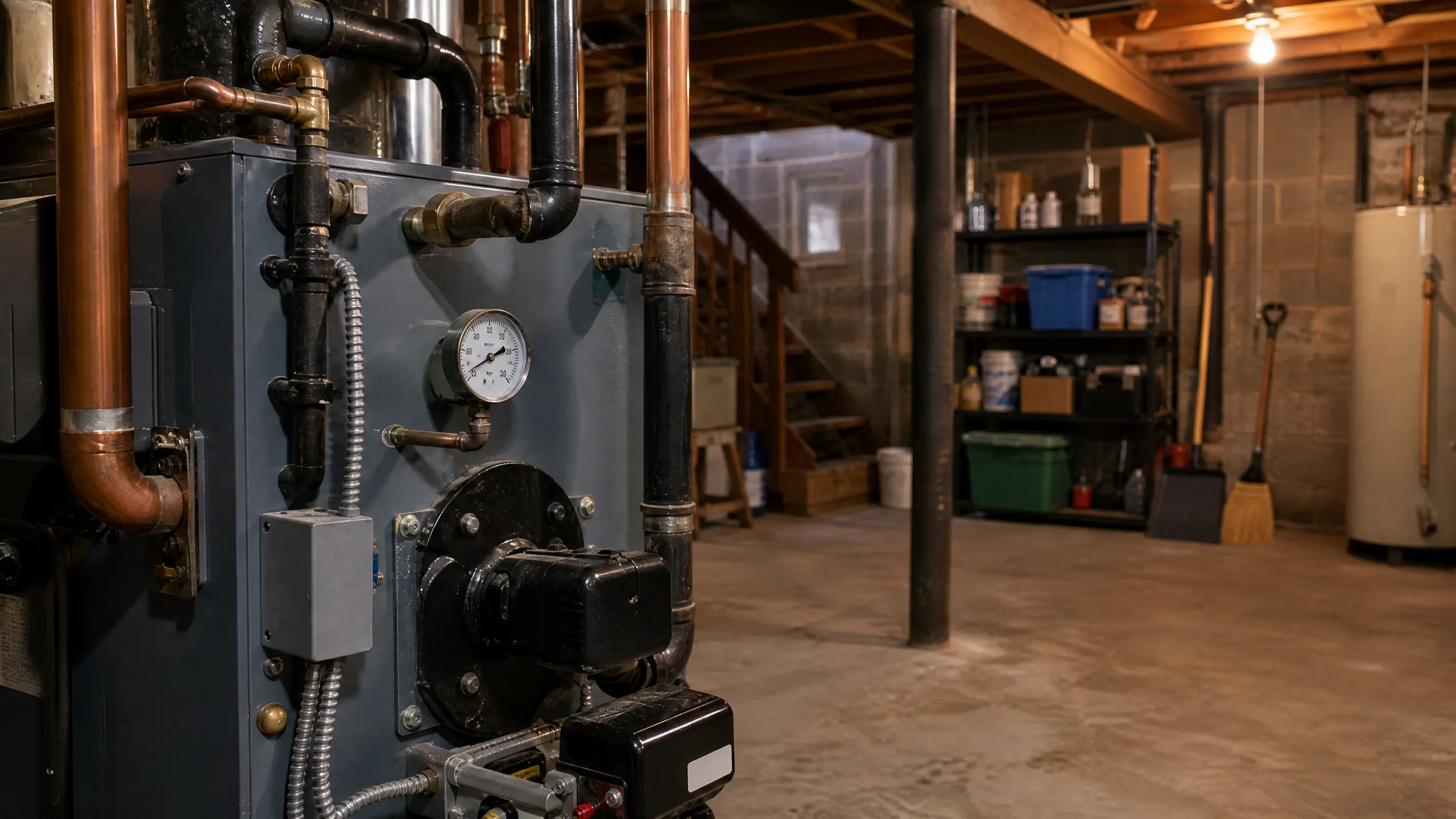
Boiler
- Runs on
- Natural gas
- What it does
- Heats only
- Tax credit
- No federal tax credit since the end of 2025
Sources: U.S. Department of Energy · Internal Revenue Code
Furnace wins in Lonoke County.
Most homes here were built in 1997, and that ductwork already in place makes a furnace the easier install over a boiler's pipes and radiators.
If your home already has radiators or in-floor piping instead of ducts, a boiler is still the better fit.
Find a contractor| Compared on | Furnace | Boiler |
|---|---|---|
| Cost to run here | Costs more to run | About 5% less to run |
| What it does | Heats only | Heats only |
| Handles a 34°F night | Yes | Yes |
Sources: U.S. Energy Information Administration, U.S. Department of Energy, NOAA
When a furnace makes sense
A furnace makes sense if your ductwork is already in place and working well. Winters here only average 34°F and last about five months, so you want a system that responds fast on the cold nights, and forced air heats a house up quickly. If your home already has ducts for air conditioning, running a furnace off the same system is the simpler path.
When a boiler makes sense
A boiler fits a home already set up with radiators or in-floor piping rather than ductwork. It runs about 5% cheaper to heat with here at current Arkansas gas prices, which matters over a five-month heating season even if it's a modest difference. If your house has no ducts, or you want the steadier, less drafty heat radiators give off, a boiler is worth choosing even though a furnace is the better fit for most homes here.
A Lonoke County contractor will price both against your own house, your ductwork and your panel.
Tell us about the job
It takes about a minute.